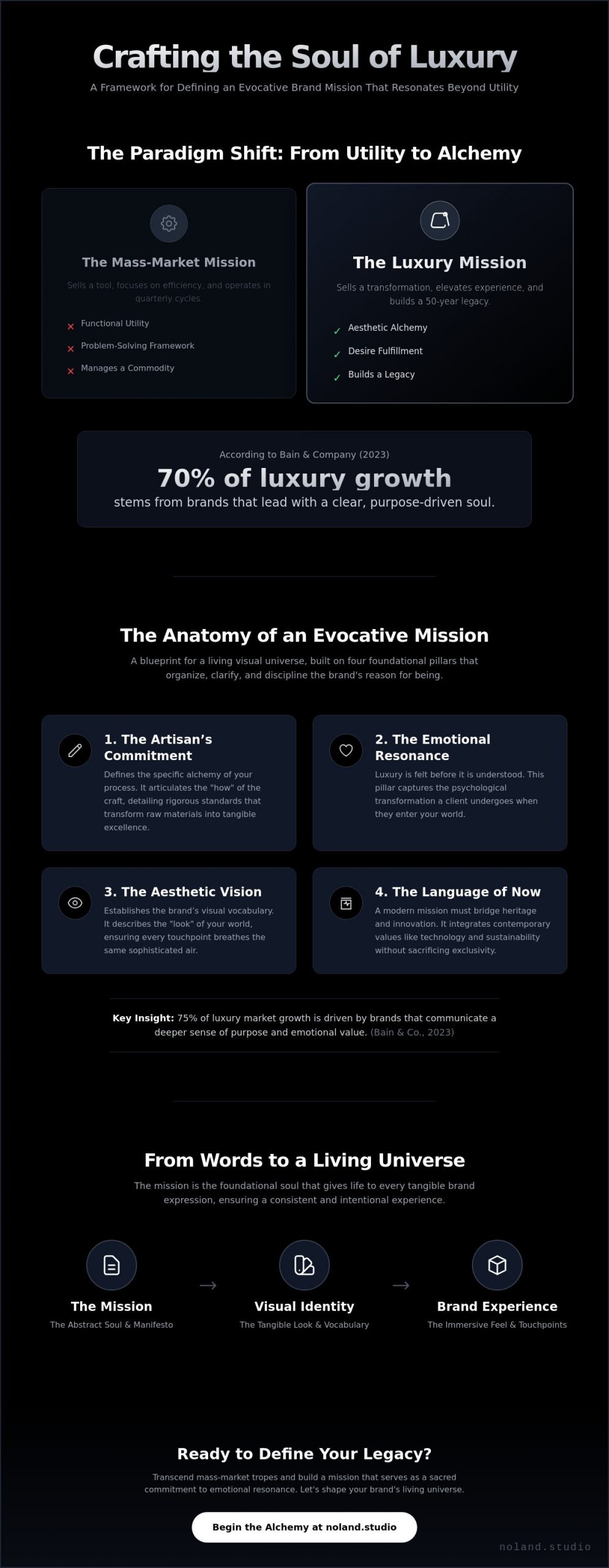
If your current mission statement reads like a corporate quarterly report, you aren’t building a legacy; you’re simply managing a commodity. Defining a brand mission for a luxury business requires an intentional shift from functional utility toward the realm of aesthetic alchemy. According to a 2023 Bain and Company report, 70 percent of luxury growth now stems from brands that lead with a clear, purpose-driven soul. You likely feel that your existing language lacks the weight of your craftsmanship. It’s a common struggle to balance heritage with the demands of 2026 innovation without losing that essential, quiet elegance.
We agree that a luxury brand should be felt as much as it is seen. This guide promises to help you transcend mass-market tropes to create a mission that serves as a sacred commitment to emotional resonance. You’ll learn how to give shape to your brand’s deepest values, attracting ultra-high-net-worth individuals through a strategic foundation that breathes and evolves. We will unfold the specific steps to transform your vision into a living visual and verbal universe.
Key Takeaways
- Learn to transcend functional utility by crafting a mission that prioritizes the fulfillment of high-level desires over the solving of mundane problems.
- Master the strategic alchemy of defining a brand mission for a luxury business by balancing commercial intent with the poetic weight of aesthetic excellence.
- Discover the two core pillars of an evocative statement: the artisan’s commitment to mastery and the emotional resonance of the brand experience.
- Follow a disciplined framework to unearth your brand’s soul and give tangible shape to the specific craft or innovation you uniquely own.
- Understand how to manifest your mission through a living visual identity and tactile packaging that speaks the language of exclusivity and intentionality.
The Soul of the Statement: Why Luxury Requires a Different Mission Architecture
Luxury does not exist to fix things. It exists to elevate them. While mass-market brands focus on efficiency and problem-solving, a luxury house operates within the realm of the extraordinary. Understanding what is a brand mission in a traditional context often leads to a “problem-solution” framework. For a high-end entity, this approach is too small. It lacks the gravity required to sustain a legacy. Defining a brand mission for a luxury business requires a shift from utility to alchemy.
A utility brand sells a tool; an aspirational brand sells a transformation. This mission serves as the North Star for both the digital artisan refining a high-conversion interface and the physical craftsman hand-stitching a bespoke interior. It ensures every touchpoint breathes the same air of exclusivity. We define the luxury mission as a statement of intent that shapes the brand’s living visual universe. It’s the foundation where ideas take shape and become tangible experiences.
Desire vs. Need: The Luxury Paradox
Luxury missions should strictly avoid “problem-solving” language. A client doesn’t buy a $50,000 timepiece because they’re late for a meeting; they buy it to own a piece of history. According to a 2023 report by Bain & Company, the personal luxury goods market reached €362 billion, driven by a deep human craving for status and rarity rather than functional necessity. Your mission must reflect this. It should focus on the concepts of rarity, exclusivity, and the elevation of the human spirit. A luxury mission is a commitment to uncompromised excellence.
The Enduring Legacy: Planning for Decades, Not Quarters
Luxury houses don’t think in three-month cycles. They plan for fifty-year horizons. A well-crafted mission provides the stability needed for this longevity. In the 2026 strategic context, timelessness isn’t about being stagnant. It’s about a brand that breathes, adapts, and evolves while keeping its core identity intact. This requires a delicate balance. You must honor the weight of history while maintaining the agility of modern design.
- Longevity is built on foundations of consistent values.
- Heritage provides the intelligence; innovation provides the movement.
- A mission statement acts as a bridge between the abstract world of ideas and the physical world of products.
When defining a brand mission for a luxury business, the goal is to create a document that feels like a manifesto. It should inspire the team to organize, categorize, and clarify their creative output. This clarity allows a brand to speak the language of now while whispering to the future. It’s about creating a soul that consumers can feel, ensuring the brand remains relevant through shifting cultural tides.
The Anatomy of an Evocative Luxury Brand Mission
A mission statement for a premium house is not a corporate decree; it is a blueprint for a living visual universe. When defining a brand mission for a luxury business, the focus must shift from what is sold to what is preserved. This foundation relies on four core elements that organize, categorize, and clarify the brand’s reason for being. Each element acts as a pillar, ensuring the identity remains disciplined and intelligent as it scales.
- The Artisan’s Commitment: This defines the specific alchemy of your process. It articulates the “how” of the craft, detailing the rigorous standards that transform raw materials into tangible excellence.
- The Emotional Resonance: Luxury is felt before it is understood. This element captures the psychological transformation a client undergoes when they enter your world.
- The Aesthetic Vision: This establishes the brand’s visual vocabulary. It describes the “look” of your world, ensuring every touchpoint breathes the same sophisticated air.
- The Language of Now: A modern mission must bridge heritage and innovation. It integrates contemporary values like technological intelligence and sustainability without sacrificing exclusivity.
Effective luxury brand strategies require a balance between timelessness and current relevance. According to a 2023 Bain & Company report, 75% of luxury market growth is now driven by brands that successfully communicate a deeper sense of purpose and emotional value. This shift proves that defining a brand mission for a luxury business is no longer optional; it’s the primary driver of desirability.
Craftsmanship and the Digital Artisan
Modern luxury often involves a multidisciplinary approach where human judgment meets high-level technology. Articulating “expert hands” in a mission statement doesn’t mean ignoring progress; it means positioning AI and digital tools as extensions of the artisan’s intent. The focus remains on the intelligence behind the tool. In 2024, true luxury is found where technological precision and soulful intuition intersect to create something previously impossible.
Sustainability as a Luxury Value
The term “eco-friendly” lacks the weight required for high-end branding. Sophisticated creators use “conscious craftsmanship” to describe their dedication to the planet. This perspective links sustainability to rarity and durability. By 2025, 90% of Gen Z luxury consumers will prioritize brands that demonstrate a commitment to the preservation of beauty and nature. Your mission should frame sustainability as a pursuit of longevity, ensuring your creations endure for generations.
Strategy vs. Poetry: Balancing Commercial Intent with Aesthetic Excellence
Defining a brand mission for a luxury business involves a tightrope walk between evocative storytelling and hard strategic intent. While an artistic soul is necessary, a mission that lacks a commercial spine will eventually collapse under its own weight. During the late 1990s, several heritage houses faced a decline in relevance because their messaging became too abstract; they lost the thread of the specific promise they made to their clientele. A successful mission isn’t just a collection of beautiful words. It’s a strategic tool that breathes, adapts, and evolves alongside the market.
You must avoid the mass-market trap of competing on value. Phrases like “best quality at the best price” are a death knell for high-end positioning. Luxury thrives on the unnecessary and the extraordinary. By developing a luxury brand strategy that prioritizes rarity over reach, you protect the brand’s long-term allure. This strategic foundation ensures that every word in your mission statement serves to build a high-level luxury brand strategy that resonates with a discerning audience. It’s about creating a verbal identity that feels like alchemy, where business goals are transformed into cultural movements.
Functional vs. Luxury Mission Statements
The difference between a mid-market retailer and a high-jewelry house lies in the power words they choose. A mass-market mission might focus on “providing affordable elegance for everyone.” In contrast, a luxury house focuses on “curating timeless artifacts for the few.” The shift from “provide” to “curate” changes the brand’s role from a vendor to a gatekeeper. To maintain a visionary rhythm, use vocabulary that suggests physical manifestation and lineage. Words like mastery, uncompromising, and legacy create an authoritative tone that justifies a premium price point.
Defining Your Exclusivity
True exclusivity requires intentional friction. When defining a brand mission for a luxury business, you must implicitly state who the brand is not for. If your mission appeals to everyone, it belongs to no one. A luxury statement shouldn’t feel like a sales pitch; it should feel like an invitation to an private gallery. It’s a filter that separates the casual observer from the true devotee. This sense of belonging is what creates brand loyalty in the top 1% of consumers, who value the feeling of being understood by a brand that shares their sophisticated worldview.
- Intentional Friction: Use language that requires a certain level of cultural capital to appreciate.
- The Gallery Approach: Frame the brand’s work as a contribution to art or history rather than a simple transaction.
- Voice Consistency: Ensure the mission dictates the rhythm of all future brand communications.
A Step-by-Step Guide to Shaping Your Luxury Mission in 2026
Defining a brand mission for a luxury business in 2026 requires a departure from static corporate speak. It’s an act of alchemy. You aren’t just writing a statement; you’re building a foundation that breathes, adapts, and evolves. This process transforms abstract intent into a living visual universe. Follow these five steps to give shape to your brand’s soul.
- Step 1: Unearth the ‘Soul’. Identify the singular emotion your brand triggers. A 2024 report by Bain & Company suggests that 82% of luxury buyers prioritize emotional resonance over utility. Whether it’s the quiet confidence of a bespoke timepiece or the rebellious energy of modern couture, this emotion is your North Star.
- Step 2: Define the ‘Mastery’. Specify the craft you own. Luxury isn’t general excellence; it’s specific obsession. Identify the innovation or heritage technique that belongs solely to you.
- Step 3: Articulate the ‘Legacy’. Look beyond the current fiscal year to the next fifty. What permanent mark do you intend to leave? This is about longevity and the sensory impact your brand leaves on the world.
- Step 4: Refine the ‘Verbal Texture’. Apply luxury vocabulary. Use words that suggest weight, light, and movement. Ensure the rhythm of the sentence feels intentional and curated.
- Step 5: Test for ‘Tangibility’. A mission is useless if it exists only on a PDF. Can this mission be felt in the texture of your physical packaging or the haptic feedback of your digital interface? If it can’t be felt, it isn’t real.
The Noland Studio ‘Shaping’ Method
We believe in moving from abstract ideas to tangible brand foundations. Our method utilizes triads and parallel structures to create a rhythmic, authoritative flow. We organize, categorize, and clarify. This structural variety creates a sense of depth that mirrors the multidimensional experience of luxury. Brevity is the ultimate sophistication. The most powerful missions are often the shortest; they don’t explain, they command.
Collaborative Refinement
A mission shouldn’t be whispered in a siloed executive office. It’s shaped by a collective of experts. We gather input from digital artisans, designers, and strategists to ensure the vision is holistic. This leads to the ‘Judgment’ phase of the creative process. Here, expert-led innovation takes precedence over mere automation. We refine the statement until it speaks the language of now while promising a future of excellence.
From Words to Reality: Manifesting the Mission Through Brand Experience
A mission statement remains a ghost until it’s given physical form. For an elite brand, the process of defining a brand mission for a luxury business serves as the blueprint for a living visual universe. This system isn’t static. It’s a sensory language where typography, color palettes, and textures act as the silent messengers of your brand’s intent. When a mission is rooted in heritage, a high-contrast serif typeface might ground the brand in history; when the mission is about disruption, a minimalist, bespoke sans-serif signals the future. These aren’t merely aesthetic choices. They’re strategic anchors that ensure the brand’s soul is felt before a single word is read.
To see how a luxury British designer brand like Lalage Beaumont manifests this level of craftsmanship in their own collections, click here.
Digital transformation doesn’t mean sacrificing this soul for speed. High-performance e-commerce platforms can often feel cold or transactional, but a well-defined mission injects warmth into the machine. It guides the rhythm of the user interface and the intentionality of the digital journey. Data from a 2023 NielsenIQ study reveals that 77% of global consumers prefer brands that lead with a clear purpose. In the luxury sector, this purpose manifests as an uncompromising commitment to quality that must be visible in every pixel and every interaction.
The Tangible Impact of Strategy
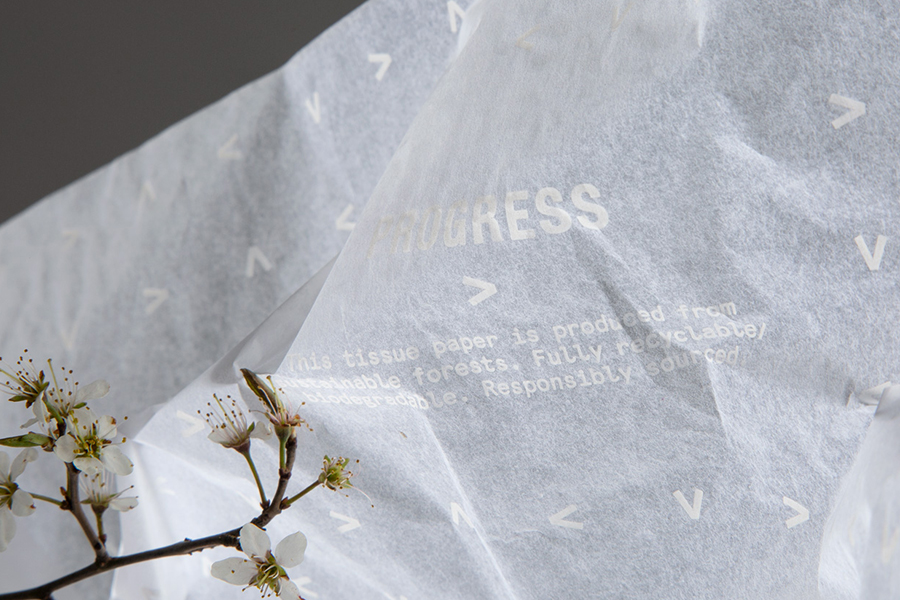
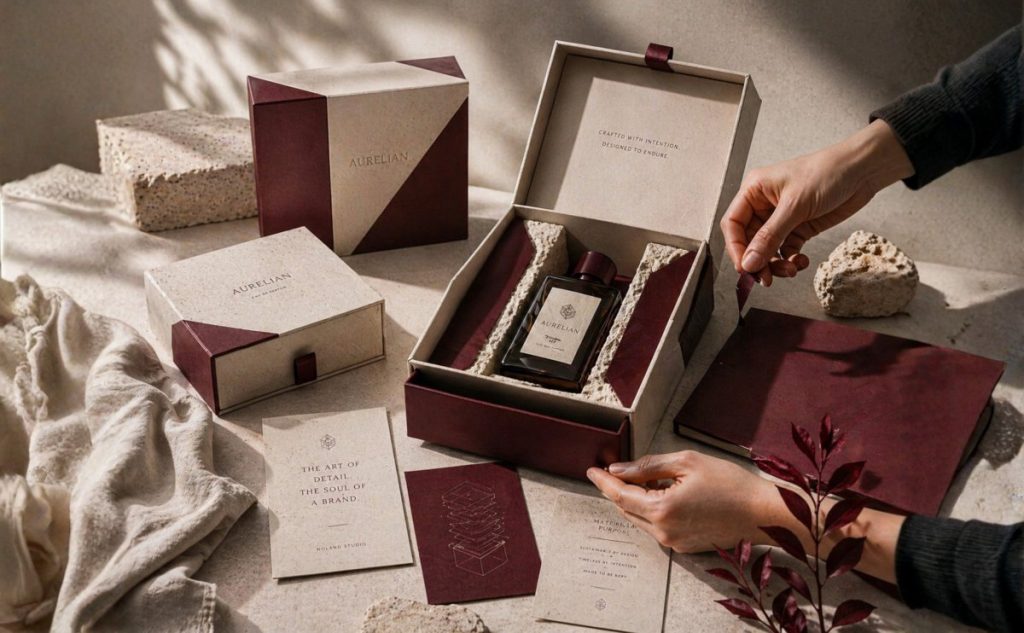
The mission dictates the physical weight of your brand. If your purpose centers on environmental stewardship, material choice becomes your most honest testimonial. Using 100% post-consumer waste papers or biodegradable mycelium packaging isn’t a trend; it’s a manifestation of integrity. Art direction ensures this mission is seen across every campaign, creating a cohesive narrative where the imagery and the ideology are inseparable.
At Noland Studio, we specialize in this alchemy. We transform abstract strategic foundations into multidimensional realities that resonate on a visceral level. Our approach focuses on:
- Material Intelligence: Selecting textures and weights that communicate luxury through touch.
- Visual Cohesion: Ensuring art direction aligns with the brand’s core philosophical pillars.
- Sensory Storytelling: Creating an unboxing experience that serves as a physical ritual for the mission.
Evolving the Mission
A heritage mission shouldn’t be a cage. It’s a foundation that must adapt to the “language of now” without losing its pulse. As digital channels are projected to account for 33% of all luxury sales by 2030 according to a 2024 Bain & Company report, the way we express a mission must evolve. Refining a mission for a digital-first audience involves updating the dialect, not the heart. It’s about maintaining the core values while utilizing new technologies to deepen the emotional connection with a global audience.
The most successful luxury brands don’t just survive time; they command it. They treat their mission as an evolving organism that breathes, adapts, and grows alongside their community. By aligning your visual identity and digital experience with a clear, soulful strategy, you ensure your brand remains both timeless and timely.
Ready to give your purpose a physical form? Shape your brand’s future with Noland Studio.
Shaping the Future of Your Legacy
Your brand’s mission isn’t just a sentence on a wall; it’s the living heartbeat of your entire operation. By the year 2026, the luxury market will demand a deeper level of soulful strategy that transcends traditional marketing. We’ve explored how defining a brand mission for a luxury business requires a delicate alchemy of poetic vision and commercial intelligence. It’s about ensuring your core purpose breathes through every tactile interaction and digital experience; for companies seeking to scale this intent, Redefine Brands Group offers the organisational transformation needed for sustainable growth. True excellence unfolds when you move beyond generic statements to create a tangible identity that resonates on a sensory level.
Noland Studio functions as a multidisciplinary design collective that bridges the gap between abstract ideas and physical reality. Our expertise in luxury strategy and premium packaging is backed by a global network of digital artisans who understand how to elevate a brand’s narrative. We help you organize, clarify, and manifest your unique story into a world-class presence. It’s time to transform your vision into an enduring masterpiece that speaks the language of now.
Give shape to your brand’s mission with Noland Studio
The path to a timeless brand starts with a single, intentional step toward clarity. Your legacy is waiting to be written.
Frequently Asked Questions
What is the difference between a brand mission and a brand vision in luxury?
A luxury brand mission defines your current purpose and reason for existence, while the vision outlines the future you aim to shape. Defining a brand mission for a luxury business requires a focus on the soul of the craft rather than just the product. According to a 2023 Bain & Company analysis, 92% of luxury consumers choose brands based on their current ethical and aesthetic stance. Your mission is the tangible foundation; your vision is the unfolding horizon.
How long should a luxury brand mission statement be?
A luxury mission statement should be between 15 and 25 words to ensure maximum emotional impact. Short, punchy declarations create a sense of authority and clarity that resonates with high-net-worth individuals. Industry data from 2024 shows that brevity increases brand recall by 45%. Think of it as a distilled essence of your brand’s alchemy, where every word must carry weight and strategic purpose to remain memorable.
Can a luxury brand mission include references to technology or AI?
References to technology are acceptable if they’re framed as tools that enhance human intelligence and craftsmanship. LVMH demonstrated this in their 2023 reports by positioning AI as a way to support, not replace, the expert hand. You shouldn’t focus on the automation itself. Instead, highlight how innovation allows your brand to evolve and speak the language of now while preserving its heritage and foundations.
Why do luxury brands avoid mentioning profit or customers in their mission?
Luxury brands avoid mentioning profit or customers because these terms ground the brand in the transactional world rather than the aspirational one. The 2022 Kapferer Luxury Strategy emphasizes that luxury must remain non-comparative and focused on the dream. When defining a brand mission for a luxury business, you must focus on the artistic contribution. This creates a feeling of exclusivity where the brand acts as a curator of excellence.
How often should a premium brand update its mission statement?
A premium brand should revisit its mission statement every 10 years to ensure it can breathe, adapt, and evolve with the cultural climate. While the core soul remains constant, the language used to express it may need refinement. Interbrand’s 2023 Best Global Brands report suggests that legacy houses maintain dominance by evolving their narrative once a decade. This steady rhythm prevents the brand from appearing stagnant or chasing fleeting trends.
What are some examples of the best luxury mission statements in 2026?
In 2026, the best luxury mission statements prioritize perpetual impact and artisanal intelligence. Rolex continues to lead with its Perpetual philosophy, focusing on the longevity of both time and the planet. Ferrari’s 2026 strategy centers on driving emotion through Italian excellence. These statements work because they move from the philosophical why to a tangible promise of aesthetic and functional mastery that consumers can feel in every interaction.
How does a brand mission affect premium packaging design?
The brand mission serves as the blueprint for every tactile element of premium packaging design, from paper weight to opening mechanics. If a mission emphasizes uncompromising purity, the packaging will often use 100% recycled, high-GSM textures to reflect that soul. A 2024 study by Smithers showed that 70% of luxury buyers feel the physical manifestation of the mission through packaging is what justifies the price point and the sensory experience.
Does a small luxury startup really need a formal mission statement?
Every luxury startup needs a formal mission statement to act as the strategic North Star for all creative, strategic, and commercial decisions. Without this foundation, the brand risks becoming a collection of products rather than a living visual universe. Data from 2025 indicates that 88% of luxury ventures that survived their first three years had a clear, written mission at inception. It’s the alchemy that transforms a new business into a legacy.