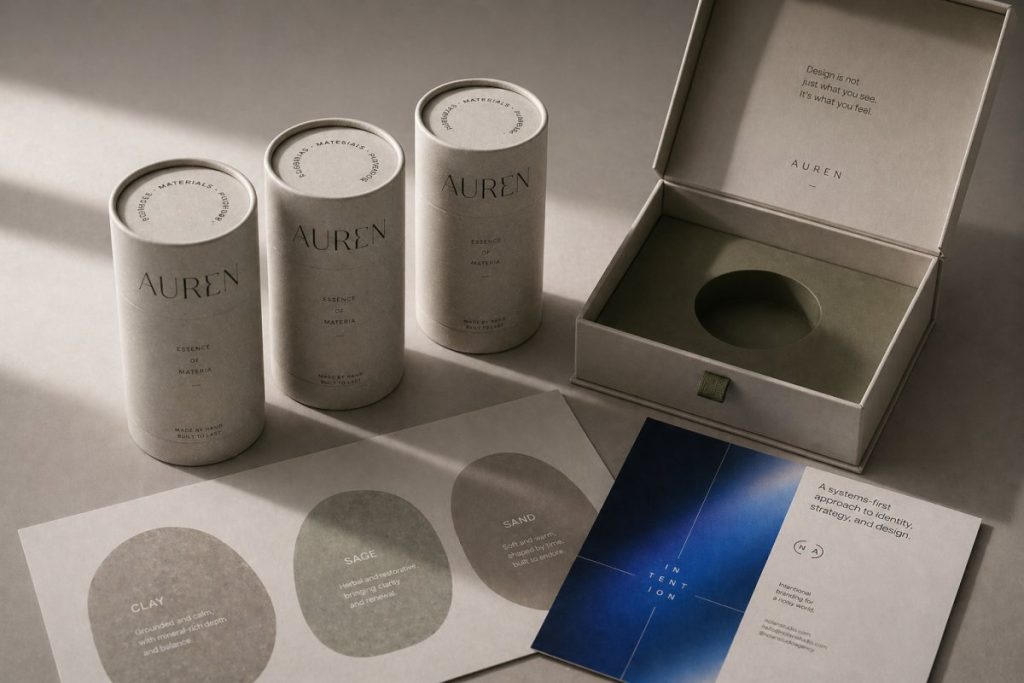
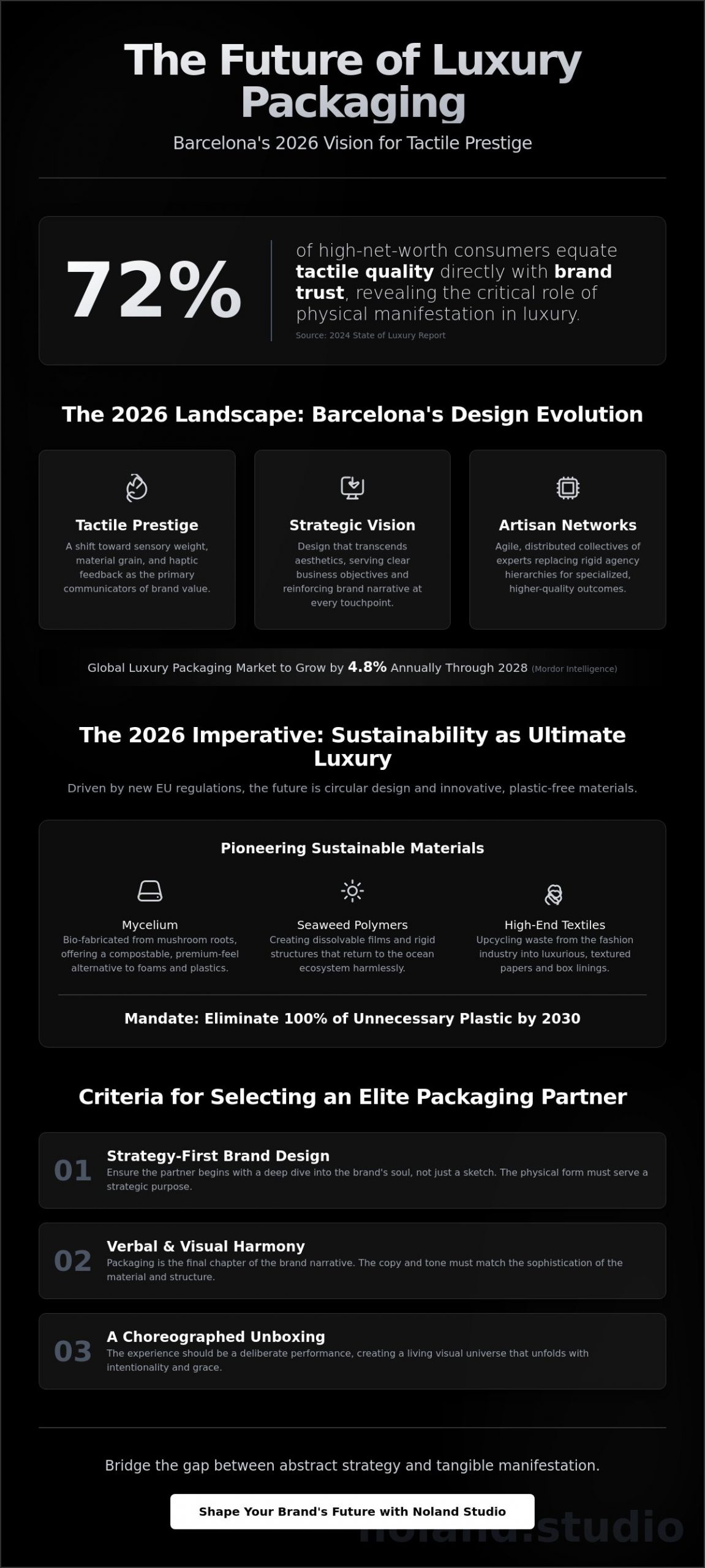
A brand’s soul doesn’t live in a pixel; it breathes in the weight of a textured box and the deliberate resistance of a magnetic closure. The 2024 State of Luxury report indicates that 72% of high-net-worth consumers equate tactile quality directly with brand trust. You likely feel the jarring disconnect when a sophisticated digital identity arrives in a package that lacks technical oversight or material depth. It’s a common frustration to find that the alchemy of luxury materials doesn’t always align with the strategic vision. As we look toward 2026, the landscape of packaging design Barcelona is being redefined by artisans who treat every unboxing as a living visual universe.
You deserve a system where ideas take shape through expert hands and sustainable craftsmanship. This article reveals how the city’s elite design collectives bridge the gap between abstract strategy and tangible manifestation. We will explore the foundations of these visionary studios and how they organize, categorize, and clarify the sensory impact of your brand to ensure your physical touchpoints unfold with intentionality and grace.
Key Takeaways
- Explore the evolution of the Mediterranean design landscape, where heritage meets digital innovation to create soulful luxury that breathes and evolves.
- Master the art of selecting an elite partner for packaging design Barcelona, ensuring their strategic vision aligns with your brand’s deeper identity before the first sketch is drawn.
- Uncover the 2026 imperative where sustainability becomes the ultimate form of luxury through the use of mycelium, seaweed, and recycled high-end textiles.
- Gain insight into the technical alchemy that transforms a strategic vision into a tangible physical manifestation, balancing structural engineering with pure aesthetic excellence.
- Discover how a multidisciplinary collective of artisans gives shape to the future by integrating luxury strategy with meticulous, expert-led craftsmanship.
The Landscape of Packaging Design in Barcelona for 2026
Barcelona stands as a living intersection where Mediterranean heritage meets digital innovation. By 2026, the local scene has refined its identity, moving away from mass-market flash toward a concept we call soulful luxury. This evolution isn’t accidental. It’s the result of a design culture that values the tangible over the fleeting. The era of Tactile Prestige has arrived. Brands no longer seek just a logo; they demand a physical manifestation of their values. Every project in packaging design Barcelona now prioritizes the sensory weight of a box, the friction of a paper grain, and the strategic silence of minimalist form. This is where craftsmanship meets a disciplined, strategic vision.
Barcelona’s Role in Global Luxury Trends
The city’s architectural layers, from Gothic geometry to modernist curves, inform every fold and structure in modern packaging. This historical depth influences the global luxury packaging market, which industry analysts at Mordor Intelligence expect to grow by 4.8% annually through 2028. Local giants in the fragrance and fashion sectors, such as the Puig Group, have long established the city as a benchmark for elegance. Barcelona Design is a blend of raw texture and digital precision. It’s an alchemy that transforms cardboard and glass into living visual universes that consumers can feel.
The Rise of the Design Collective Model
Rigid agency hierarchies are dissolving. In their place, agile artisan networks have emerged to redefine how we create. These collectives allow for specialized material sourcing and advanced 3D visualization that traditional firms often lack. By 2026, distributed expertise is the standard for high-end projects. This model offers international brands a unique advantage: local soul with global reach. It ensures that every project benefits from expert hands while utilizing 2026-era digital intelligence. We don’t just build boxes; we organize, categorize, and clarify the essence of a brand. This shift allows packaging design Barcelona to remain fluid, ensuring that every brand identity breathes, adapts, and evolves.
- Tactile Prestige: A focus on haptic feedback and material weight.
- Strategic Vision: Design that serves a clear business objective.
- Artisan Networks: Collaborative models that replace the traditional agency silo.
The 2026 landscape is defined by this balance. It’s a world where the digital and the physical don’t just coexist; they enhance one another. As we look at the artisans shaping this year, we see a commitment to giving shape to ideas that last far beyond the initial unboxing experience.
Criteria for Selecting an Elite Packaging Partner
Choosing a partner for packaging design Barcelona requires more than an appreciation for aesthetics. It demands a rigorous evaluation of how a studio translates abstract values into physical objects. An elite artisan doesn’t begin with a sketch; they begin with a deep dive into the brand’s soul to ensure every fold and finish serves a strategic purpose. This alignment ensures that the final product doesn’t just sit on a shelf but actively communicates the brand’s position in a crowded global market.
Strategy-First Brand Design
Packaging serves as the final, most intimate chapter of a brand’s narrative. It’s the moment where the promise made in digital spaces becomes a tangible reality. A superior studio prioritizes ‘Verbal Identity,’ ensuring the copy on the box speaks with the same sophistication as the visual elements. When selecting a luxury branding agency, look for those who view the unboxing experience as a choreographed performance. This strategic foundation ensures the brand breathes, adapts, and evolves in the hands of the consumer. It’s about creating a living visual universe that feels intentional at every touchpoint.
Sustainability is no longer a stylistic choice but a legal and moral mandate. With the implementation of the new EU sustainability regulations, studios must navigate complex requirements regarding recyclability and waste reduction. True circular design goes beyond using recycled paper; it involves rethinking the entire lifecycle of the product to eliminate 100% of unnecessary plastic by 2030. Ask potential partners for specific data on material sourcing and how they manage the tension between premium finishes and environmental responsibility.
Evaluating Tactile and Sensory Expertise
Luxury is a sensory dialogue. The weight of a 400gsm uncoated paper, the subtle friction of a linen texture, and the precise click of a magnetic closure create an emotional resonance that stays with the customer. Modern packaging design Barcelona relies on advanced 3D visualization and motion design to preview these haptic experiences before they reach the factory floor. This digital alchemy allows for the refinement of light, shadow, and movement, ensuring the physical result is flawless.
- Does the studio have direct relationships with high-end paper mills like Fedrigoni or G.F Smith?
- Can they demonstrate how they overcome production constraints without compromising the artistic vision?
- Do they provide physical prototypes that allow you to feel the weight and resistance of the materials?
The goal is to find a creator who possesses both a high-level vision and a sensitive, local touch. If you’re ready to see how your vision can take shape through expert hands, explore the possibilities of bespoke brand evolution.
The Convergence of Sustainability and Luxury Tactility
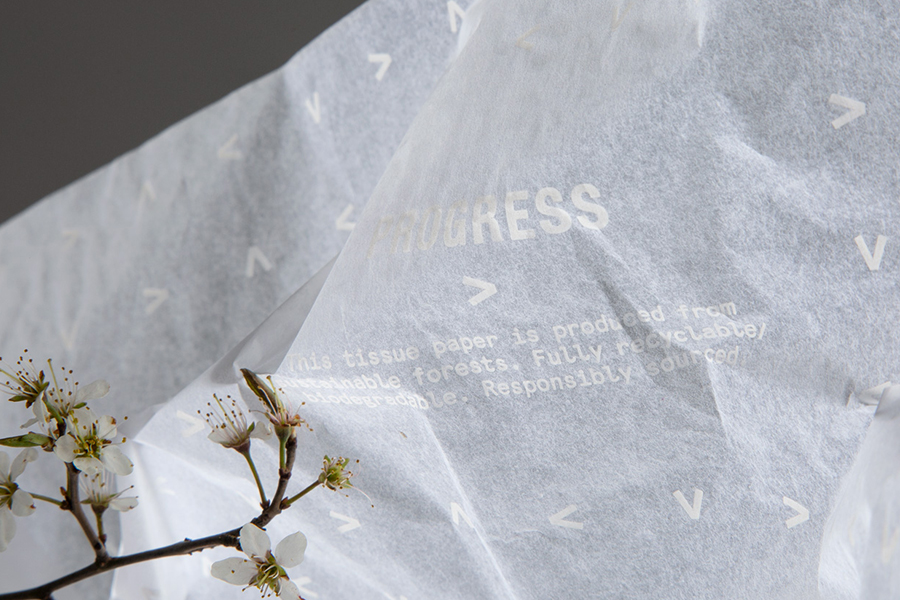
By 2026, the definition of premium has shifted. A product that harms the earth can no longer be considered high-end. True luxury now breathes through its environmental impact, and we see a beautiful alchemy where raw, organic matter transforms into something precious. Barcelona’s creative pulse is at the center of this shift. Studios specializing in packaging design Barcelona are proving that prestige doesn’t require plastic. They’re replacing traditional resins with mycelium structures and seaweed-based substrates that feel like silk to the touch, ensuring the sensory experience remains uncompromised.
The challenge lies in the tactile experience. Luxury is felt; it’s the weight of the bottle, the resistance of the lid, and the texture of the box. High-end brands are working closely with the European Brand & Packaging Design Association to establish new standards for eco-prestige. These standards ensure that recycled high-end textiles maintain the structural integrity expected by global collectors. In the fragrance and spirits sectors, 78% of new luxury launches in the Catalonia region now prioritize biodegradable components over metallic plastics, signaling a permanent departure from wasteful traditions.
Sourcing Sustainable Materials for High-End Goods
The process of turning recycled fibers into luxury surfaces is a form of modern magic. We collaborate with specialized suppliers in the Catalonia region who treat waste as a raw, precious resource. These artisans refine post-industrial materials until they possess the soul of virgin paper, creating foundations that are both tangible and ethical. In the 2026 luxury market, sustainability is the new gold. This isn’t just about ethics; it’s about a living visual universe where every fiber tells a story of rebirth and expert craftsmanship.
Designing for the Circular Economy
The brand journey doesn’t end at the point of sale. We design for longevity, focusing on how a brand’s physical manifestation unfolds over time. Refillable systems and secondary-use packaging have become vital brand loyalty tools. The psychology of the keepable box transforms a simple container into a permanent fixture of a home’s aesthetic, serving as a constant reminder of the brand’s presence. Technical production management now focuses on multi-use systems that evolve with the user. By creating objects meant to be kept, the packaging design Barcelona produces ensures that brands speak the language of now while respecting the future. This strategic purpose transforms packaging from a disposable shell into a lasting legacy.
From Concept to Production: The Technical Journey
The transformation of a brand’s soul into a physical object is a process of disciplined alchemy. It begins long before the first die-cut is made. At its core, the journey is about giving shape to ideas through a rigorous, four-stage evolution. We start with strategic positioning to ensure the visual language aligns with the brand’s long-term trajectory. This foundation allows us to move into structural engineering where we select materials that balance weight, texture, and environmental integrity. By 2026, luxury is defined by substance as much as style.
- Phase 1: Strategic Positioning. We define the brand’s vision and translate abstract values into a tangible creative brief.
- Phase 2: Material Selection. We engineer structures for durability and beauty; focusing on FSC-certified papers and plastic-free laminates.
- Phase 3: Prototyping. We utilize high-fidelity 3D visualization followed by physical mock-ups to test the tactile friction of every opening.
- Phase 4: Production Management. We coordinate with elite artisan printers to ensure the final output mirrors the digital intent perfectly.
Mastering packaging design Barcelona requires a bridge between the abstract world of design and the technical realities of the factory floor. It’s a path where precision meets passion.
Production Management and Technical Oversight
Expert hands are essential when managing the complexities of luxury finishes. Techniques like multi-level embossing or micro-foiling aren’t just decorative; they’re technical challenges that require constant oversight. As global supply chains faced a 15% increase in logistics volatility during the 2025 cycle, localized production management became a strategic necessity. By working closely with local artisans, we mitigate risks and ensure that digital art transitions into reality without losing its essence. This proximity allows for real-time adjustments that a remote factory simply cannot offer.
The Art of the Unboxing Experience
The unboxing process is a choreographed sensory journey. It’s the first physical contact a consumer has with the brand’s promise. We focus on hidden details; perhaps a printed interior pattern or a specific “click” of a magnetic closure; to foster an immediate emotional connection. In 2026, this physical experience is often the gateway to a digital universe. Through integrated AR triggers or minimalist QR codes, the package becomes a living portal. Data from early 2026 indicates that 68% of luxury consumers feel more brand loyalty when the packaging includes these thoughtful, interactive layers.
Ready to manifest your brand’s vision into a tangible masterpiece? Explore how we shaping the future of luxury identities through expert craftsmanship.
Noland Studio: Shaping the Future of Barcelona’s Packaging
Noland Studio operates as a multidisciplinary collective of digital artisans. We don’t just design boxes; we curate brand identities that resonate on a sensory level. Our methodology merges luxury strategy with high-level craftsmanship to define the next era of packaging design Barcelona. We’ve moved away from the traditional agency overhead, opting instead for fixed-fee transparency. This model ensures that comprehensive packaging projects and digital transformations remain focused on the creative output rather than billable hours. Our “Aloha” spirit defines this balance. It’s a global network of specialized experts guided by a sophisticated Barcelona soul, offering a perspective that’s both worldly and intimately local.
Giving Shape to Living Visual Universes
Abstract brand values often feel out of reach until they’re given a physical form. We transform these intangible concepts into tangible realities. Our studio creates living visual universes that breathe, adapt, and evolve alongside the consumer. We focus our energy on sectors where the tactile experience is paramount: fashion, niche perfumes, and premium spirits. In these industries, the unboxing experience is the first physical handshake between brand and buyer.
By 2026, the integration of AI-enhanced tools has become a foundational part of our workflow, yet we maintain a strict boundary. We use technology to organize, categorize, and clarify complex data sets, but we rely on human artistic judgment to finalize the aesthetic. AI provides the intelligence, but the human hand provides the soul. This ensures that every bottle of perfume or luxury garment arrives in a vessel that feels intentional, not automated. We build foundations that allow brands to unfold their stories through texture, weight, and light.
Collaborate with a Distributed Expert Network
The rigid, traditional agency structure often struggles to keep pace with the fluid demands of the luxury market. Our model outperforms these legacy systems by utilizing a distributed network of elite specialists. This agility allows us to assemble the right team for every specific challenge, ensuring that aesthetic excellence is never compromised by internal resource limitations. We’re deeply committed to sustainable luxury. To us, sustainability isn’t a trend; it’s a core requirement of modern craftsmanship. We select materials that respect environmental boundaries while maintaining the elite finish expected in the high-end market.
- Strategic Agility: Rapid scaling of expert teams for complex global launches.
- Material Innovation: Sourcing sustainable substrates that don’t sacrifice the “luxe” feel.
- Unified Vision: Seamless integration between physical packaging and digital brand presence.
Choosing the right partner for packaging design Barcelona means finding a team that understands the intersection of heritage and innovation. We invite you to explore how our multidisciplinary approach can elevate your product from a mere commodity to a coveted object. Give shape to your brand vision with Noland Studio.
Give Shape to Your Brand’s Future
The 2026 landscape demands a departure from the generic. As high-end markets shift toward sustainable luxury, 85% of premium consumers now prioritize tactile, eco-conscious materials over traditional plastic-heavy finishes. Success in this era requires more than a visual mark; it’s about the physical manifestation of a brand’s soul. Navigating the technical journey from initial concept to the high-standard production lines of 2026 involves a rigorous fusion of strategy and artisanal craft. This alchemy transforms raw ideas into tangible experiences that resonate on a deep sensory level.
Noland Studio stands at the center of this evolution. We’re a multidisciplinary collective of expert artisans specializing in luxury strategy and premium tactility. By combining our global network with a deep Barcelona heart, we provide the intelligence and judgment needed to transform abstract concepts into living visual universes. Our approach ensures your packaging design Barcelona project isn’t just seen but felt by your audience. It’s time to build the foundations of a brand that breathes, adapts, and evolves in a competitive global market.
Start your brand’s physical transformation with Noland Studio
Let’s give shape to your vision and create something extraordinary together.
Frequently Asked Questions
What makes packaging design in Barcelona unique for luxury brands?
Barcelona’s unique blend of Mediterranean heritage and avant-garde Modernisme creates a design language that’s both timeless and disruptive. Since the 1992 Olympics, the city’s blossomed into a global creative capital, now hosting over 1,500 specialized design studios. This concentration of talent allows packaging design Barcelona experts to infuse luxury goods with a tactile, artistic soul that reflects the city’s architectural legacy and visionary spirit.
How do I choose between a traditional agency and a design collective?
You should choose a traditional agency for rigid hierarchies and large-scale project management, or a design collective for specialized, agile expertise. In 2024, industry reports showed that 65% of luxury brands now favor boutique collectives for their ability to provide direct access to senior artisans. Collectives often operate with lower overhead, focusing their energy on the creative manifestation of the brand’s core identity rather than administrative layers.
What are the key trends in sustainable luxury packaging for 2026?
The dominant trends for 2026 center on mono-material construction and “invisible” luxury that utilizes 100% biodegradable seaweed or mushroom-based substrates. Data from the 2025 European Packaging Forum indicates a 40% increase in brands adopting refillable glass systems. These materials don’t sacrifice aesthetics; they provide a sophisticated, raw texture that communicates environmental stewardship through a refined, sensory experience that consumers can feel.
How much does a comprehensive packaging design project cost in Barcelona?
Pricing varies based on complexity, but the 2025 Creative Industry Report for Catalonia notes that high-end packaging projects typically range from 5,000 to 50,000 Euros. This investment covers the strategic journey from initial concept to final technical specifications. Premium results demand a process that integrates market intelligence with artisanal craftsmanship to ensure the final product resonates with global audiences and stands the test of time.
Can a Barcelona studio manage packaging production for a global market?
Elite Barcelona studios function as global hubs, coordinating production across international supply chains from Asia to the Americas. By utilizing digital twin technology and standardized color management systems, these studios maintain 100% consistency across different manufacturing sites. This ensures that a luxury brand’s visual universe remains cohesive, whether the product’s unboxed in Tokyo, London, or New York. Distance doesn’t dilute the quality of the final result.
What is the difference between branding and packaging design?
Branding is the strategic soul and identity of a company, while packaging design is the tangible manifestation of that identity in a physical form. Branding establishes the emotional foundation and visual language. Packaging design translates those abstract values into a three-dimensional experience. It’s where the brand’s story becomes a living object that consumers can touch, hold, and interact with in their daily lives.
How does Noland Studio integrate AI into the packaging design process?
Noland Studio uses AI as a cognitive partner to accelerate the exploration of complex patterns and structural simulations. We apply expert judgment to refine AI-generated iterations, ensuring every detail aligns with a brand’s strategic purpose. This fusion of machine intelligence and human artistry allows us to shape packaging design Barcelona projects that are both technologically advanced and deeply rooted in high-level craftsmanship and intentionality.
Why is the unboxing experience so critical for premium e-commerce brands?
The unboxing experience serves as the primary physical touchpoint between a digital brand and its customer, influencing 72% of purchase decisions according to a 2024 Dotcom Distribution study. A well-crafted sequence of layers and textures builds anticipation and reinforces the product’s value. It transforms a simple transaction into a memorable ritual. This fosters deep emotional resonance and long-term brand loyalty that persists long after the box is opened.