The most exquisite digital rendering remains a ghost until it survives the alchemy of the factory floor. According to a 2023 industry analysis by Smithers, the luxury packaging market is expanding toward a $19 billion valuation by 2028, yet brands frequently lose up to 15% of their projected margins during the prototyping phase alone. This is where packaging production management becomes your most critical strategic asset. It’s the disciplined process where high-concept vision meets the rigid demands of physics, ensuring your brand identity breathes, adapts, and takes shape without losing its soul.
You’ve likely felt the frustration of a physical sample that failed to capture the tactile weight of your digital vision. We understand that in the world of prestige, a single millimeter of misalignment isn’t just a mistake; it’s a dilution of your brand authority. This guide will teach you to master the sophisticated coordination required to transform ambitious concepts into flawless, sustainable realities. We’ll explore how to bridge communication gaps with high-end manufacturers, stabilize your production timelines, and maintain the uncompromising quality control that defines true luxury.
Key Takeaways
- View production as the strategic bridge that ensures your brand identity survives the transition from digital vision to a tangible, high-prestige reality.
- Implement a five-step framework for packaging production management that emphasizes rhythmic refinement to protect the integrity of your living visual universe.
- Balance the alchemy of traditional craftsmanship with advanced design tools to master complex material sourcing and reduce unforeseen prototyping costs.
- Evolve your approach to sustainability by treating it as a catalyst for innovation rather than a limitation, embracing packaging that supports a circular luxury model.
- Leverage a distributed network of global artisans to achieve uncompromising quality control and sensory impact across every physical touchpoint.
The Critical Role of Packaging Production Management in High-End Branding
Packaging production management is the strategic bridge between the ethereal world of digital design and the physical manifestation of a brand’s promise. It’s far more than a logistical checklist; it’s the crucible where luxury is forged. While mass-market competitors often view packaging as a mere entry in a Bill of Materials, prestige brands understand that the container is the first physical handshake with the consumer. Treating production as a secondary, purely technical task is a gamble that high-end houses can’t afford to take. True excellence emerges from a triad of modern production: aesthetic brilliance, technical feasibility, and sustainable ethics. Packaging production management serves as the ultimate guardian of brand integrity throughout the manufacturing journey, ensuring that no nuance of the original vision is lost to the machine.
Beyond the Box: Why Production Defines Prestige
The psychology of luxury is rooted in the senses. A 2021 study by the Paper and Packaging Board revealed that 72% of consumers allow packaging design to influence their purchasing decisions; for the luxury sector, this influence is even more profound. Tactility communicates what words cannot. The specific weight of a rigid box, the resistance of a magnetic closure, and the micro-texture of embossed paper all signal value. Without disciplined management, these details dissolve during the scaling phase. Brand erosion occurs when a 3D mockup’s elegance is replaced by a physical sample that feels hollow or imprecise. We replace mass-market logistics with artisanal coordination, ensuring that every fold and finish feels intentional and exclusive.
The Multidisciplinary Advantage
Success in the physical world requires an early marriage of creative intent and technical reality. Integrating Brand Strategy & Positioning into the production phase prevents the costly late-stage revisions that plague 25% of luxury launches. The production manager acts as a vital translator, someone who speaks the language of both the visionary designer and the technical manufacturer. This collaboration ensures that the living visual universe remains intact as it moves from the screen to the shelf. By identifying material constraints and structural opportunities during the initial design stages, we create a path for innovation that respects the brand’s heritage while embracing the requirements of modern manufacturing.
- Aesthetic Preservation: Protecting the soul of the design through every iteration.
- Technical Fluency: Mastering the limitations of specialized substrates and finishes.
- Ethical Sourcing: Aligning luxury prestige with the growing demand for sustainable transparency.
The transition from idea to object is a journey of refinement. It’s a process where intelligence and judgment guide the hand of technology. When you prioritize the management of this transition, you aren’t just making a box; you’re shaping a tangible legacy that consumers can feel, hold, and remember.
From Concept to Tangible Reality: The Technical Production Lifecycle
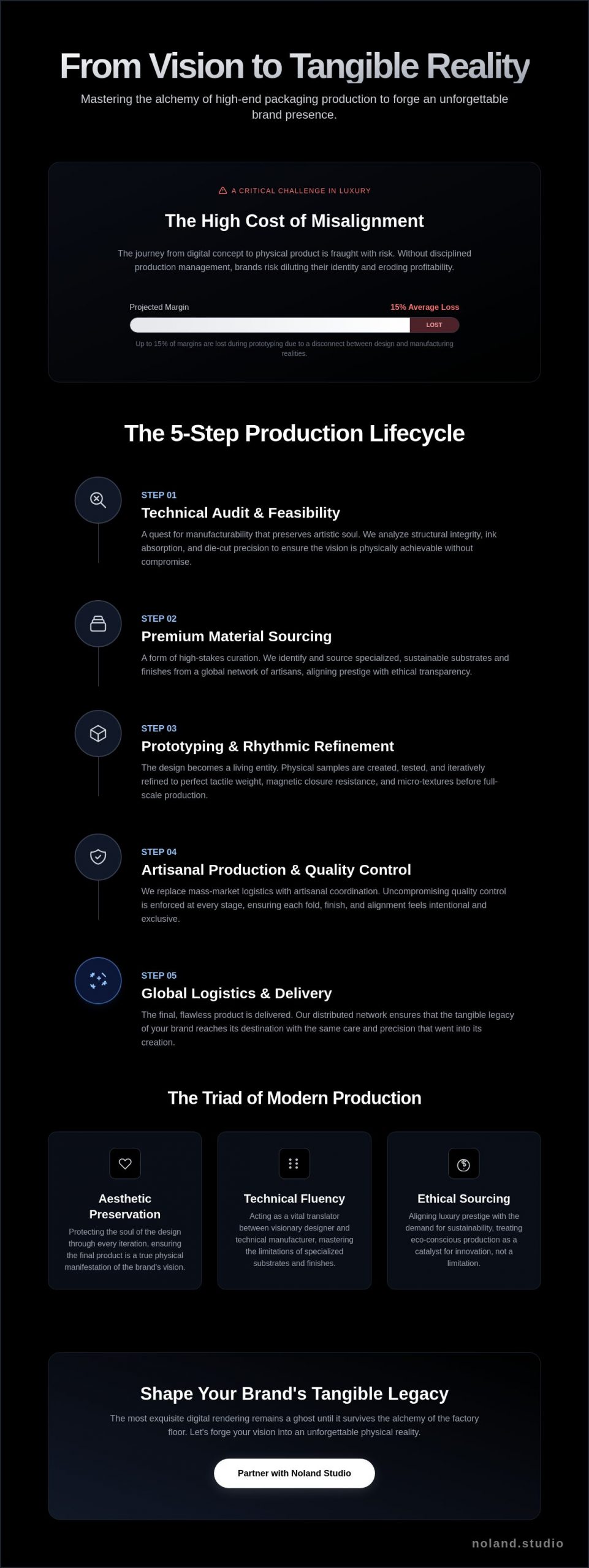
Giving shape to ideas requires more than a software algorithm. It demands a deliberate, five-step technical production lifecycle that prioritizes refinement over the frantic pace of mass-market output. Within this framework, packaging production management acts as the connective tissue between a living visual universe and its physical form. While automated manufacturing software can calculate dimensions, it lacks the expert judgment required to evaluate the soul of a texture or the emotional resonance of a specific color shift. We treat every design as an evolving entity that only reaches its final state through disciplined, expert-led intervention and an uncompromising eye for detail.
Step 1 & 2: Technical Auditing and Material Sourcing
The journey begins with a technical audit. This isn’t a search for limitations, but a quest for manufacturability that preserves the artistic soul of the design. We analyze structural integrity, ink absorption rates on specialized substrates, and the precision of intricate die-cuts. Sourcing then becomes a form of high-stakes curation. According to a 2022 McKinsey report, 67% of luxury consumers now consider sustainable materials a core purchasing factor. Finding the rare balance between this eco-conscious demand and high-performance technical requirements is where the alchemy happens. Material choice is the first verbal signature of a brand’s character, speaking to its values before a single word of copy is read.
Step 3 to 5: Prototyping, Press Checks, and Final Execution
Prototyping is the stage where we test the unboxing experience with the same rigor applied to a digital UI. We evaluate the torque required to lift a lid, the resistance of the paper grain, and the specific sound of a magnetic closure. These sensory markers are non-negotiable foundations of prestige. Following this, on-site press checks are essential to ensure color fidelity and tactile consistency across the entire production run. This hands-on approach allows us to manage the final rollout across global markets while maintaining a sensitive, local touch in quality control. If your brand is ready to begin shaping its physical legacy, this lifecycle provides the necessary discipline to ensure excellence.
This lifecycle is an unfoldment. It’s a series of intentional steps designed to ensure that the final product isn’t just a container, but a living extension of the brand’s identity. By focusing on the strategic “how” of production, we ensure that the transition from abstract concept to tangible object is seamless, predictable, and deeply impactful for the end consumer.
Navigating the Complexity of Premium Material Sourcing and Prototyping
A common misconception suggests that high-end production is inevitably a drain on time and capital. In reality, precision in the sourcing phase prevents the 20% waste typically seen in unmanaged luxury supply chains, according to 2023 data from the Sustainable Packaging Coalition. Packaging production management transforms these potential bottlenecks into a disciplined sequence of creative wins. We view the combination of traditional craftsmanship and modern AI-enhanced tools as a form of alchemy. While AI can optimize the structural integrity of a die-line in seconds, it lacks the human intelligence to judge if a specific foil stamping will catch the light with the right emotional weight. By leveraging a distributed network of global artisans rather than a single local supplier, we gain access to rare substrates and specialized finishes that a standard factory cannot replicate.
The Sensory Architecture of Luxury
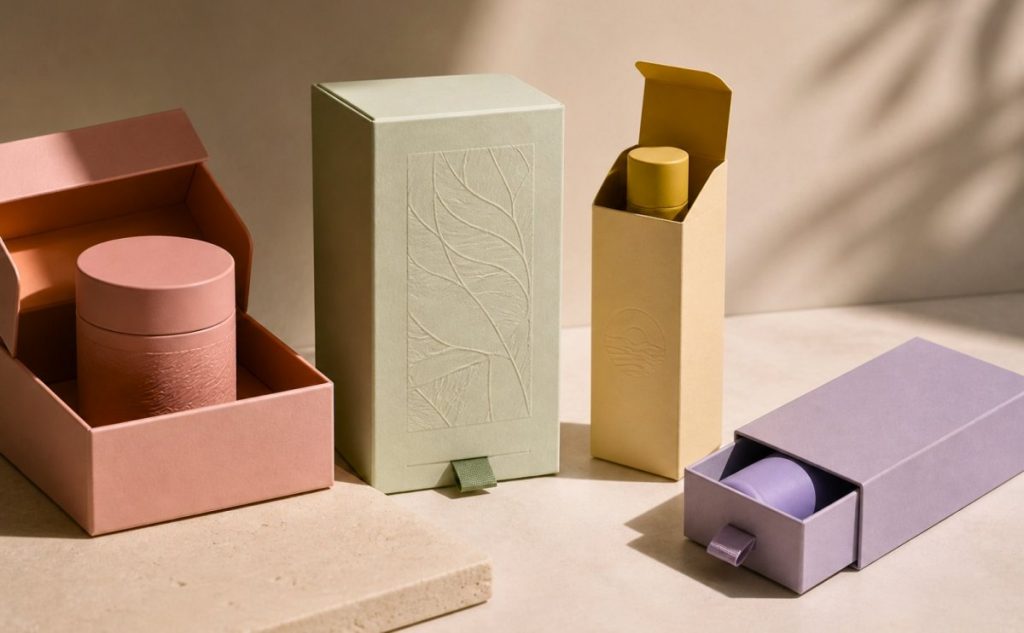
The weight of a bespoke paper stock or the resonant click of a magnetic closure isn’t accidental; these are the foundations of sensory architecture. Every tactile choice must speak the Naming & Verbal Identity of the brand. If a brand’s voice is minimalist and quiet, the physical execution must reflect this through expansive white space and subtle debossing rather than loud, glossy finishes. We treat the opening mechanics as a choreographed performance. The resistance of the lid and the texture of the internal fitment create an emotional resonance that justifies a premium price point and builds lasting brand soul.
Prototyping as a Strategic Tool
Prototyping is your most powerful strategic tool for risk mitigation. We utilize 3D visualization and motion design to pre-visualize production hurdles long before the manufacturing phase begins. This early intelligence allows us to identify structural weaknesses or material incompatibilities that would otherwise cause unforeseen costs. There’s a profound difference between a mass-market sample and a Final Evaluation Prototype (FEP). While a standard sample checks for basic dimensions, an FEP is a living proof of concept used to secure stakeholder buy-in for unconventional designs. It serves as the tangible evidence that an ambitious vision is not only beautiful but technically viable and ready for global rollout.
- Foil Stamping: Adding a layer of metallic prestige that catches the eye and suggests exclusivity.
- Bespoke Paper Stocks: Sourcing FSC-certified, high-grammage papers that provide a signature tactile weight.
- Minimalist Execution: Using precision engineering to make complex structures appear effortless and clean.
Mastering this complexity requires a bridge between the abstract and the physical. When you manage the sourcing and prototyping phases with expert judgment, you ensure the brand’s visual universe unfolds exactly as intended, without compromise or dilution.
Sustainability as a Standard: Managing Eco-Conscious Production for Luxury
Sustainability is no longer a peripheral consideration or a technical hurdle to be cleared. Within the framework of packaging production management, it acts as a powerful catalyst for innovation, pushing the boundaries of what’s possible in luxury design. We embrace a “circular luxury” model where packaging isn’t just discarded; it breathes, adapts, and evolves alongside the product it protects. This shift requires a disciplined approach to vetting manufacturing partners, ensuring they meet rigorous ethical labor and environmental standards before a single prototype is created. According to a 2023 report by Bain & Company, 80% of luxury consumers now prefer brands that demonstrate social and environmental responsibility, making eco-conscious execution a non-negotiable pillar of brand strategy.
The Myth of the “Sustainable Look”
A common fallacy suggests that eco-friendly packaging must look raw, brown, or unfinished. The reality of modern aesthetic excellence is far more sophisticated. We’re seeing an evolution where innovative materials like mushroom-based inserts, seaweed films, and upcycled textile fibers provide the same tactile prestige as traditional plastics or foams. Managing the cost-benefit analysis of these materials is a core function of the production process. While initial material costs can be higher, the long-term brand equity gained from a “soulful” supply chain outweighs the short-term expenditure. It’s about shaping a future where luxury doesn’t cost the earth.
Compliance and Global Standards
Navigating the labyrinth of international regulations is essential for global luxury houses. Whether it’s the strict labeling requirements for spirits or the safety standards for high-end cosmetics, the production manager ensures every certification is authentic and traceable. This transparency builds trust with the modern, conscious consumer who demands to know the origin of every substrate. By integrating these standards early, we prevent the 12% delay in time-to-market often caused by late-stage compliance failures. If you’re ready to align your brand with these values, explore how we can help you design for a sustainable future.
Checklist for Sustainable Prestige:
- Plastic-Free Structures: Replacing traditional foam inserts with molded pulp or mycelium.
- FSC-Certified Stocks: Ensuring all paper and wood components come from responsibly managed forests.
- Biodegradable Finishes: Utilizing soy-based inks and water-based coatings instead of heavy metal-based alternatives.
- Traceable Supply Chains: Verifying that every partner adheres to fair labor practices and carbon-reduction goals.
True luxury is a form of alchemy that balances the needs of the present with the legacy of the future. When sustainability is woven into the foundations of production, the resulting packaging speaks a language of intentionality and respect. It’s a living visual universe that respects its environment as much as its aesthetic roots.
The Noland Approach: Distributed Artisanship in Packaging Execution
Noland Studio acts as the expert hand that guides the complex machinery of physical manifestation. We don’t believe in the rigid, centralized models of the past. Traditional agencies often struggle with the agility required for global luxury transformations, frequently resulting in a 25% increase in project friction during the hand-off to manufacturers. Instead, we employ a distributed network of digital and physical artisans. This structure allows us to maintain a high-level vision while applying a sensitive, local touch to every project. Our packaging production management process is rooted in a fixed-fee model, providing the clarity and discipline needed to navigate an often chaotic manufacturing landscape without the fear of hidden costs or scope creep.
Global Vision, Local Craft
Our studio coordinates with high-end manufacturers in Barcelona, Valencia, and other global centers of excellence to ensure your brand’s visual universe unfolds with precision. This Mediterranean connection provides access to centuries of artisanal heritage combined with modern technical fluency. Our multicultural experts understand regional production nuances, from the specific humidity requirements of premium paper stocks to the local labor laws that impact production timelines. We integrate art direction with technical oversight, ensuring that the brand journey remains unified from the first strategy session to the final pallet delivery. This holistic approach ensures that the “soul” of the design is never lost in translation between different time zones or languages.
Shaping the Future of Your Brand
Noland’s multidisciplinary collective outperforms traditional, siloed agencies by breaking down the barriers between strategy, design, and execution. We utilize AI-enhanced tools to accelerate the prototyping phase, yet these technologies remain firmly in the hands of expert artisans. According to a 2022 study by the Design Management Institute, integrated teams that bridge the gap between creative and technical roles see a 35% reduction in time-to-market for complex products. This intelligence allows us to move from abstract ideas to tangible realities with a speed that doesn’t compromise on sensory impact or prestige.
- Strategic Oversight: Every production decision is filtered through the lens of your brand’s long-term positioning.
- Tactile Precision: We manage the minute details of weight, texture, and finish to ensure a premium unboxing experience.
- Financial Discipline: Our transparent model ensures that your production budget is respected and optimized for maximum impact.
Your brand deserves a partner that speaks the language of both high-level vision and technical reality. We invite you to move beyond the screen and embrace the physical world with confidence and intentionality. It is time to Partner with Noland Studio to transform your vision into a tactile masterpiece that breathes, adapts, and speaks the language of now. Aloha.
Manifesting Your Tangible Brand Legacy
The bridge between a digital concept and a physical masterpiece is built on the discipline of packaging production management. We’ve navigated the technical lifecycle that ensures your brand’s soul remains intact as it moves from the screen to the shelf. You’ve seen that integrating sustainability and sensory architecture is essential to meeting the demands of the 80% of luxury consumers who now prioritize ethical prestige. True excellence requires an expert hand to guide the alchemy of material sourcing and prototype refinement.
Noland Studio offers a multidisciplinary collective of global artisans who understand that prestige is felt in the weight of a substrate and the silent click of a closure. We provide fixed-fee transparency for complex production runs, ensuring your vision unfolds without financial friction. Our expertise in sustainable luxury material sourcing allows your brand to lead with intentionality and grace. Give shape to your luxury vision with Noland Studio. It’s time to transform your abstract ideas into a tangible reality that resonates across every sense. Your brand’s physical legacy is waiting to be shaped. Aloha.
Frequently Asked Questions
What exactly does a packaging production manager do for a luxury brand?
A packaging production manager acts as the strategic steward of a brand’s physical manifestation. They oversee the entire lifecycle from technical auditing to final execution, ensuring the soul of the design survives the manufacturing process. By managing a distributed network of artisans, they translate abstract creative concepts into tangible objects that maintain sensory prestige and structural integrity.
How does packaging production management differ from standard printing services?
Packaging production management is an end to end strategic discipline, whereas standard printing is a transactional service focused on ink on paper output. While a printer follows a provided file, a production manager curates the substrates, engineers the opening mechanics, and manages the structural integrity of the entire suite. They prioritize the long term brand identity over simple manufacturing speed.
Can sustainable packaging still feel premium and high end?
Sustainable packaging is the new standard for modern prestige, utilizing innovative materials that often exceed traditional plastic in tactile quality. Recent developments in mushroom based inserts and seaweed films prove that eco conscious choices offer superior sensory impact. According to a 2023 study by NielsenIQ, products with ESG claims grow 8% faster, showing that conscious consumers equate sustainability with true luxury.
How early should production management be involved in the design process?
Production management should be integrated during the first phase of brand strategy and positioning. Involving technical experts early prevents the 15% margin loss often seen when digital designs are found to be unmanufacturable during the final stages. This early alignment ensures that every creative flourish is grounded in physical possibility and predictable costs from the very beginning.
What are the most common mistakes in luxury packaging production?
The most frequent error is neglecting the prototyping phase, which leads to structural failures once mass production begins. Many brands also suffer from brand erosion when they fail to provide on site oversight at the factory level, resulting in misaligned foils or inconsistent colors. These gaps often stem from treating production as a technical afterthought rather than a strategic foundation.
How do you manage quality control when manufacturing in different global regions?
We manage global quality control through a distributed network of multicultural experts who conduct on site press checks in regions like Barcelona and Valencia. By utilizing standardized technical specifications and physical Final Evaluation Prototypes, we ensure that a box produced in Europe matches the exact tactile weight of one produced in Asia. This local touch ensures artisans are guided by expert hands regardless of geography.
What is the typical timeline for a custom luxury packaging production cycle?
A custom luxury production cycle typically spans 12 to 24 weeks depending on the complexity of material sourcing. This timeline includes 4 weeks for material auditing, 6 weeks for iterative prototyping, and 8 to 14 weeks for final manufacturing and global logistics. Rushing these steps often dilutes the sensory quality and precision that defines a high end brand experience.
How does Noland Studio handle the coordination between design and manufacturing?
Noland Studio bridges the gap between design and manufacturing by integrating art direction with technical oversight. Our multidisciplinary collective uses 3D visualization and motion design to pre visualize hurdles before they reach the factory floor. We act as the single point of contact, employing a fixed fee model to provide discipline and clarity throughout the entire unfoldment of your brand’s physical universe.