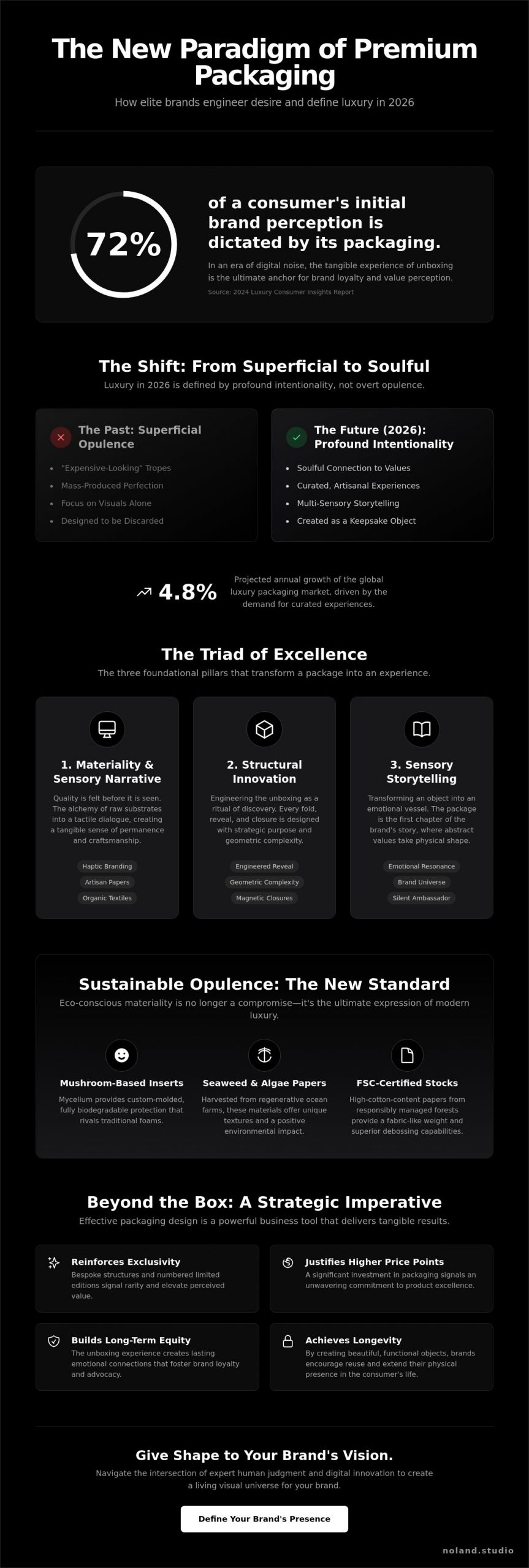
A package is no longer a mere container; it’s a living visual universe that dictates 72% of a consumer’s initial brand perception according to the 2024 Luxury Consumer Insights report. In an era where digital noise is constant, the tangible weight of premium packaging design serves as the ultimate anchor for brand loyalty. You’ve likely felt the frustration when a high-end product arrives in a generic box that lacks soul, or struggled to balance the demands of sustainability with the uncompromising expectations of luxury. It’s a delicate alchemy that many brands fail to master, resulting in missed emotional connections and diluted brand equity.
This article promises to bridge that gap by revealing how elite brands use structural innovation, sustainable materiality, and sensory storytelling to define the next era of luxury. We’ll provide a clear framework for your own creative journey, offering inspiration from 2026’s most forward-thinking examples. You’ll discover how to organize, categorize, and clarify your brand’s physical presence so it breathes, adapts, and evolves in a competitive market. Let’s explore the foundations of designs that don’t just sit on a shelf but actively shape the future of consumer desire. Aloha.
Key Takeaways
- Understand the evolution from superficial aesthetics to intentionality, where 2026 luxury is defined by a brand’s soulful connection to the conscious consumer.
- Explore the alchemy of materials where artisan craftsmanship and organic textiles create a tangible sense of exclusivity and sensory storytelling.
- Master the engineering of the unboxing reveal to create a high-impact premium packaging design that unfolds with geometric complexity and strategic purpose.
- Discover how sustainable materiality, from seaweed to mushroom-based inserts, has become the new global standard for uncompromising opulence.
- Learn how to navigate the intersection of expert human judgment and digital innovation to give shape to your brand’s unique vision and living visual universe.
The New Paradigm of Premium Packaging Design in 2026
Premium no longer equates to the loudest voice in the room. In 2026, the definition has shifted from superficial opulence to a profound sense of intentionality. As conscious consumerism matures, brands are moving away from “expensive-looking” tropes. They’re embracing a philosophy where every fold and finish possesses a soul. Today’s premium packaging design acts as the most tangible touchpoint within a brand’s living visual universe. It’s where abstract values take physical shape.
The modern era demands a triad of excellence: Materiality, Structure, and Storytelling. These three pillars ensure that a product doesn’t just sit on a shelf; it commands space. By 2026, the global market for luxury packaging is projected to grow by 4.8% annually, driven by a desire for objects that feel curated rather than manufactured. This evolution represents a move toward alchemy, where raw materials are transformed into vessels of emotional resonance.
The Psychology of the First Touch
Quality is felt before it’s seen. The subconscious processes weight, texture, and temperature long before the conscious mind identifies a logo. Heavier glass signals permanence. Cool-to-the-touch metal suggests precision. Haptic Branding is the strategic use of tactile sensations to forge a neurological connection between the consumer and the brand’s identity. It’s the difference between a transaction and an experience.
Designers now prioritize the emotional resonance of a brand that breathes, adapts, and evolves. When a box yields with a specific resistance or a magnet snaps with a crisp click, it builds trust. These sensory cues create a narrative of craftsmanship. They transform the simple act of unboxing into a ritual of discovery. In a digital-first world, these physical interactions provide the grounding foundations that digital interfaces lack.
Beyond the Box: Packaging as Brand Strategy
Physical touchpoints must align with high-level luxury branding agency goals to be effective. Packaging isn’t an afterthought; it’s a strategic tool that justifies higher price points and builds long-term equity. It functions as a silent ambassador. When a brand invests in premium packaging design, it signals a commitment to excellence that extends through the entire product lifecycle.
- Exclusivity is reinforced through numbered limited editions and bespoke structures.
- Intentionality is shown through sustainable materials that don’t sacrifice aesthetics.
- Longevity is achieved by creating objects that consumers want to keep, not discard.
Strategic design gives shape to ideas. It allows a brand to speak the language of now while maintaining a timeless appeal. By focusing on the intersection of intelligence and aesthetic judgment, brands create a sense of transformation. They don’t just sell a product; they unfold a story that begins the moment the package touches the hand. To see how this storytelling is applied to modern beverage brands, visit drinklodo.com.
Materiality and the Sensory Narrative: Examples of Tactile Excellence
True luxury begins where the visual ends. In 2026, premium packaging design transcends mere containment to become a tactile dialogue between brand and seeker. This is the alchemy of materials; a process where raw substrates transform into a living visual universe. We see a definitive return to artisan craftsmanship that rejects the sterile perfection of mass production. Instead, brands embrace the soul of handmade papers and organic textiles to create an experience that breathes, adapts, and evolves the moment it’s touched.
The New Language of Paper and Pulp
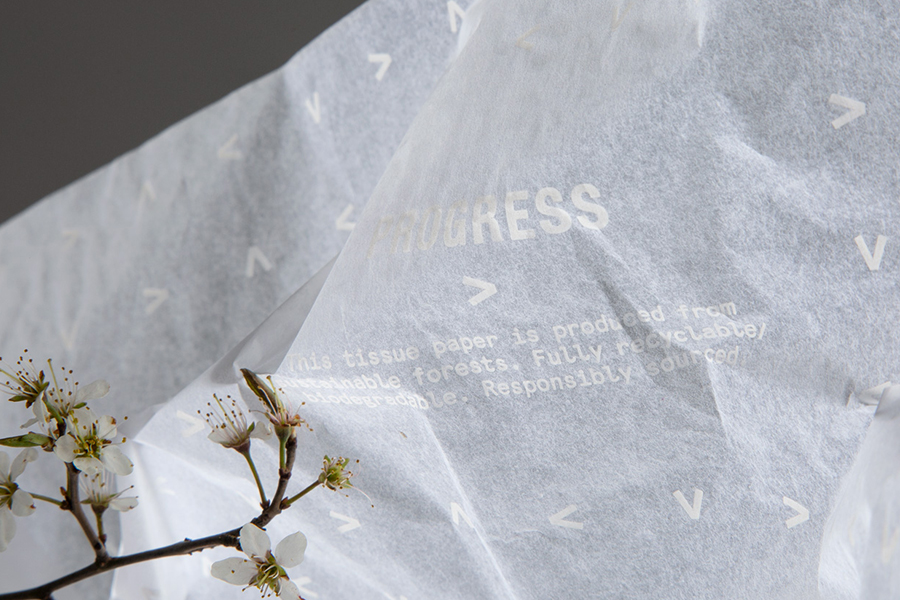
The foundation of this sensory narrative rests on high-cotton-content stocks that offer a fabric-like weight. These FSC-certified materials provide a tangible sense of permanence. By prioritizing Sustainable Packaging practices, designers ensure that luxury remains responsible and deeply rooted in strategic purpose. Techniques such as debossing and deep embossing create architectural depth without a single drop of ink, allowing light and shadow to define the brand’s silhouette. Micro-texturing adds a unique “fingerprint” to every unit, ensuring that no two boxes feel identical under the hand.
Surface tension plays a critical role in this unfolding story. Soft-touch finishes provide a velvet-like intimacy, while high-gloss architectural foils offer a sharp, structural contrast. In a 2025 launch, a leading high-end skincare brand utilized 300gsm cold-pressed textures on their primary cartons. This specific stock mimicked the raw, porous feel of natural stone, grounding the high-tech formula in a primal, earthy reality. At our studio, we believe that we give shape to ideas by selecting materials that speak a language of expert-led innovation.
Metallic Accents and Sophisticated Foiling
Gold is no longer the sole arbiter of prestige in the 2026 landscape. The palette has expanded to include oxidized copper, matte black, and iridescent holographic foils that shift with the observer’s movement. These elements aren’t merely decorative; they’re functional tools used to organize, categorize, and clarify information. They guide the eye toward key brand signatures through technical precision.
- Oxidized Copper: Evokes a sense of heritage and temporal depth.
- Matte Black Foil: Provides a subtle, “stealth” luxury that rewards close inspection.
- Iridescent Finishes: Captures a futuristic, digital-native aesthetic for tech-integrated luxury.
Hot-stamping on uneven, textured surfaces requires a level of intelligence and judgment that machines alone cannot provide. It’s a dance of heat and pressure guided by expert hands. This precision ensures that even the smallest serif on a logo remains crisp against a heavy grain. These metallic accents don’t just sit on the surface; they’re integrated into the material’s DNA, creating a multidimensional experience that’s meant to be felt as much as it’s seen.
Structural Innovation: Engineering the Unboxing Architecture
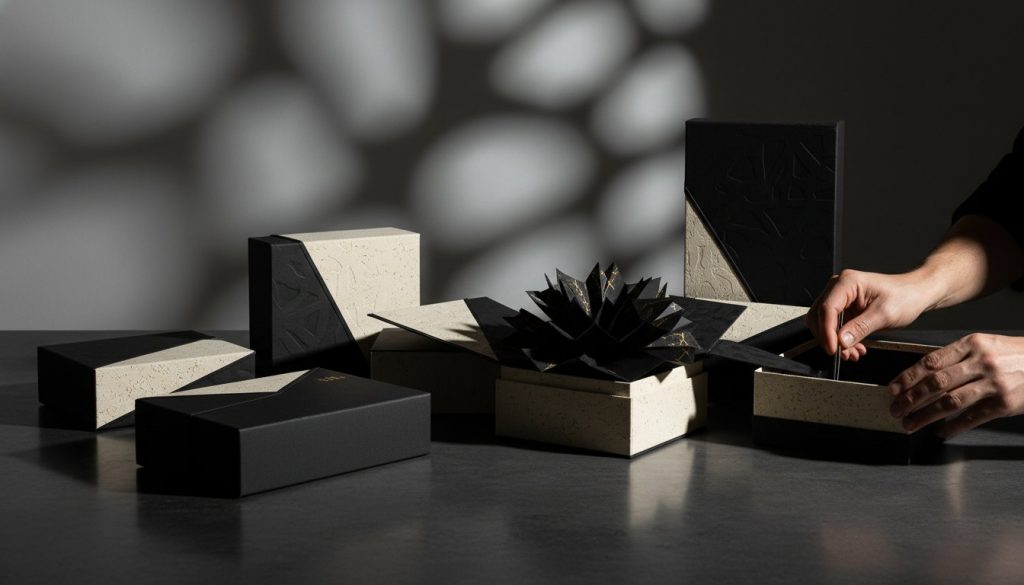
The reveal represents the most critical threshold in the consumer journey. It’s the precise moment where brand promise transforms into tangible reality. In the world of premium packaging design, this isn’t a mere opening of a box; it’s a choreographed performance of engineering and alchemy. By the year 2026, structural innovation has moved beyond simple protection to become a living extension of the product’s soul. We see this through geometric complexity where multi-tiered boxes and hidden compartments invite the user to explore, organize, and discover layers of meaning.
Luxury is often defined by the physics of the “slow slide.” Engineers now calculate the exact tolerances of air displacement between a telescoping lid and its base to create a vacuum effect. A descent that lasts between 1.5 and 2.0 seconds communicates a sense of weight and intentionality that a quick opening simply cannot match. To achieve this level of precision, designers utilize 3D visualization and digital twin technology. These tools allow us to perfect structural integrity and simulate friction before a single sheet of paper is cut. This ensures the architecture breathes and adapts to the weight of the contents, eliminating the risk of structural failure during the final unboxing.
The Ritual of the Reveal
The sensory experience begins with the tactile and the auditory. Magnetic closures offer a satisfying click of quality, providing an immediate signal that the contents are secure and precious. Ribbon pulls and nested layers build anticipation through a deliberate sequence, forcing the consumer to slow down and engage with the brand on a deeper level. The structural architecture of a box functions as the physical syntax of a brand, mirroring its verbal identity through the rhythm of its folds and the clarity of its openings. Every pull and every hinge acts as a punctuation mark in a larger narrative of craftsmanship.
Minimalist Architecture vs. Maximalist Detail
Choosing a structural direction requires a balance of strategic purpose and aesthetic excellence. Monolithic, clean structures project a modern luxury feel that favors restraint and quiet confidence. These designs rely on perfect 90 degree angles and seamless joins to convey a sense of technological mastery. Conversely, the charm of intricate, “cabinet of curiosities” style packaging appeals to the desire for storytelling and discovery. This approach, similar to the intricate unboxing of precision model kits from Narrow Minded Railworks, uses complex folding patterns and hidden drawers to create an immersive world. While these designs push the boundaries of creativity, they must remain grounded in the foundations of logistics. Modern luxury brands now utilize ISTA-6 durability standards during the design phase to ensure that even the most delicate, multi-layered structures arrive in the customer’s hands without a single crushed corner or compromised seal.
Sustainable Opulence: Examples of Eco-Conscious Premium Design
Luxury no longer demands environmental sacrifice. In 2026, the most coveted premium packaging design is defined by its ability to leave no trace while providing a sensory feast. We’re witnessing the death of the “sustainability compromise.” High-end brands are proving that compostable materials can feel as weighty and significant as hand-carved marble. It’s a shift from the disposable to the enduring. The alchemy of mycelium, or mushroom packaging, transforms agricultural waste into structural masterpieces. These inserts offer a velvet-like texture that outperforms traditional plastics, providing a cushioned, organic cradle for delicate products.
Seaweed-based films and inserts have become the new high-end standard for internal components. Companies like Notpla are leading this transition, offering materials that are naturally biodegradable within six weeks. This isn’t just a trend; it’s a response to a global shift in values. A 2023 First Insight report found that 73% of Gen Z consumers are willing to pay more for sustainable products. In the luxury sector, this translates to “circular luxury,” where the box is no longer trash. It’s a keepsake, a jewelry box, or a piece of decor meant to be repurposed and cherished.
Biomimicry and Natural Innovation
Designers are looking to nature’s blueprints to solve complex structural challenges. By mimicking the hexagonal strength of honeycombs or the protective layers of seed pods, brands give shape to ideas that are both resilient and beautiful. We’re seeing refillable systems designed as permanent vanity art. Luxury fragrance houses are moving toward glass bottles meant to last decades. These vessels serve as living visual universes, where the outer shell is a sculptural masterpiece and the inner vessel is a simple, recyclable refill. It’s design that breathes, adapts, and evolves.
The Ethics of Manufacturing
The soul of a brand now extends to its carbon footprint. In 2026, transparency is the ultimate luxury. Leading manufacturers are integrating AI to optimize die-cut patterns, reducing material waste by an average of 22% during production cycles. This intelligence ensures that every millimeter of paper or fabric is used with purpose. Brands now utilize blockchain-enabled storytelling to share the journey of their materials, from forest to finish. This level of detail builds a bridge between the abstract world of ideas and the tangible reality of the product.
Build a brand identity that speaks the language of the future through conscious craftsmanship. Shape your sustainable vision with Noland Studio.
The Artisan Collective: Executing Your Packaging Strategy
Noland Studio operates as a distributed network of digital artisans. This structure allows us to assemble specialized talent from across the globe, ensuring that every project benefits from a diverse range of technical expertise. We don’t function like a traditional, rigid agency. Instead, we act as a fluid collective that prioritizes high-level craftsmanship and strategic purpose. Our focus remains on the intersection of human judgment and AI-enhanced design tools. While technology provides the speed to iterate, it’s the expert hand that provides the soul. We use intelligence to organize, categorize, and clarify, ensuring that every design choice is intentional rather than automated.
The transition from conceptualization to technical production management is where an idea becomes a physical reality. We specialize in transforming abstract concepts into tangible, multidimensional products. This process involves a meticulous attention to detail, from selecting the right substrates to managing the complexities of the printing press. Our goal is to ensure that the final premium packaging design feels as sophisticated in the hand as it looked on the screen. We bridge the gap between a brand’s internal identity and its external manifestation.
Shaping the Future of Your Brand
We believe in transparency and focus. Our fixed-fee approach to end-to-end packaging and branding eliminates the uncertainty of hourly billing, allowing us to dedicate our full energy to the creative evolution of your brand. This model fosters a partnership built on trust and shared vision. We bring a global perspective to every project, yet we maintain a sensitive, local touch that respects cultural nuances. By curating every detail, we ensure your brand speaks the language of now while building a foundation for the future. It’s about creating a living visual universe that breathes, adapts, and evolves with your audience.
Start Your Transformation
The Noland process is a disciplined journey through three distinct phases: discovery, strategy, and the unfolding of the visual universe. We start by digging into the core of your brand’s soul. Once the foundation is set, we move into the strategic shaping of your identity. This isn’t just about aesthetics; it’s about creating a sensory impact that lasts. Over the last decade, we’ve refined this methodology to ensure that every brand we touch finds its unique voice and physical form.
Connecting with our collective is the first step toward a total brand evolution. We say “aloha” to our global partners because it represents the warmth and openness we bring to every professional relationship. We’re ready to help you navigate the complexities of modern luxury and innovation. Give shape to your ideas with Noland Studio and begin the process of making your brand’s vision a reality.
Shaping the Future of Sensory Luxury
The 2026 horizon demands more than a simple box; it requires a living visual universe that unfolds through tactile excellence and structural intelligence. We’ve explored how the intersection of sustainable opulence and unboxing architecture creates a sensory narrative that resonates with the modern collector. Success in this new paradigm relies on the alchemy of expert judgment and technical precision. Your brand’s physical manifestation must be intentional, rooted in a strategy that respects both the environment and the heritage of craftsmanship. This is where premium packaging design becomes a tangible extension of your brand’s soul.
Noland Studio operates as a multidisciplinary collective of global digital artisans. We specialize in luxury strategy and the application of premium sustainable materials, ensuring every detail is curated with AI-enhanced precision and traditional hand-finished quality. We don’t just design; we build the foundations for brands to breathe, adapt, and evolve. Our team acts as a bridge between your most ambitious ideas and the physical world of products. It’s time to elevate your presence and define your legacy in the luxury market.
Give shape to your ideas with Noland Studio
We’re ready to start this journey with you.
Frequently Asked Questions
What actually makes a packaging design feel “premium” to a consumer?
Premium packaging design relies on the intentional interplay of weight, texture, and silence. A 2023 study by Dotcom Distribution found that 40% of consumers believe gift-like packaging directly influences their perception of a brand’s value. We focus on heavy-gsm papers, debossed logos, and magnetic closures that provide a specific haptic click. These elements transform a simple box into a vessel that breathes quality through every fiber and finish.
Can sustainable packaging materials truly look and feel like luxury?
Sustainable materials now emulate the highest tiers of luxury through advanced bio-polymers and mycelium-based substrates. By 2026, the global sustainable packaging market is projected to reach $358 billion, proving that eco-consciousness is the new gold standard. We utilize mushroom leather and algae-based inks to create textures that feel organic yet refined. These materials allow a brand to unfold its story without leaving a permanent footprint on the planet.
How does structural design impact the overall brand experience?
Structural design dictates how a consumer interacts with the product’s soul. A precise 1.5-second friction-fit lid creates a moment of anticipation that a standard tuck-top box cannot replicate. By engineering the architecture of the package, we organize, categorize, and clarify the brand’s message. It’s about shaping a tangible journey that begins the moment the hands touch the outer sleeve and continues through every layer of the reveal.
What are the top packaging design trends for 2026?
The year 2026 will see the rise of living visual universes where packaging responds to biometric data or environmental shifts. Smartsheet reports that 85% of luxury consumers expect digital integration, leading to widespread use of NFC chips and invisible QR codes. We see a shift toward monolithic minimalism where single-material constructions dominate the shelf. These trends prioritize expert-led innovation over fleeting aesthetic whims, ensuring a brand speaks the language of now.
How much does premium packaging design typically cost for a startup?
Costs vary based on volume and complexity, but industry benchmarks provide a baseline for high-end ambitions. According to the 2024 State of Packaging report, small-batch luxury production often requires an initial investment of $5,000 to $15,000 for custom tooling and die-cuts. Startups should expect to allocate 10% of their retail price to the unboxing experience to remain competitive. These market figures reflect the capital needed to give shape to sophisticated ideas.
What is the role of 3D visualization in the packaging design process?
3D visualization acts as a bridge between the abstract and the tangible. This process allows us to apply human intelligence and judgment to a digital prototype before a single sheet of paper is cut. Modern rendering techniques reduce physical prototyping waste by 60% and accelerate the path to market. It ensures every shadow, fold, and reflection aligns with the brand’s high-level vision. We use these tools to curate a visual universe that’s perfect.
How do I choose between minimalist and maximalist packaging for my brand?
The choice depends on the brand’s core emotional resonance and its strategic purpose. Minimalist design speaks the language of quiet authority, while maximalism celebrates a vibrant, multicultural spirit. If your brand’s foundation is built on clarity and restraint, a minimalist approach using premium packaging design elements like blind embossing is ideal. Brands that aim to inspire through complex storytelling should embrace maximalist patterns. We help you choose the path that makes your identity felt.
Why is the unboxing experience so important for e-commerce luxury brands?
In a digital-first world, the unboxing moment is the only time a brand becomes physically tangible to the consumer. Data from the 2023 Luxury Institute report shows that 65% of high-net-worth individuals share unique packaging on social media platforms. This ritual transforms a simple transaction into a sensory performance that builds long-term loyalty. It’s where the brand’s promise finally takes shape in the customer’s hands; it’s a moment of pure alchemy.