True luxury doesn’t scream for attention through excess; it whispers through the deliberate selection of what remains. As global regulations like the EU Packaging and Packaging Waste Regulation (PPWR) take full effect in August 2026, the industry is shedding its layers of unnecessary weight. You likely feel the pressure to evolve while fearing that a stripped-back aesthetic might inadvertently look generic or unfinished. Mastering minimalist packaging design for luxury goods is not about subtraction for its own sake. It’s the strategic condensation of a brand’s soul into a physical form that feels substantial, intentional, and rare.
We recognize the difficulty of choosing materials that feel premium while navigating the complexities of modern EPR laws and sustainability mandates. This article will show you how to transform abstract visions into tangible packaging that evokes deep emotion and commands prestige. You’ll discover a clear framework for material and typographic selection, learn to bridge the gap between digital identity and physical touchpoints, and see how light luxury resonates with a global audience. We’ll explore the path toward a packaging system that feels evocative, confident, and enduring.
Key Takeaways
- Learn why modern luxury demands a shift from loud excess toward a strategic condensation of your brand’s internal essence.
- Master the sensory architecture of minimalist packaging design for luxury goods by balancing material weight, texture, and typographic precision.
- Identify the critical differences between strategic minimalism and generic blandness to ensure your physical identity never feels unfinished or cheap.
- Create a choreographed unboxing journey that bridges the gap between your digital brand strategy and the tactile reality of the physical product.
- Leverage a global, artisan-led perspective to infuse your packaging with the cultural depth and expert discernment required for true prestige.
Redefining Minimalism: Why Luxury Demands Strategic Restraint
True luxury doesn’t need to shout to be heard. In 2026, the psychological landscape of prestige has shifted from performative excess to a state of quiet authority. This evolution isn’t merely a fleeting trend; it’s a profound realignment of how brands communicate their worth to a discerning global audience. When we speak of minimalist packaging design for luxury goods, we aren’t describing a process of simple removal or cost-cutting. Instead, we’re talking about the intentional manifestation of a brand’s internal essence. It is the process of distilling, refining, and manifesting a brand’s core into a physical form that feels both rare and inevitable.
This design philosophy, which we call “intentional condensation,” requires a deep foundation in Brand Strategy & Positioning. Without a clear strategic soul, minimalism risks becoming generic or “bland.” When executed with expertise, restraint signals a level of confidence and intelligence that resonates with modern consumers. It suggests that the product’s value is so inherent that it requires no decorative mask to command respect. It’s an invitation to experience the brand’s truth without the distraction of clutter.
The Evolution of Luxury Aesthetics
The days of performative ornamentation are fading, replaced by a quiet sophistication that values depth over decoration. Historically, luxury was often synonymous with weight and gold leaf. Today, global audiences value authenticity and purposeful design that respects their intelligence. This shift is driven by a triad of core values: Essence, Emotion, and Excellence. By adhering to Sustainable packaging principles, brands can align their aesthetic restraint with a global commitment to resourcefulness. This isn’t just about environmental compliance; it’s about the refinement of materials to their most potent, luxurious state.
Strategic Positioning Through Simplicity
Minimalist packaging acts as a silent ambassador for your brand’s values. Every surface becomes a canvas for discernment, where the strategic use of white space creates a sense of calm, order, and curated exclusivity. It invites the consumer to pause, breathe, and focus on the object itself. This first physical touchpoint must mirror the brand’s overarching strategic vision perfectly. If there’s a disconnect between the digital promise and the physical box, the illusion of luxury shatters. True prestige is found in the seamless transition from the abstract world of ideas to the physical world of the product.
The Architecture of Tactile Prestige: Materials and Typography
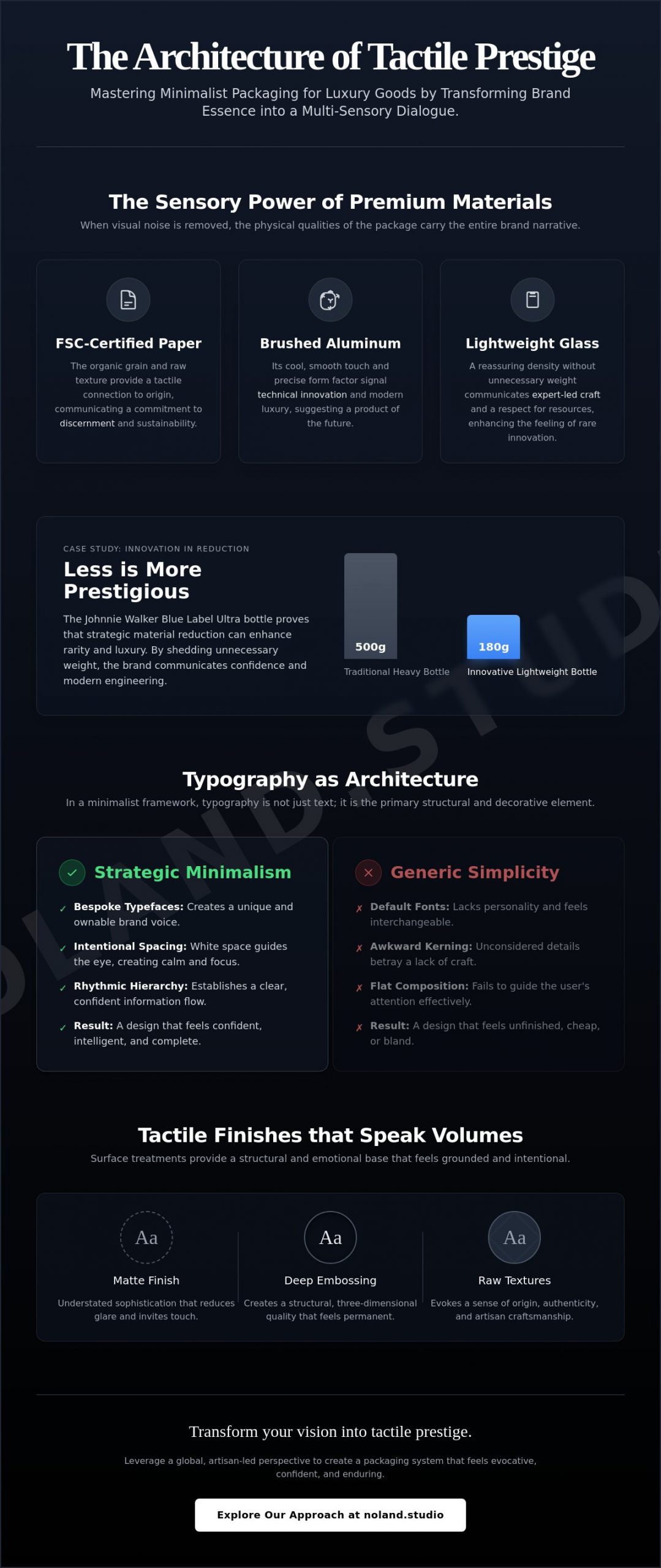
Luxury is a multi-sensory dialogue. When the visual noise of a brand is stripped away, the physical qualities of the package must carry the full weight of the narrative. In the context of minimalist packaging design for luxury goods, every material choice is a strategic decision. It’s about the cold touch of brushed aluminum, the organic grain of FSC-certified paper, or the reassuring density of a lightweight glass bottle. These choices don’t just hold the product; they communicate the brand’s commitment to discernment and expert-led craft.
The Sensory Power of Premium Materials
Tactile prestige is the physical manifestation of brand quality through sensory feedback. It’s the moment a consumer’s fingertips meet the surface of a box and instantly recognize excellence. In 2026, brands are increasingly looking at examples of minimalist luxury packaging to understand how to balance substance with sustainability. For instance, the Johnnie Walker Blue Label Ultra bottle weighs just 180 grams, proving that material reduction can actually enhance the feeling of rare innovation. We prioritize matte finishes, deep embossing, and raw textures that evoke a sense of origin. These elements provide a structural base that feels grounded, intentional, and permanent.
Typographic Discipline in Luxury Design
In a minimalist framework, typography isn’t merely text; it is the primary architectural element. It replaces the need for loud illustrative graphics, acting as the bridge between the brand’s intellectual essence and its physical presence. We utilize bespoke typefaces to create a sense of rhythm and spacing that guides the eye with quiet authority. This hierarchy ensures that the most vital information is felt rather than just read. It requires a ruthless process of refinement: identifying what to keep and what to discard until only the soul remains.
This discipline extends to the brand’s Naming & Verbal Identity. A single word, perfectly placed on a monochromatic or earthy-toned surface, can communicate more than a thousand images. By limiting the color palette to natural, hushed tones, we allow the texture and the type to perform. This creates a sense of exclusivity that feels curated rather than manufactured. If you’re looking to elevate your brand’s physical presence, our team can help you refine your visual identity system for a global market.
Strategic Minimalism vs. Generic Simplicity: Avoiding the Incomplete Trap
The line between high-end restraint and generic blandness is razor-thin. While many brands attempt to follow the “bland-ing” trend by stripping away color and character, they often fall into the incomplete trap. True minimalist packaging design for luxury goods isn’t about what is missing; it’s about the overwhelming presence of what remains. It’s a calculated choice to let the brand’s soul speak through subtle, refined gestures rather than loud, decorative noise. When a design lacks this strategic intent, it ceases to be luxury and becomes merely unfinished.
To avoid a generic outcome, the packaging must feel like a deliberate distillation of a brand’s identity. This requires a level of discernment that moves beyond surface-level aesthetics. It’s the difference between a product that looks “simple” because it was cheap to produce and one that looks “minimalist” because every unnecessary element was ruthlessly refined away. This process of evolution transforms the package from a mere container into a physical manifestation of prestige.
Identifying the “Soul” of the Brand
Uncovering a brand’s unique markers is a process of creative archeology. We look for the internal essence that defines its existence and gives it a reason to be felt. This requires a triad of considerations: form, function, and feeling. The form provides the structural base, the function ensures intuitive ease of use, and the feeling creates the emotional resonance that lingers after the unboxing. By focusing on these pillars, we ensure the design feels evocative and visionary. It’s about building a structural base that supports a narrative of global expertise rather than just filling space.
The Comparison: Intentional vs. Unfinished
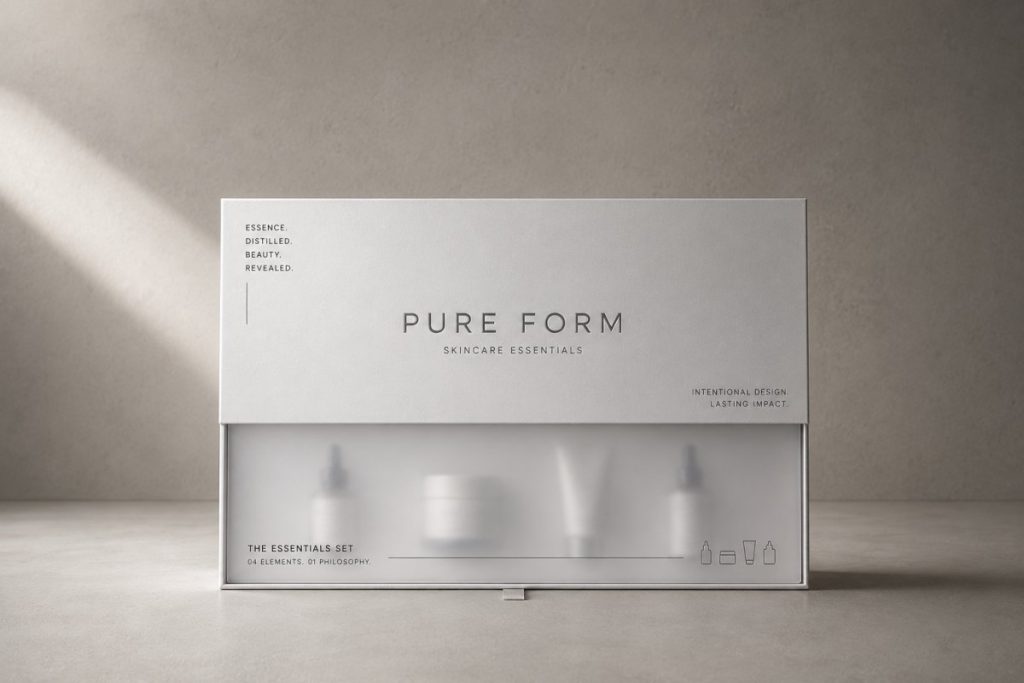
The difference between a generic box and a luxury masterpiece lies in the technical precision of the final physical manifestation. True prestige is found in the hidden details that a casual observer might miss but a connoisseur will feel. Consider the following markers of intentionality:
- Heft and Weight: A box that feels too light suggests a lack of substance and care.
- Hidden Details: Magnetic closures that provide a satisfying, audible “click” or interior prints that reveal a secret brand story.
- Technical Precision: Sharp edges, perfect alignment, and the absolute absence of visible glue or structural seams.
Refining these elements requires expert hands guided by a high-level vision. This is why partnering with a specialized luxury branding agency is vital. They act as a bridge between abstract thought and the physical world, ensuring every detail is a deliberate choice rather than a generic default. Without this level of discernment, a brand risks looking cheap in a global market that values sensory impact and enduring quality.
The Multidimensional Unboxing: Bridging Physical and Digital Realities
The unboxing journey is a choreographed sensory experience that begins long before the consumer touches the box. In a world where the initial brand encounter often happens on a screen, minimalist packaging design for luxury goods serves as the physical culmination of a digital promise. It’s the moment where the abstract world of Digital Design & Web Development takes on a physical presence. This transition must feel seamless, moving from the fluid visuals of a website to the structured, tactile reality of the packaging.
Strategic minimalism actually enhances the performance of opening a product. By stripping away clutter, the focus shifts to the mechanics of the reveal. We use AI-enhanced tools and 3D visualization to map this journey with mathematical precision before a single material is sourced. This allows us to refine the minimalist packaging design for luxury goods until it perfectly matches the high-level vision of the brand. This measured approach ensures that every fold, weight, and texture is a deliberate choice rather than a generic default.
Choreographing the Physical Journey
Digital Integration and Content Creation
Modern luxury packaging must be inherently camera-ready. Because minimalist design relies on subtle textures and typographic precision, it translates beautifully into high-performance digital touchpoints. This alignment is critical for Art Direction & Content Creation, as the package often becomes the central character in social storytelling. When a design is this intentional, consumers are inspired to capture, share, and celebrate the experience. This organic digital resonance extends the brand’s reach far beyond the physical product itself.
If you are ready to unite your digital identity with a physical masterpiece, explore our premium packaging design services to begin your transformation.
Cultivating Soulful Brands: The Noland Studio Artisan Approach
Noland Studio operates as a multidisciplinary design collective of digital artisans, dedicated to the intersection of strategic purpose and aesthetic excellence. We believe that minimalist packaging design for luxury goods is the ultimate expression of a brand’s internal essence. Our studio acts as a bridge between the abstract world of ideas and the physical world of products, ensuring that every design choice carries artistic weight. We don’t merely automate; we curate, refine, and manifest identities that are meant to be felt as much as they are seen.
Our philosophy is rooted in the belief that luxury is a transformative process. It requires a high-level vision that is both disciplined and intelligent, moving beyond the frantic pace of typical marketing to find something enduring. By focusing on the building of structural bases, we allow abstract concepts to take on a physical presence that commands prestige. This intentionality is what distinguishes a soulful brand from a fleeting trend.
The Distributed Expert Network
Our strength lies in a distributed network of global experts who bring a high-level vision to every project. Traditional, localized agency models often lack the multicultural depth required to resonate with a truly global audience. By engaging a diverse collective, we ensure that our approach to minimalism remains sophisticated and visionary. These expert hands guide our technological innovations, ensuring that AI-enhanced tools serve the craft rather than defining it. This balance allows us to give physical form to abstract brand thoughts with a sensitive, localized touch that centralized models cannot replicate.
From Idea to Tangible Reality
The process of bringing a luxury vision to life is one of constant refinement. We follow a steady, intentional rhythm to organize, evolve, and manifest your brand’s physical presence. This journey requires a disciplined mind and a passionate heart, moving from philosophical foundations to strategic implementation. We partner with high-end manufacturing specialists to ensure that the technical precision of our designs is maintained during production. The result is a packaging system that projects authority and depth, standing as a testament to enduring impact rather than fleeting trends.
If you are seeking a partner to help you master the complexities of modern prestige, we invite you to transform your brand vision into reality. Together, we can build a structural base for your brand that commands respect and inspires transformation.
Manifesting the Future of Prestige
The shift toward intentional condensation is more than a regulatory response; it’s a profound evolution of how we experience value. By embracing the sensory power of materials and the discipline of typographic rhythm, your brand can transcend the noise of the marketplace. True minimalist packaging design for luxury goods requires a rare balance of strategic restraint and technical precision. It’s the art of ensuring that every element serves a purpose, tells a story, and resonates with a global audience’s desire for authenticity.
As a multidisciplinary design collective of global digital artisans, we specialize in bridging the gap between abstract brand strategy and premium physical touchpoints. Our process combines AI-enhanced tools with human-centric craftsmanship to curate identities that are felt as much as they are seen. We invite you to partner with Noland Studio to give shape to your luxury vision and create a packaging system that commands lasting prestige. The path to a more soulful, evocative brand starts with a single, intentional choice. We look forward to manifesting your brand’s future together.
Frequently Asked Questions
What defines minimalist packaging for luxury goods?
Minimalist packaging design for luxury goods is the strategic condensation of a brand’s internal essence into its most evocative physical form. It moves beyond simple subtraction to focus on intentionality, where every element is a deliberate manifestation of prestige. This design philosophy emphasizes the building of structural bases through material choice, weight, and finish, allowing the product’s soul to speak without the distraction of decorative clutter.
How does minimalist design influence consumer perception of luxury?
Minimalism signals a state of quiet prestige and high-level confidence that resonates with modern, discerning audiences. By rejecting loud ornamentation, a brand communicates that its value is so inherent it requires no decorative mask to command respect. This restraint invites the consumer into an exclusive dialogue, rewarding their intelligence and discernment through a curated, sensory-focused experience that feels both rare and inevitable.
Can minimalist packaging be sustainable without losing its premium feel?
It can, and in 2026, sustainability is often the primary driver of the light luxury trend. Sustainable luxury materials like FSC-certified papers or lightweight glass can actually enhance the premium feel through innovative design engineering. Minimalism aligns perfectly with global sustainable packaging principles by reducing material waste while prioritizing the quality, origin, and texture of the remaining structural components.
Why is typography so important in luxury minimalist design?
Typography acts as the primary architectural element when illustrative graphics are removed from the canvas. It is the bridge between a brand’s intellectual essence and its physical presence on the shelf. Through bespoke typefaces and precise spacing, typography creates a sense of rhythm and authority that guides the eye and reinforces the brand’s naming and verbal identity with quiet power.
How do I avoid my minimalist packaging looking cheap or unfinished?
You must prioritize technical precision and hidden details that suggest expert-led craft. To master minimalist packaging design for luxury goods, focus on material heft, custom matte finishes, and structural integrity. Elements like magnetic closures with a satisfying click or sharp, seamless edges ensure the design feels like a deliberate distillation of quality rather than an incomplete or generic product.
What is the role of tactility in the luxury unboxing experience?
Tactility is the physical manifestation of quality that consumers feel before they see the product. The unboxing journey is a choreographed sensory experience where the sequence of touch, from raw textures to deep embossing, builds anticipation. These physical sensations provide the structural base for the emotional resonance that defines a truly multidimensional ritual of brand discovery and transformation.
How does a design collective approach differ from a traditional agency?
A design collective utilizes a distributed network of global experts rather than a localized, centralized team. This model brings diverse, multicultural perspectives to the creative process, allowing expert hands to guide technological innovations. It ensures that abstract brand thoughts are given physical form with a sensitive, localized touch that traditional, rigid agency structures often struggle to replicate.
Is minimalist packaging suitable for all types of luxury products?
Minimalism is a powerful tool for brands seeking quiet prestige, but its success depends on strategic alignment with the brand’s internal soul. It is particularly effective for products where the craftsmanship, ingredients, or heritage can stand alone as the primary narrative. The design must always be a manifestation of the brand’s specific vision rather than a generic application of a fleeting aesthetic trend.