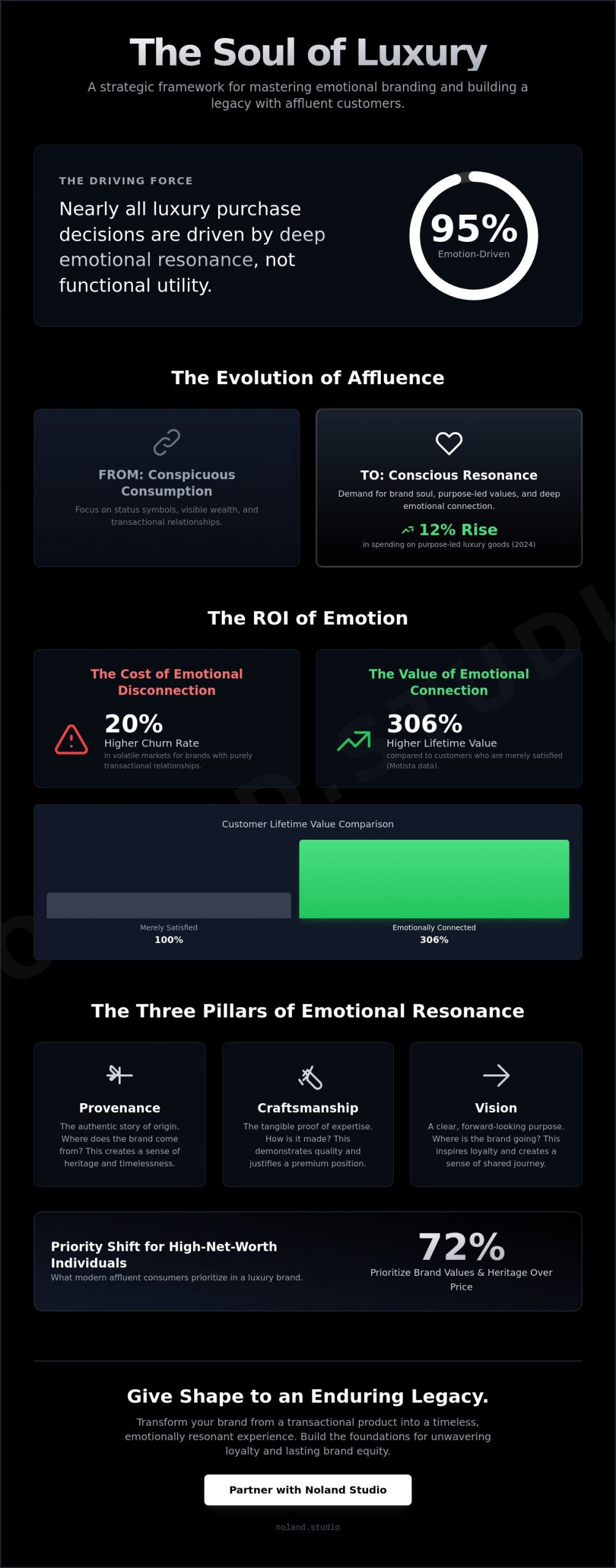
El lujo nunca se trata del precio; se trata del alma. Un informe de Bain & Company de 2023 reveló que casi el 95% de las decisiones de compra de lujo están impulsadas por una profunda resonancia emocional, más que por la utilidad funcional. Por eso, el branding emocional para clientes adinerados es la única manera de destacar en un mercado saturado. Probablemente sientas la presión cuando incluso la mejor artesanía se siente genérica porque carece de alma. Es difícil justificar una posición premium cuando tu marca se percibe como una transacción fría en lugar de una experiencia cuidadosamente seleccionada. Quieres que tu trabajo se sienta, no solo se vea.
Esta guía te ofrece la alquimia estratégica que necesitas para transformar tu identidad. Te mostraremos cómo traducir la compleja psicología del consumidor en un universo visual tangible que fomente una lealtad inquebrantable. Descubrirás un marco para construir una marca que respire, se adapte y evolucione hasta convertirse en un verdadero legado. Exploraremos el lenguaje silencioso del prestigio y los fundamentos necesarios para aumentar el valor de tu marca y el valor de vida del cliente en los años venideros. Es hora de dar forma a ideas que perduren.
Conclusiones clave
- Transición del mero consumo a la "resonancia consciente" mediante la decodificación de los deseos psicológicos arraigados que impulsan el mercado de alta gama moderno.
- Descubre cómo dar forma al propósito central de una marca a través de la narrativa y la herencia, creando una sensación de atemporalidad que trasciende generaciones.
- Explora la alquimia sensorial de la elección de materiales y el tacto, aprendiendo cómo los puntos de contacto físicos sirven como la primera manifestación de una promesa emocional.
- Maestro Marketing emocional para clientes adinerados transformando tu identidad en un universo visual vivo que conserva su esencia en cada interacción digital.
- Implementa una transición estratégica desde las características centradas en el producto hasta los legados basados en las emociones, asegurando que tu marca respire, se adapte y resuene con una autoridad perdurable.
La psicología del deseo: por qué los consumidores adinerados compran emociones, no productos.
El lujo existe en el espacio entre lo que se ve y lo que se siente. Ya no basta con ofrecer una artesanía superior o materiales raros; estas son ahora las expectativas básicas de una élite global exigente. Hoy, Marca emocional Sirve como la arquitectura principal del deseo, transformando un objeto físico en un recipiente de significado personal. Para los 1% de mayores ingresos, una compra es un espejo. Refleja quiénes son, quiénes aspiran a ser y los valores que eligen defender. Esta es la alquimia del diseño de alta gama, donde la intención estratégica se une a la ejecución artística para crear algo que se siente inevitable.
Para 2026, la era del consumo ostentoso, definida por la visibilidad de la riqueza, habrá evolucionado por completo hacia una resonancia consciente. Los consumidores modernos y adinerados exigen más que un símbolo de estatus; buscan un alma. Una marca con alma posee un punto de vista distintivo que respira, se adapta y evoluciona. Este cambio es visible en el aumento del gasto en bienes de lujo con propósito reportado en 2024. Para marcas como JC Londres, Esto implica ir más allá del producto para ofrecer guías personalizadas y narrativas centradas en el valor que conecten con la vida cotidiana del consumidor. Sin este núcleo emocional, un producto premium se convierte en una simple mercancía, vulnerable a la fría lógica de las comparaciones de precios y la utilidad funcional.
La jerarquía de necesidades de las personas adineradas
El camino del consumo de alta gama comienza con el estatus, pero culmina en la autorrealización. Si bien la mente racional puede analizar las especificaciones técnicas de un reloj a medida, el cerebro emocional ya ha tomado una decisión basada en el sentimiento de pertenencia que evoca la marca. Marketing emocional para clientes de alto poder adquisitivo Evita la corteza prefrontal y accede al sistema límbico, donde la lealtad se forja a través de los sentimientos, no de los hechos. El lenguaje silencioso del lujo es una sinfonía cuidadosamente seleccionada de señales sensoriales que traduce la herencia abstracta en un sentido tangible de identidad personal. Esta conexión garantiza que la marca no solo se vea, sino que se sienta profundamente, fomentando un vínculo que trasciende el producto en sí.
El costo de la desconexión emocional
Las marcas que dependen de relaciones transaccionales enfrentan una tasa de abandono 20% mayor en mercados volátiles. Cuando el vínculo es puramente funcional, la lealtad del cliente dura solo hasta que aparece una alternativa más conveniente. La resonancia emocional es la mejor protección contra los cambios del mercado. Datos de Motista indican que los clientes con una conexión emocional tienen un valor de vida 306% mayor que aquellos que simplemente están satisfechos. Para abordar la objeción de que el branding emocional para clientes adinerados es demasiado abstracto para el ROI, es necesario analizar los márgenes; la capacidad de mantener precios premium depende completamente del peso emocional de la marca. Es la base sobre la que se construyen universos visuales vivos, asegurando que una marca hable el lenguaje del presente mientras se prepara para el futuro.
Los pilares de la resonancia emocional: herencia, narrativa y alma.
El lujo no es un producto. Es un sentimiento que toma una forma tangible. Para dominarlo Marketing emocional para clientes adinerados, Una marca debe construir cimientos que vayan más allá de la estética. Requiere una alquimia entre tradición y visión de futuro. La campaña “Generaciones” de Patek Philippe, lanzada en 1996, sigue siendo un referente porque centra la atención en el legado, en lugar del objeto en sí. Sugiere que uno es simplemente un guardián para la próxima generación. Esta narrativa crea un vínculo emocional que trasciende una simple transacción.
Los clientes adinerados poseen un radar refinado para detectar la publicidad engañosa. Un informe de 2023 sobre el comportamiento del consumidor de lujo indicó que el 721% de las personas con alto patrimonio priorizan los valores y la tradición de la marca por encima del precio. Buscan la tríada de la narrativa de lujo: Procedencia, Artesanía y Visión. La Procedencia les indica de dónde proviene; la Artesanía demuestra que fue elaborada por manos expertas; la Visión les muestra hacia dónde se dirige la marca. Cuando estos tres elementos se alinean, la marca respira, se adapta y evoluciona.
Dar forma a las ideas: El arte de la narrativa de marca
Extraer el alma de una marca comienza con el posicionamiento estratégico. Se trata de ir más allá del discurso de venta para crear una identidad verbal que se sienta como un secreto compartido. Cuando te asocias con una agencia de marcas de lujo, el objetivo es asegurar que la marca hable con intencionalidad. Esta conversación debe estar arraigada en la psicología de la marca emocional, donde el cliente ve reflejadas sus propias aspiraciones en la narrativa de la marca. Es un proceso de dar forma, refinar y clarificar el propósito central de la marca hasta convertirla en un universo visual vivo.
El papel de la rareza y la exclusividad
La escasez no es solo una táctica para inflar los precios. Es una forma de crear un vínculo emocional donde el cliente se siente como un mecenas, no solo como un comprador. Este sentimiento de pertenencia diferencia una compra casual de una obsesión de por vida. Es la diferencia entre poseer un artículo producido en masa y ser parte de la historia de un artesano que dedicó 18 horas a coser a mano una sola pieza.
Exitoso Marketing emocional para clientes adinerados requiere un compromiso con la profundidad. Es aquí donde el juicio y la inteligencia transforman una historia en un legado. Esta transformación asegura que la marca siga siendo relevante a lo largo de las décadas, manteniendo su aura de exclusividad. Si está listo para definir el futuro de su marca, Explorar cómo damos forma a las ideas a través de un diseño disciplinado y visionario.
Alquimia sensorial: Traduciendo la emoción en diseño tangible
El verdadero lujo reside en la punta de los dedos. Si bien las interfaces digitales ofrecen rapidez, carecen del peso de una tradición. Para el individuo de alto poder adquisitivo, la manifestación física de una marca funciona como un saludo silencioso, una promesa de calidad que trasciende los píxeles. Esta transición de la estrategia abstracta a la forma física es donde ocurre la magia. Genera una reacción visceral inmediata antes incluso de leer una sola palabra. La excelencia estética actúa como un filtro, señalando al instante que una marca pertenece al círculo íntimo del consumidor.
La materialidad de la emoción
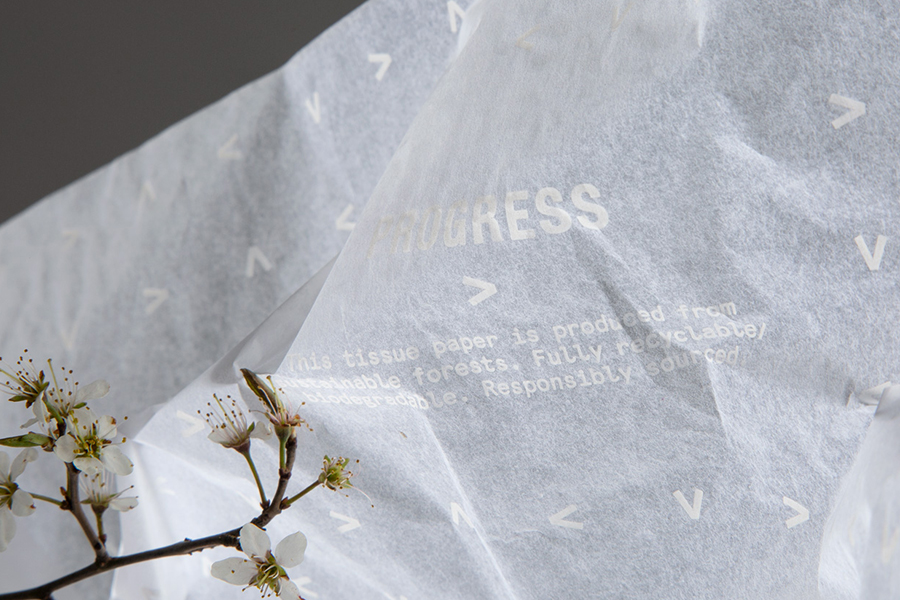
La materialidad define el alma. Un informe de 2022 del Luxury Institute reveló que el 781% de los consumidores adinerados asocian el peso físico de un objeto con su valor intrínseco. Elegir materiales sostenibles no es solo una cuestión ética; realza la esencia ética de la marca. La veta de la madera con certificación FSC o el tacto fresco del aluminio reciclado crean un recuerdo emocional perdurable. Los rituales de desempaquetado transforman una simple transacción en una ceremonia. Es una narrativa táctil que se despliega en las manos del cliente.
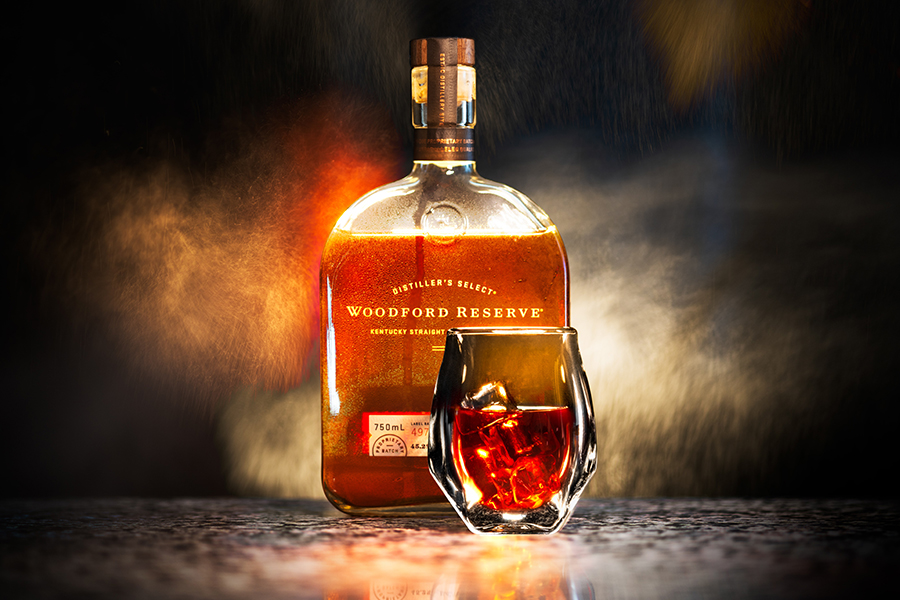
Consideremos el diseño estructural de un frasco de perfume hecho a medida. Cuando una marca crea un recipiente con la precisión geométrica del movimiento Art Déco de la década de 1920, no solo contiene una fragancia. Ancla al consumidor en una era específica de elegancia y poder. Esta narrativa estructural es un componente vital de Marketing emocional para clientes adinerados. La botella se convierte en un tótem de la historia de la marca, haciendo que el concepto abstracto de "patrimonio" se sienta real y significativo.
Universos visuales: Más allá del logotipo
Un logotipo es la base, no la meta final. En una experiencia de marca multidimensional, la identidad visual debe respirar, adaptarse y evolucionar a través de diferentes medios. Es un universo visual vivo que habla el lenguaje del presente sin dejar de respetar los cimientos del pasado. Las paletas de colores y la tipografía actúan como anclas emocionales. Los azules intensos o las fuentes con serifa de alto contraste evocan estabilidad y tradición, mientras que los diseños minimalistas sugieren una inteligencia moderna y rigurosa.
- Teoría del color: Utilizar tonalidades específicas como el "Azul Klein Internacional" para evocar exclusividad y profundidad artística.
- Tipografía: Tipografías diseñadas a medida que sugieren que una marca es demasiado singular para las soluciones estándar disponibles en el mercado.
- Visualización 3D: Utilizamos renders de alta fidelidad para que los conceptos abstractos parezcan tangibles antes de que entren en producción.
Utilizamos la visualización 3D para asegurar que cada superficie y sombra se alinee con la identidad central de la marca. Este nivel de detalle garantiza que Marketing emocional para clientes adinerados La experiencia es coherente, tanto si interactúan con un catálogo digital como con una tienda física insignia. Se trata de crear un mundo donde el consumidor se sienta visto y comprendido en cada detalle, en cada color. Aquí, la estrategia se une al arte para dar forma a una marca que no solo se ve, sino que se siente.
Esta filosofía de crear experiencias inmersivas y sentidas se extiende más allá de la marca comercial hacia la esfera privada. Para explorar cómo se aplican estos mismos principios de diseño de alto nivel a los proyectos residenciales, Conozca más sobre Barbara Nyke Interiors & Design..
La evolución de la conexión: Construyendo universos de marca vivos
La imagen de marca de lujo ya no se limita a un logotipo estático o una paleta de colores fija. Se ha transformado en un universo visual vivo que respira, se adapta y evoluciona en cada interacción. Para el individuo moderno de alto poder adquisitivo, la marca debe sentirse tan tangible en la pantalla de un teléfono inteligente como dentro de una tienda insignia revestida de mármol. Esta fluidez y consistencia son la base de Marketing emocional para clientes adinerados. Requiere un cambio del diseño web transaccional a la creación de ecosistemas digitales que palpiten con la misma alma artesanal que se encuentra en la artesanía física.
Utilizamos la IA como socio estratégico, no como sustituto de la intuición humana. Un informe de McKinsey de 2023 indica que el 701% de las marcas de lujo están integrando la IA para mejorar la personalización. El verdadero valor reside en cómo aplicamos el criterio humano a estas herramientas. Adaptamos la tecnología al arte; garantizamos que, incluso a gran escala, la voz única de la marca permanezca intacta. Esta sinergia nos permite organizar, categorizar y clarificar narrativas de marca complejas, manteniendo una estética evocadora y sofisticada.
Narración digital inmersiva
Los espacios digitales deben funcionar como galerías, no como simples tiendas online. Al acceder a un sitio web, el diseño de movimiento y los elementos 3D deben provocar una respuesta visceral inmediata. Los puntos de contacto de alto rendimiento son imprescindibles. Un retraso de tan solo 100 milisegundos en el tiempo de carga de la página puede reducir las tasas de conversión en un 71%, según un estudio de Akamai. Priorizamos experiencias estéticamente atractivas que se cargan con fluidez, reflejando el servicio impecable de un conserje personal. Estas “galerías” digitales permiten que la historia de la marca se desarrolle con intencionalidad y profundidad.
La ventaja de la red de artesanos
Un monolito corporativo a menudo carece de la sensibilidad necesaria para el lujo de alto nivel. Nuestra red distribuida de artesanos digitales ofrece una perspectiva más humana, que combina una visión global con precisión local. Este modelo permite un enfoque especializado donde manos expertas guían cada píxel. Creemos que Marketing emocional para clientes adinerados Prosperamos en la intersección de la disciplina y la alquimia. Se trata de cómo las ideas toman forma a través de un espíritu colaborativo que valora la longevidad por encima de las tendencias pasajeras. Aprovechando una red de especialistas, mantenemos un puente entre el mundo abstracto de las ideas y el mundo físico de los productos.
La brecha “fisigital” es donde muchas marcas pierden su esencia. Mantener una atmósfera coherente desde el ámbito digital hasta la tienda física garantiza que la narrativa permanezca intacta. Al asociarse con expertos como Diseño de Pianta Para diseñar estos puntos de contacto físicos, cada interacción en pantalla y cada detalle arquitectónico reflejan la esencia de la marca, creando una experiencia unificada que resulta a la vez visionaria y sólida. Este compromiso con la coherencia garantiza que el alma de la marca se perciba en cada punto de contacto, independientemente del medio.
Cómo forjar tu legado: Cómo implementar una marca emocional
La transición de una estrategia centrada en el producto a una centrada en la emoción requiere más que una simple renovación visual; exige un cambio fundamental en la forma en que respira su marca. Para la persona de alto poder adquisitivo, el producto es simplemente la evidencia física de una promesa más profunda. Para implementar con éxito Marketing emocional para clientes adinerados, Para ello, primero debes analizar tus valores fundamentales para asegurarte de que no sean solo palabras en una pared, sino principios vivos que guíen cada interacción con el cliente. Esta transición implica abandonar la mentalidad centrada en las funcionalidades y adoptar una narrativa donde las aspiraciones del cliente sean el eje central.
Para preservar la integridad creativa, abogamos por un modelo de tarifa fija en lugar de la facturación por horas. Este modelo garantiza que la profundidad y la calidad artística no se vean comprometidas por limitaciones de tiempo artificiales. Permite que el proceso creativo se desarrolle de forma natural, brindando a la esencia de la marca el espacio que necesita para manifestarse sin la presión del tiempo. Los fundadores deben evaluar la salud emocional de su marca utilizando esta breve lista de verificación:
- ¿Nuestra marca evoca alguna emoción específica incluso antes de leer una sola palabra?
- ¿Se reflejan nuestros valores en los detalles sensoriales de nuestro embalaje y nuestra presencia digital?
- ¿Nuestra historia es coherente en todos los puntos de contacto, desde el primer clic hasta la entrega final?
- ¿Hablamos el "lenguaje del presente" sin dejar de lado una base atemporal?
Una marca que se niega a evolucionar se convierte en una reliquia. El mercado del lujo actual se mueve a gran velocidad; tu identidad debe estar preparada para adaptarse sin perder su esencia. Esta es la alquimia del branding: mantenerse fiel a la propia verdad a la vez que se conserva la flexibilidad necesaria para satisfacer los deseos cambiantes de la élite global. Se trata de construir una base sólida y transformadora.
De la estrategia a la manifestación
Alinear la cultura interna con las promesas externas es la única manera de lograr un verdadero valor de marca. Si tu equipo no siente la esencia de la marca, tus clientes tampoco la sentirán. Medir estos aspectos intangibles implica analizar el sentimiento a través de comentarios cualitativos y observar cómo el valor de marca se traduce en lealtad a largo plazo. Contar con un colectivo de diseño multidisciplinario es fundamental. Al combinar estrategia, arte y tecnología, se crean identidades complejas que se sienten tanto como se ven. Esta inteligencia colectiva garantiza que tu marca no sea solo un logotipo, sino un universo visual vivo que conecta con el corazón.
Tu invitación para dar forma al futuro
Para 2026, las marcas de lujo más exitosas no se definirán por sus precios, sino por la claridad de su esencia. Marketing emocional para clientes de alto poder adquisitivo Es el puente entre una simple transacción y un legado perdurable. Es hora de transformar tu visión en una realidad palpable que conecte con tu interior. ¡Bienvenidos al nuevo capítulo de tu marca! Demos forma a tus ideas.
Dando forma al alma eterna de tu marca
El verdadero lujo trasciende el objeto físico. Vive en el espacio silencioso entre la herencia de una marca y los deseos más profundos del cliente. Al centrarse en Marketing emocional para clientes adinerados, Se trata de ir más allá de lo transaccional para crear una narrativa que conecte con el espectador a un nivel profundo. Has visto cómo la alquimia sensorial y los universos de marca vivos transforman conceptos abstractos en experiencias tangibles que definen un legado. Va más allá de la estética; se trata de la intencionalidad detrás de cada punto de contacto.
Noland Studio es un colectivo multidisciplinario de profesionales digitales de todo el mundo, dedicados a este arte. Especialistas en estrategia de lujo y empaques premium, ofrecemos proyectos de identidad y branding a precio fijo que brindan claridad y profundidad artística. No solo creamos identidades; diseñamos universos visuales con alma que conectan con el presente y, a la vez, honran las bases del futuro. Su visión merece ser percibida, vista y recordada gracias a la experiencia y la visión de un experto.
Descubre cómo Noland Studio da forma a marcas de lujo con alma.
El camino hacia una identidad de marca perdurable comienza con un paso sincero y significativo. Tu legado está listo para tomar su forma definitiva.
Preguntas frecuentes
¿Cuál es la diferencia entre el marketing emocional y el marketing tradicional?
El marketing tradicional se centra en la utilidad, el precio y las especificaciones técnicas para impulsar las ventas. El marketing emocional dirigido a clientes de alto poder adquisitivo prioriza los valores compartidos y la identidad personal para crear un vínculo duradero. Transforma un producto, de una simple herramienta a un símbolo de la visión del mundo de su propietario. Un estudio de Motista de 2023 muestra que los clientes con una conexión emocional tienen un valor de por vida un 306 % mayor que aquellos que simplemente están satisfechos.
¿Por qué los clientes adinerados se preocupan más por la esencia de la marca que por las características del producto?
Los clientes adinerados esperan la perfección técnica como requisito básico para cualquier compra de lujo. Buscan la esencia de la marca porque les ofrece un sentido de pertenencia y una narrativa más profunda que las características técnicas no pueden brindar. Bain & Company informó en 2024 que el 75 % del crecimiento del mercado de lujo está vinculado al propósito percibido de una marca. Al centrarse en la esencia, una marca se convierte en un universo visual vivo que refleja las aspiraciones del cliente.
¿Puede una nueva marca crear una conexión emocional tan fuerte como la de una casa de moda con tanta tradición?
Las nuevas marcas pueden forjar conexiones profundas al ser más ágiles y transparentes que las casas de moda tradicionales. Mientras que las casas de moda con historia se basan en ella, un estudio moderno puede cimentar sus bases en torno a las tendencias culturales actuales. El Barómetro de Confianza Edelman 2022 reveló que el 64 % de los consumidores eligen marcas en función de valores compartidos. Una nueva marca triunfa al hablar el lenguaje del presente con mayor precisión e intimidad que un gigante tradicional.
¿Cómo contribuye el diseño del empaque a la construcción de una imagen emocional de marca para los productos de lujo?
El empaque es el primer punto de contacto tangible donde la idea de una marca cobra forma física. Sirve como puente sensorial entre la promesa digital y la realidad física del producto. Un estudio de Dotcom Distribution revela que el 40 % de los consumidores son más propensos a compartir un producto en redes sociales si el empaque les da la sensación de ser un regalo. El diseño de alta gama utiliza la textura y el peso para provocar una respuesta emocional inmediata durante el ritual de desempaquetado.
¿Es relevante el branding emocional para los servicios de lujo B2B?
El branding emocional para clientes de alto poder adquisitivo es esencial en el sector B2B, ya que las decisiones cruciales se basan en la confianza y la profesionalidad. Los clientes corporativos buscan socios que reflejen sus propios estándares de excelencia y su visión a largo plazo. Un informe de B2B International de 2023 indica que el 56 % de los responsables de la toma de decisiones priorizan la personalidad de la marca sobre el precio. Se trata de crear una relación profesional que se adapte, evolucione y se desarrolle al ritmo de los objetivos comerciales del cliente.
¿Cómo se mide el éxito de una campaña de marketing emocional?
El éxito se mide a través de la profundidad cualitativa y las métricas de fidelización a largo plazo, en lugar de las tasas de clics inmediatas. El seguimiento del Net Promoter Score (NPS) ofrece una perspectiva de la defensa de la marca y la resonancia emocional. Los datos del Grupo Temkin muestran que el 86 % de los clientes que experimentan una alta conexión emocional son propensos a volver a comprar. Buscamos indicadores como el crecimiento orgánico de la comunidad para evaluar el grado de arraigo de una idea.
¿Qué papel desempeña la sostenibilidad en la conexión emocional con los consumidores adinerados modernos?
La sostenibilidad actúa como una brújula moral que fortalece el vínculo emocional entre la marca y el comprador. Los consumidores modernos y adinerados consideran sus compras como una extensión de su ética personal y su responsabilidad global. Una encuesta de Deloitte de 2023 reveló que el 55 % de los consumidores adquirió un producto o servicio sostenible el mes anterior. Cuando una marca integra la responsabilidad ambiental en su esencia, crea una narrativa de longevidad que conecta profundamente con el público.
¿Cómo pueden las experiencias digitales transmitir una sensación de autenticidad y exclusividad?
Las plataformas digitales se perciben como de alta gama cuando priorizan la intencionalidad y una navegación fluida y guiada. Un sitio web no solo debe funcionar, sino que debe ofrecer una experiencia inmersiva, como un recorrido por un universo visual dinámico. Un estudio del Instituto CXL demuestra que un usuario tarda tan solo 0,05 segundos en formarse una opinión sobre la presencia digital de una marca. Mediante tipografías personalizadas y un movimiento rítmico, creamos una atmósfera digital tan cuidada como la de una boutique física.