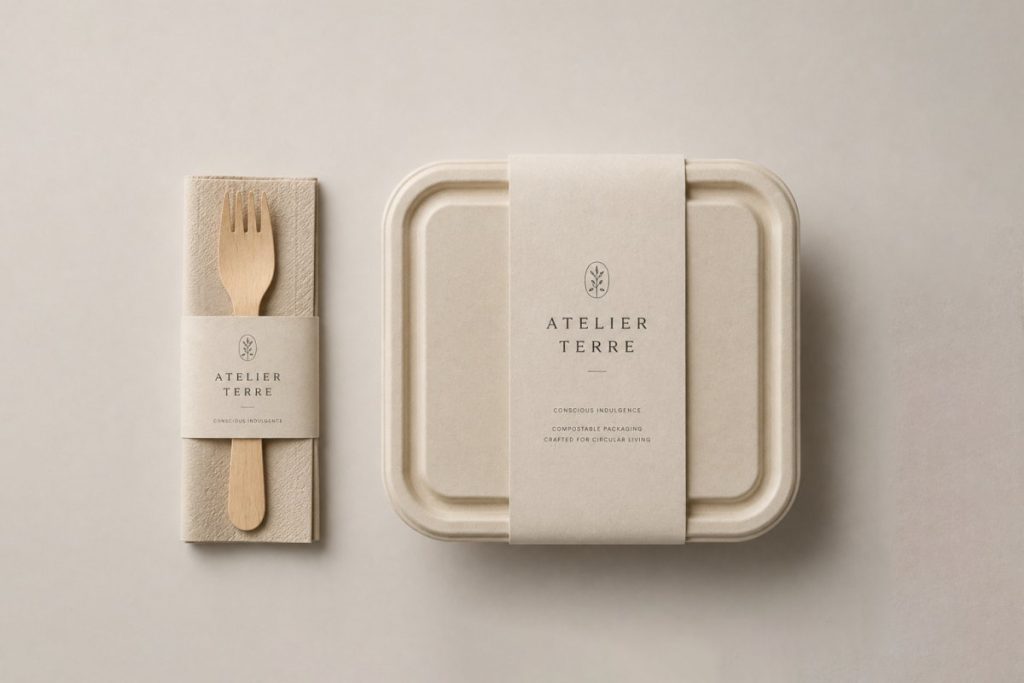
The definition of prestige is shifting from the heavy permanence of the past toward a future defined by discernment, ethics, and grace. For years, the pursuit of sustainability felt like a descent into the “eco-cheap” aesthetic, characterized by flimsy textures and muted palettes that failed the soul of a luxury brand. You shouldn’t have to choose between a masterpiece of design and a commitment to the earth.
Integrating compostable packaging for high-end food products is no longer a compromise; it’s a sophisticated manifestation of brand values that resonates with the conscious elite. This article demonstrates how to achieve a unique tactile experience that maintains your premium pricing power while ensuring product freshness without a single gram of plastic. We’ll examine the technical evolution of barrier performance, the impact of 2026 regulations like the EU’s Packaging and Packaging Waste Regulation, and the strategic path to finding suppliers who understand the weight of your vision. By aligning your visual identity with high-performance materials, you can create a sensory experience that feels as intentional as the product inside.
Conclusiones clave
- Redefine your brand’s legacy by shifting from disposable luxury to a model of circular elegance that honors both the earth and your heritage.
- Learn to harmonize elite aesthetics with technical precision, ensuring that compostable packaging for high-end food products provides the rigorous barrier performance required for artisanal ingredients.
- Explore the sensory psychology of prestige, focusing on the weight, texture, and resonance that transform sustainable materials into a high-end unboxing journey.
- Implement a refined five-step framework to audit, organize, and manifest your transition toward high-performance materials without losing your premium pricing power.
- Discover how specialized design expertise can translate abstract sustainability goals into physical forms that are meant to be felt and remembered.
Sustainability as the New Heritage: Why Luxury Food Demands Compostability
Heritage in the luxury sector has traditionally been synonymous with permanence, often manifested through heavy glass, polished metals, or ornate plastics. However, as we move through 2026, the definition of prestige is undergoing a profound transformation. True luxury is no longer measured by what remains in a landfill for centuries, but by the grace with which a brand’s footprint disappears. For the discerning producer, compostable packaging for high-end food products represents a sophisticated fusion of biology and prestige, where the lifecycle of the container mirrors the ephemeral nature of the rare ingredients within.
This shift from “disposable luxury” to “circular elegance” reflects a deeper change in consumer behavior. Modern patrons view sustainability as a proxy for brand integrity and long-term vision. They seek an experience that aligns with their internal values, demanding a narrative where every detail is considered. In this landscape, luxury is found in the intersection of intentionality, craftsmanship, and environmental stewardship. By embracing materials that return to the earth, a brand demonstrates a level of strategic foresight that traditional, resource-heavy packaging simply cannot match.
The Strategic Pivot: From Compliance to Soul
High-end food brands are currently leading the transition to plastic-free futures because they understand that packaging is the first physical touchpoint of the brand’s soul. It’s a manifestation of an ethical stance. Whether you’re presenting hand-harvested truffles or rare, single-origin spices, the vessel must communicate the same level of expert-led craft as the product. This commitment to sustainable packaging principles builds a deeper emotional resonance with a global, multicultural elite. These individuals don’t just buy a product; they invest in a story of growth, organization, and refinement. Moving beyond mere regulatory compliance allows a studio to curate an identity that’s felt as much as it’s seen, positioning the brand as a visionary leader rather than a passive participant in a changing market.
Defining Compostable Excellence in 2026
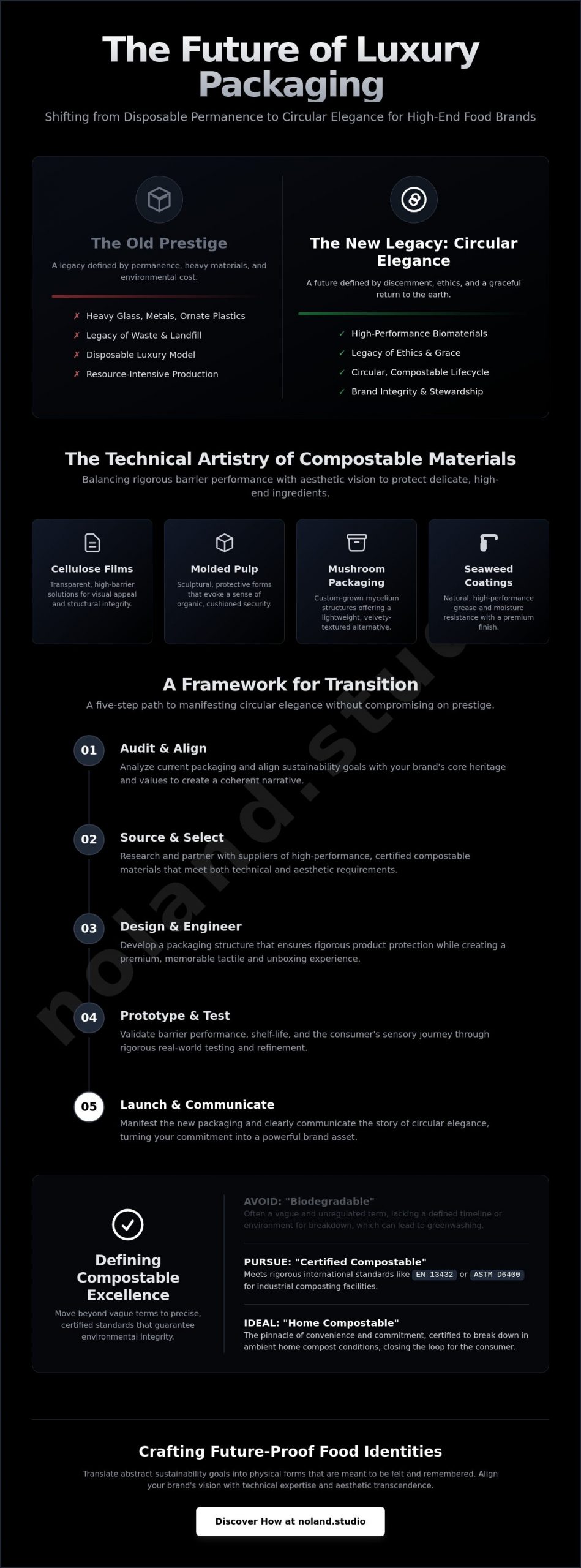
Precision is the hallmark of any premium offering. In the current market, the term “biodegradable” has become too vague to satisfy the requirements of a high-end identity. Discerning brands now prioritize “certified compostable” materials that meet rigorous international standards like EN 13432 or ASTM D6400. There’s a growing emphasis on home-compostability, which offers the ultimate convenience for the consumer while reinforcing the brand’s commitment to real-world recovery systems. Luxury compostability is the convergence of material science and aesthetic transcendence. It requires a disciplined approach to selection, ensuring that the material’s end-of-life is as beautiful and intentional as its beginning.
The Technical Artistry: Balancing Barrier Performance with Aesthetic Vision
High-end ingredients demand a sanctuary. Truffles require breathability without moisture loss. Artisanal chocolates need protection from oxidation. Rare spices must retain their volatile oils. Achieving this with compostable packaging for high-end food products is a feat of engineering and art. It isn’t enough for the material to be sustainable. It must be silent, protective, and invisible in its performance. This requires a deep understanding of how bio-based materials interact with delicate organic compounds to preserve their internal essence.
Preserving the Essence: High-Performance Substrates
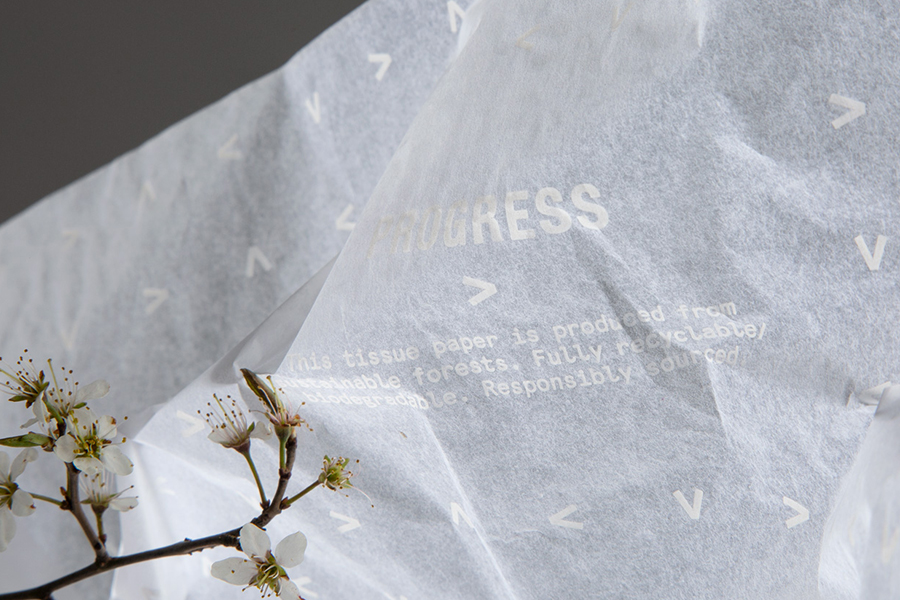
Cellulose-based films have evolved into transparent, high-barrier solutions that allow the product’s visual essence to shine while maintaining structural integrity. For secondary layers, molded pulp and mushroom-based packaging offer sculptural possibilities that evoke a sense of organic protection. We are also seeing the rise of seaweed-based coatings for grease resistance, providing a finish that feels as premium as it looks. Understanding how compostable packaging breaks down is essential for brands to ensure their technical choices don’t leave a legacy of microplastics.
Bio-based laminates now provide the necessary oxygen and moisture barriers that once belonged exclusively to plastic. Even the smallest details, such as compostable inks and metallic foils, have been refined to ensure the unboxing journey remains a multisensory delight. These elements aren’t mere utilities. They are the physical manifestation of a brand’s commitment to excellence, proving that high-performance protection and aesthetic transcendence can exist in a single form.
The Production Management of Sustainable Luxury
Transitioning to these materials requires more than just a change in supplier. It demands a rigorous process of testing, refinement, and coordination. Ensuring design fidelity in eco-materials means working with specialized manufacturers who respect the weight of your vision. This is where gestión de la producción de envases becomes a strategic necessity. It’s about bridging the gap between a visionary concept and a physical reality that performs under pressure.
Shelf-life stability is non-negotiable in the premium food sector. Every substrate must undergo stress testing to ensure the product remains pristine from the studio to the patron’s table. The evolution of compostable packaging for high-end food products has reached a tipping point where technical barriers are no longer an excuse for aesthetic compromise. Noland Studio acts as the expert hand guiding this process, ensuring that every choice serves both the brand soul and the consumer’s high expectations. If you’re ready to see your abstract values take physical form through sustainable innovation, our approach to Sistemas de identidad visual can help define that future.
Elevating the Tactile Experience: Overcoming the ‘Eco-Cheap’ Stigma
Prestige is a physical sensation. For many years, the primary objection to compostable packaging for high-end food products centered on a perceived lack of substance, a fear that sustainable materials inevitably felt “low-rent” or “papery.” This stigma ignores the profound evolution of bio-based fibers that offer unique, organic textures impossible to replicate with traditional plastics. True luxury doesn’t hide its origins; it celebrates them through materials that speak of the earth with a refined, articulate voice.
The unboxing journey is a choreographed sequence of weight, texture, and sound. A heavy, textured box made from agricultural waste or recycled cotton fibers carries a gravitas that thin, glossy plastic cannot match. When a patron runs their hand over a surface, they should feel the intention behind the choice. Rather than mimicking the sterile perfection of synthetic films, visionary brands embrace “honest materials.” These substrates allow for deep embossing, sculptural debossing, and the tactile bite of letterpress, adding a multidimensional layer of craftsmanship to every touchpoint.
The Sensory Architecture of Premium Packaging
Building a sensory architecture requires a balance of raw essence and expert-led refinement. Texture creates a sense of “earthy prestige,” grounding the product in its artisanal origins while maintaining a sophisticated profile. While matte finishes in compostable bio-plastics suggest a modern, understated elegance, high-gloss seaweed coatings can provide a striking contrast that catches the light. True luxury is felt through the fingertips before it is seen by the eyes. This tactile priority ensures that the brand identity is anchored in a physical presence that resonates long after the initial reveal.
Art Direction for the Conscious Consumer
Visual storytelling in the sustainable sector must avoid the tired clichés of greenwashing. Instead of relying on literal imagery, we use color palettes and minimalist layouts to highlight the inherent quality of the sustainable substrates. This approach requires a sensitive, localized touch to ensure visual harmony across all platforms. By integrating Dirección de arte y creación de contenido into the packaging strategy, brands can transform abstract environmental values into a living visual universe. Minimalism acts as a tool for discernment, allowing the unique grains and subtle imperfections of compostable materials to serve as a signature of authenticity and high-level craft.
Strategic Implementation: Navigating the Transition for Premium Brands
Transitioning to compostable packaging for high-end food products isn’t a mere logistical shift. It’s a strategic evolution. This process requires a disciplined framework to ensure that the brand’s internal essence remains intact while its physical form takes on a new, soulful identity. For a luxury brand, the goal is to move beyond simple utility, creating a narrative of growth, organization, and refinement that resonates with a global audience.
Phase 1: The Audit and Vision Alignment
Every successful transformation begins with a comprehensive brand audit. You must map your current packaging footprint, identify where sustainability can be most impactful, and select materials that suit the specific “job to be done” for your product. This is where Denominación e identidad verbal becomes the invisible architecture of your transition. It isn’t enough to change the box; you must change the language. You need to articulate the “why” behind the shift, ensuring that loyal patrons understand that the disappearance of traditional materials is an act of care, not a reduction in quality.
Phase 2: Prototyping and Consumer Education
Before physical production begins, we use 3D visualization to iterate and refine the design. This allows for a precise exploration of form and function without the waste of multiple physical prototypes. Once the design is perfected, the focus shifts to the consumer. You must guide your patrons through the end-of-life process, educating them on how to properly return the material to the earth. By turning the disposal into a final, evocative brand touchpoint, you complete the circular journey and reinforce your commitment to longevity. This education is vital, especially as regional regulations like California’s SB 343 or the EU’s Packaging and Packaging Waste Regulation (PPWR) become more stringent in 2026.
Navigating these global complexities requires a partner who possesses both a high-level vision and a sensitive, localized touch. The logistics of scaling compostable packaging for high-end food products across different markets demand expertise in international standards and specialized manufacturing. The transition is a five-step process: audit, strategize, visualize, produce, and educate. Each step is an opportunity to manifest your brand’s values in a physical form that’s meant to be felt and remembered. If you’re ready to lead your sector into a plastic-free future, our Diseño de empaque premium services provide the strategic base for your transformation.
The Noland Studio Collective: Crafting Future-Proof Food Identities
Packaging is far more than a vessel; it’s a multidimensional brand experience that gives physical form to abstract thoughts. At Noland Studio, we view the move toward compostable packaging for high-end food products as a transformative process rather than a mere change in materials. Our multidisciplinary collective acts as a curator of identities, ensuring that every touchpoint, from the initial unboxing to the eventual return to the earth, is handled with intentionality and aesthetic excellence. We believe that a brand’s soul should be felt as much as it is seen.
Our distributed network model allows us to bridge the gap between high-level vision and technical delivery. We don’t just design; we organize and refine processes of growth for brands that seek an enduring impact. By leveraging a global, multicultural perspective, we help premium food producers scale across borders while maintaining a sensitive, localized touch. This structure ensures that specialized expertise in sustainable luxury is always at the center of the creative journey, providing a strategic base for innovation that transcends mere automation.
A Multidimensional Design Philosophy
We believe in a holistic approach where strategy, identity, and physical manifestation are inseparable. In the 2026 landscape, where the global compostable packaging market is projected to reach 18.73 billion USD, standing out requires more than just meeting standards. It requires a soulful brand identity that resonates through aesthetic excellence. Our philosophy is rooted in the belief that luxury is a language of discernment. We use AI-enhanced tools for 3D visualization and material optimization, yet these technologies remain guided by expert hands. This human-centric discernment ensures that innovation never feels cold or automated, but rather like a curated manifestation of craft.
Manifesting Your Vision
The journey from a strategic base to a physical product is a collaborative process. We guide our clients through every stage, from the internal essence of brand positioning to the technical realities of compostable packaging for high-end food products. This expert-led craft is what distinguishes brands focused on longevity from those following fleeting trends. We focus on building structural bases that allow for evolution while maintaining a sense of exclusivity and prestige.
Choosing a partner for this transition is an act of trust. It requires a studio that understands both the strategic business language of global markets and the artistic weight of high-end design. We invite you to explore how we give shape to luxury visions and transform your sustainable goals into a tangible, premium reality. By viewing your packaging as a living visual universe, you create a legacy that is both felt and seen by the conscious elite.
Redefining the Physical Legacy of Luxury
The evolution of prestige is moving toward a silent, graceful circularity. We’ve explored how the intersection of material science and aesthetic transcendence allows brands to shed the heavy permanence of plastic. By mastering the technical artistry of bio-based barriers and embracing the unique tactile resonance of organic fibers, your brand can achieve a physical presence that is both evocative and ethical. True luxury no longer leaves a scar; it leaves a story of intentionality and respect.
Implementing compostable packaging for high-end food products is an act of strategic foresight that transforms a simple container into a multidimensional brand experience. This transition requires a partner who understands the weight of your vision and the nuances of global discernment. As a multidisciplinary design collective, we combine expertise in luxury brand strategy with specialized premium sustainable packaging design to manifest your internal essence. Partner with Noland Studio to redefine your brand’s physical presence and build a legacy that honors the earth with the same intensity as your craft. The future of beauty is regenerative, and it’s waiting to be felt.
Common Inquiries Regarding Sustainable Luxury
Is compostable packaging durable enough for high-end food products?
Modern biopolymers and high-performance cellulose films offer structural integrity that matches conventional plastics. These materials are engineered to withstand the rigors of global transit while maintaining a pristine, rigid form. By selecting specific grades of bio-based resins, we ensure that the vessel remains a sanctuary for the product. This protects your ingredients from physical stress without sacrificing the elegant silhouette of a premium brand.
How do compostable materials affect the shelf-life of gourmet dry goods?
Advanced bio-based laminates provide robust oxygen and moisture barriers that match the performance of traditional synthetic films. These substrates are specifically designed to preserve the volatile oils of rare spices and the delicate textures of artisanal chocolates. We conduct rigorous stability testing to ensure the internal essence of your product remains unchanged. This allows for a shelf-life that meets the high expectations of the premium sector.
Can I use metallic foils and luxury finishes on compostable packaging?
You can achieve a high-end aesthetic using certified compostable metallic foils and bio-based inks. These finishes are designed to break down alongside the primary substrate, ensuring the entire unboxing experience remains circular. We curate specialized finishing techniques like embossing and debossing to add depth and gravitas. This proves that visual opulence and environmental stewardship are no longer mutually exclusive in the world of expert-led craft.
What is the difference between home-compostable and industrially compostable?
Home-compostable materials break down in lower-temperature environments like a residential bin, whereas industrially compostable products require the high heat of specialized facilities. For high-end food brands, home-compostability often resonates more deeply with patrons as it offers a seamless, personal end-of-life experience. Ensuring your materials meet standards like EN 13432 is vital for clear, ethical communication with a global, multicultural audience.
Will switching to compostable packaging require a change in my brand strategy?
Adopting compostable packaging for high-end food products is an evolution of your brand’s soul, not just a material swap. It requires a strategic alignment of your verbal identity and visual systems to articulate this shift as an act of care. We view this transition as an opportunity to deepen emotional resonance with your patrons. This positions your brand as a visionary leader in the new era of circular elegance.
How do I ensure my sustainable packaging still feels premium to the touch?
True luxury is a tactile experience anchored in weight, texture, and resonance. We move away from mimicking plastic and instead celebrate “honest materials” like agricultural waste fibers or thick, textured bio-papers. These substrates possess an organic gravitas that feels more substantial and intentional than synthetic alternatives. By focusing on the sensory architecture of the unboxing journey, we ensure the material feels as prestigious as the product it holds.
Are there global regulations for compostable packaging I need to follow?
Brands must navigate a complex landscape of regional mandates, including the EU’s Packaging and Packaging Waste Regulation and California’s SB 343. These laws dictate specific chemical safety requirements and strict labeling standards for compostability effective in 2026. Staying compliant requires a disciplined approach to sourcing and certification. This ensures that your brand’s international expansion is built on a legally sound and ethically transparent structural base.
How does Noland Studio help with the sourcing of sustainable materials?
We act as an expert bridge between visionary design and technical production through our distributed network of specialized manufacturers. Our collective identifies the most suitable high-performance substrates for compostable packaging for high-end food products, ensuring design fidelity is maintained. By managing the production process with a high-level vision and a sensitive touch, we transform abstract sustainability goals into a physical manifestation of luxury.