The most profound luxury isn’t merely seen, touched, or owned; it’s an unfolding dialogue between the physical and the digital. For decades, heritage brands feared that technology might erode the tactile prestige of a hand-finished box or a glass flacon. However, the emergence of smart packaging for luxury products has transformed the container from a static vessel into a living narrative that protects, engages, and inspires. As we approach the enforcement of the EU’s Packaging and Packaging Waste Regulation on August 12, 2026, the integration of intelligence is no longer a choice but a strategic evolution of craft.
You likely recognize that your clients crave the sensory weight of premium materials while demanding the transparency and connectivity of the modern age. It’s a delicate tension to balance. This article promises to show you how to embed NFC, RFID, and augmented reality into your visual identity without sacrificing an ounce of aesthetic soul. We’ll explore the sophisticated intersection of sustainable materials, the technical realities of phygital implementation, and the strategic value of building a direct, secure, and tamper-proof bridge to your most loyal collectors.
Conclusiones clave
- Understand why smart packaging for luxury products represents a fundamental shift from static containers to dynamic, storytelling artifacts.
- Learn how to orchestrate a multi-stage unboxing narrative that utilizes hidden digital triggers to deepen consumer discovery and exclusivity.
- Explore the integration of invisible technology, such as NFC tags embedded within paper layers, to preserve high-end aesthetics while adding digital utility.
- Identify a strategic framework for implementation that begins with a narrative audit and ends with precise hardware selection.
- Discover how to bridge the gap between physical craftsmanship and digital intelligence to ensure long-term customer loyalty and product authenticity.
The Evolution of Phygital Luxury: Defining Smart Packaging in 2026
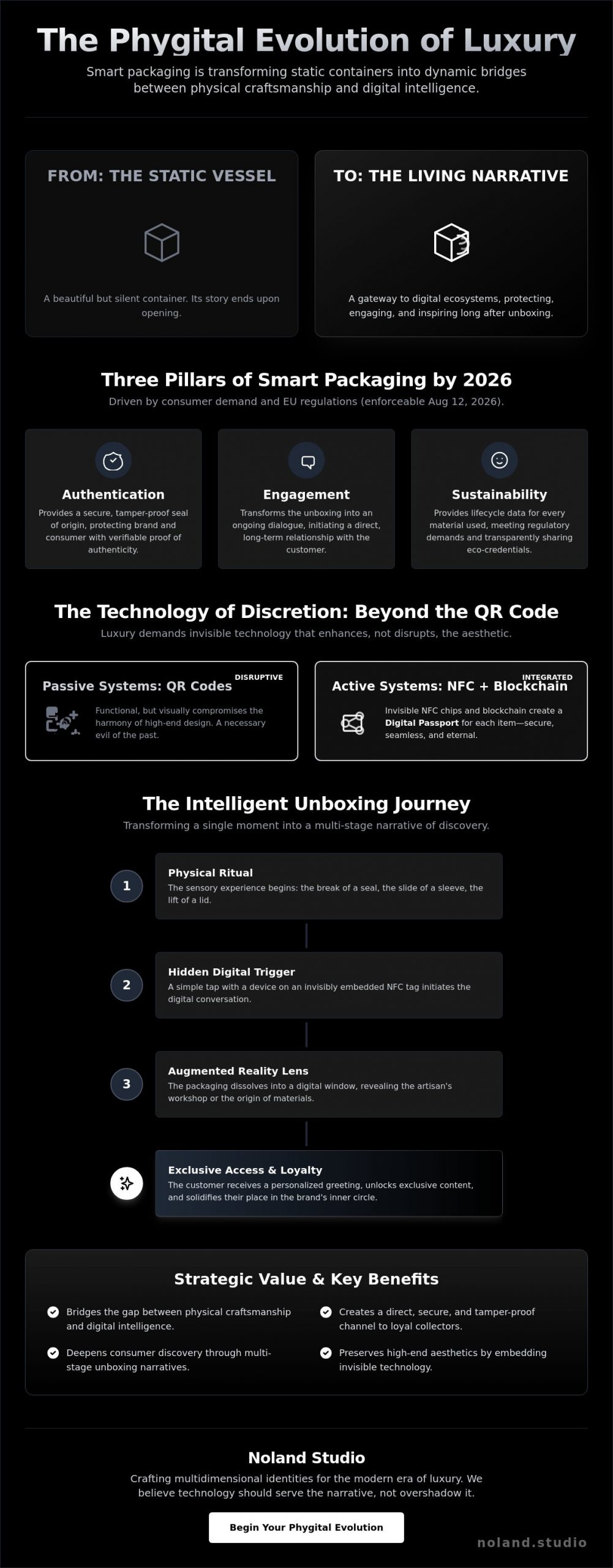
The essence of luxury has always resided in the tactile. It’s the weight of a silk ribbon or the resonance of a heavy glass vessel. Today, that essence is expanding into a new dimension. To understand the technical foundation of this shift, we must look at Defining Smart Packaging in 2026 through the lens of active and intelligent systems. We view smart packaging for luxury products as the intentional intersection of heritage craftsmanship and digital intelligence. It isn’t just a container; it’s a bridge. This phygital reality creates a seamless flow where physical touchpoints act as gateways to expansive digital ecosystems.
By 2026, three pillars support this evolution: authentication, engagement, and sustainability. For high-value goods, authentication provides a secure, tamper-proof seal of origin. Engagement transforms the unboxing into an ongoing dialogue. Sustainability, driven by the EU Packaging and Packaging Waste Regulation enforceable on August 12, 2026, demands that intelligence helps manage the lifecycle of every material used. This year marks a tipping point. Digital features have moved from experimental novelties to essential components of a brand’s structural base, often relying on the intelligent, always-on connectivity that Ai Fi provides to ensure these phygital narratives remain seamless and accessible.
Beyond the QR Code: The New Vocabulary of Luxury
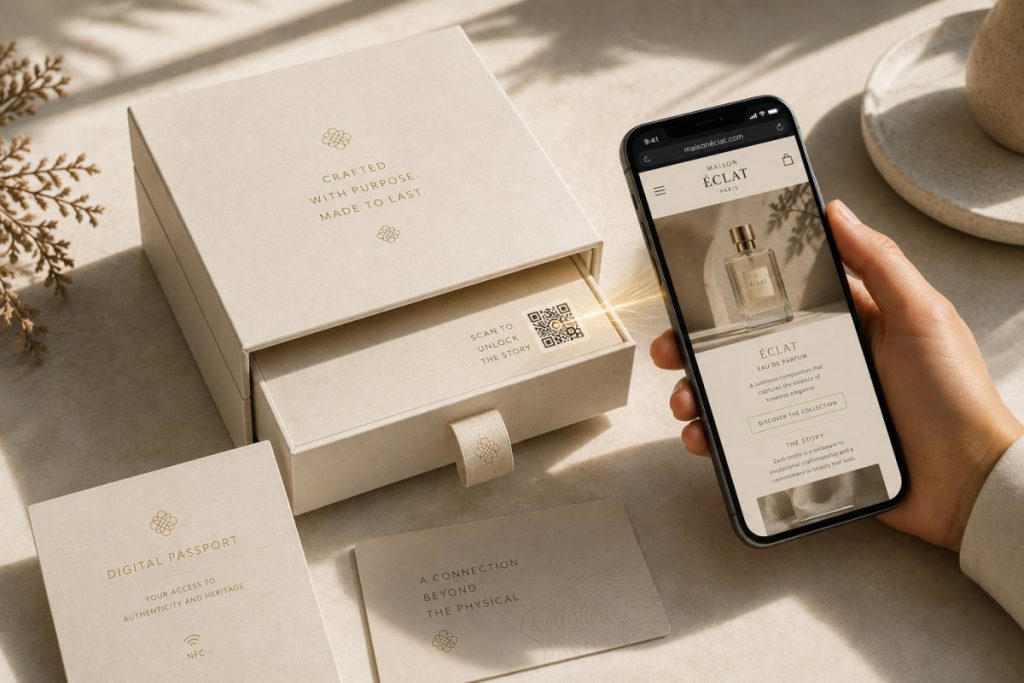
Luxury demands discretion. While passive systems like QR codes are functional, they often disrupt the visual harmony of a design. The new vocabulary of luxury prioritizes active systems, specifically NFC (Near Field Communication). These chips are the gold standard for premium goods because they remain invisible to the eye while offering high-level security. When paired with blockchain technology, these components create digital passports. These passports document a product’s journey from the artisan’s hands to the collector’s home, ensuring a legacy that is both verifiable and eternal. This shift toward smart packaging for luxury products allows brands to maintain their aesthetic integrity while providing the data-rich experiences modern consumers expect.
The Strategic Shift from Product to Experience
Smart packaging transforms a one-time transaction into a recurring digital relationship. It’s a shift from selling a static object to curating a living experience. This transition requires a rigorous approach to Estrategia y posicionamiento de marca to ensure that technology serves the narrative rather than overshadowing it. We believe in soulful technology. This means every digital interaction must feel as considered as a hand-drawn logo. When tech is guided by expert hands, it doesn’t cheapen the brand. It gives physical form to abstract values, creating an emotional resonance that lasts long after the box is opened.
The Intelligence of the Unboxing: Sensory Experience Meets Digital Precision
The unboxing ceremony is the ultimate physical manifestation of a brand’s promise. It’s a sequence of deliberate movements: the slide of a sleeve, the break of a seal, the lift of a lid. In the context of smart packaging for luxury products, this ritual is no longer silent. It becomes a multi-stage narrative journey where every layer of material serves as a chapter. By embedding hidden digital triggers within these layers, brands create a sense of discovery that feels private and exclusive. This isn’t just about opening a box; it’s about initiating a conversation.
Augmented Reality (AR) acts as a lens into the invisible. When a client hovers their device over a handcrafted item, the packaging dissolves into a digital window. They see the workshop in Florence. They watch the precise movements of the master weaver. They hear the ambient sounds of the atelier. This transparency doesn’t just inform; it transforms the object from a commodity into a storied artifact. The psychological impact of a personalized digital greeting upon opening further anchors this connection. It validates the client’s discernment, making them feel seen and valued within the brand’s inner circle. This level of intentionality transforms a purchase into a rite of passage.
Digital Storytelling through Tactile Triggers
A simple tap against a foil-stamped surface can reveal the origin story of raw materials or the specific artisan’s signature who inspected the piece. This level of depth requires a sophisticated approach to Dirección de arte y creación de contenido, ensuring the digital assets mirror the physical quality of the goods. Every pixel must match the prestige of the paper. Sensory resonance is the precise alignment of physical texture, digital rhythm, and emotional memory.
Personalization at Scale for High-End Clients
Modern technology allows for a degree of intimacy previously reserved for bespoke commissions. Smart packaging delivers content tailored to the individual buyer. AI now curates these digital experiences based on how a user interacts with the box. Imagine a perfume flacon that, once scanned, suggests a curated music playlist based on the scent profile and the time of day. This level of consideration ensures the brand remains present in the consumer’s lifestyle. If you’re ready to evolve your brand’s physical presence, consider how shaping a multidimensional identity can deepen your connection with your audience.
Elegance Without Intrusion: Marrying High-End Aesthetics with Invisible Technology
The greatest challenge in the evolution of smart packaging for luxury products is the perceived conflict between silicon and silk. For a brand built on heritage, the introduction of hardware can feel like an intrusion of the mundane into the sacred. To maintain exclusivity, technology must be felt rather than seen. We are witnessing the rise of invisible tech, where digital components are no longer external additions but are woven into the very fabric of the container. Whether it’s an NFC tag nestled between layers of 600gsm cotton paper or a sensor embedded within a hand-turned mahogany cap, the goal is total aesthetic integration.
Material selection plays a critical role in this marriage of form and function. As we navigate the requirements of the EU Packaging and Packaging Waste Regulation, which becomes enforceable on August 12, 2026, brands must choose sustainable substrates that don’t interfere with electronic signals. While the price of NFC tags in June 2026 ranges from $0.10 to over $1.00 depending on memory and casing, the investment is wasted if the tag disrupts the tactile grace of the package. We treat the digital artisan with the same reverence as the bookbinder, ensuring the digital interface feels as hand-crafted as the box itself.
The Aesthetic Challenge of Smart Components
Luxury is defined by what is hidden as much as what is revealed. Hiding antennas and chips within premium materials like heavy-weight cardstock or silk requires a design-led approach. This is why Premium Packaging Design must lead the technical implementation. If the technology dictates the shape, the brand loses its soul. We focus on maintaining the satisfying click of a magnetic closure and the specific resistance of a ribbon pull while housing the necessary sensors. The tech should never compromise the sensory weight that defines a high-end artifact.
Minimalism vs. Utility in Interface Design
A sophisticated digital experience must be frictionless. In 2026, luxury consumers don’t want to download apps or navigate cluttered menus. Entry points should be immediate, triggered by simple proximity. The digital UI must be a mirror of the brand’s Sistemas de identidad visual, using the same typography, color palettes, and rhythmic motion. By avoiding tech-clutter on the physical surface, we preserve the minimalist aesthetic. We create a structural base where the physical object remains the hero, and the digital layer acts as its silent, intelligent shadow.
A Strategic Framework for Implementing Smart Systems in Premium Product Lines
Transitioning from traditional containers to smart packaging for luxury products requires more than technical curiosity; it demands a disciplined architectural approach. We don’t view technology as a feature to be “added on” but as a structural base to be integrated. This evolution begins with a narrative audit. You must ask what story the technology needs to tell. Does it whisper of provenance, or does it shout of innovation? Once the narrative is anchored, we move to hardware selection. In 2026, this means matching the specific chip to the price point and material, whether that’s an NFC tag for high-touch intimacy or a UHF RFID tag for complex logistics. Prices for basic NFC tags currently range from $0.10 to over $1.00, making the choice of form factor a strategic business decision.
The third step involves ecosystem design. The “tap” is merely the threshold; you must curate where the user goes next. Whether it’s a private concierge portal or an immersive AR experience, the digital destination must match the physical prestige. Prototyping and production management follow, ensuring the delicate electronic components survive the rigors of the global supply chain. Finally, we practice data discernment. We use the insights gathered from these interactions not for mass-market tracking, but to refine future branding and deepen the emotional resonance of the product line.
Authentication as a Value Add
In an era where the OECD estimates the counterfeit luxury market at $461 billion, security is the ultimate luxury. Smart packaging provides a definitive answer to the fear of the fraudulent. By embedding a unique digital signature into the package, brands can provide a “Certificate of Authenticity” that lives securely in a client’s digital wallet. This layer of protection is deeply connected to a brand’s Denominación e identidad verbal. The way a brand speaks about its origin and its security protocols builds the foundation of trust that collectors demand. It’s a process of verification that feels like a private handshake between the house and the patron.
Sustainability and the Circular Economy
The intelligence of the box also serves the planet. As we prepare for the EU’s Packaging and Packaging Waste Regulation enforcement on August 12, 2026, smart tags offer a sophisticated way to manage a product’s lifecycle. Digital passports can provide clear instructions for recycling or refilling, moving beyond the need for bulky physical inserts. This circularity is particularly valuable in the pre-loved luxury market, where a digital history of ownership and care increases the item’s enduring value. If you’re ready to define your brand’s digital soul, explore how our studio can architect your phygital future.
Noland Studio: Crafting Multidimensional Identities for the Modern Era
Noland Studio exists at the precise intersection where abstract vision meets physical form. We are a multidisciplinary collective dedicated to the belief that a brand’s identity should be felt as much as it is seen. As we have explored throughout this guide, the implementation of smart packaging for luxury products requires more than technical proficiency; it demands a curator’s eye and a strategist’s mind. We don’t merely apply technology to a surface. Instead, we architect structural bases that allow a brand’s essence to evolve, breathe, and resonate within a digital landscape.
Our approach is fundamentally strategy-first. We integrate the capabilities of AI and the nuance of digital artisans to ensure that every touchpoint serves a higher purpose. By leveraging a global network of experts, we provide a high-level vision that is sensitive to localized craftsmanship. We understand that for a legacy house, the introduction of a digital layer is a transformative process that must be handled with expert hands. We invite visionary brands to move beyond the transactional and embrace a future where packaging is a sensory-rich, intelligent artifact.
The Artisan Approach to Digital Transformation
We prioritize discernment over mere automation. In the world of high-end design, the human touch remains the ultimate mark of quality. Managing the technical complexity of Diseño digital y desarrollo web alongside physical production requires a disciplined, intelligent perspective. Our studio acts as a bridge, ensuring that the digital code is as elegant as the physical embossing. We focus on:
- Organizing complex data into intuitive consumer journeys.
- Refining the interaction between sustainable materials and active sensors.
- Growing the emotional bond between the brand and the collector through immersive storytelling.
This commitment to expertise ensures that your smart packaging for luxury products creates an enduring impact rather than following a fleeting trend.
Let’s Shape Your Brand’s Digital Soul
The transition to a phygital identity is an opportunity to redefine your brand’s relationship with time and space. We encourage you to explore these possibilities through a dedicated consultation where we can map out a multidimensional future for your product lines. Our studio operates with a philosophy of fixed-fee transparency, providing clarity and confidence for every branding and packaging project we undertake. We believe that when technology is guided by a soulful vision, it doesn’t cheapen the brand; it illuminates it. Connect with Noland Studio to transform your packaging into a multidimensional experience and give physical form to your most ambitious brand thoughts.
Shaping the Future of the Phygital Artifact
The transition toward smart packaging for luxury products marks a fundamental evolution in how we perceive and protect premium goods. We’ve explored how the intersection of invisible technology and tactile craftsmanship transforms a static box into a living narrative. By prioritizing a strategy-first approach, brands can ensure that every digital touchpoint enhances rather than disrupts the sensory experience. The goal is to create a structural base where authentication, engagement, and sustainability coexist in perfect harmony.
Noland Studio acts as a bridge between the abstract world of ideas and the physical world of products. Our multidisciplinary collective of global digital artisans understands the delicate balance required to innovate without losing the brand’s soul. We invite you to move beyond the traditional and embrace a multidimensional identity that resonates with the modern collector. Begin your brand’s phygital evolution with Noland Studio and give physical form to your most visionary thoughts. Your journey into the future of luxury craft starts here.
Preguntas frecuentes
What is the most discreet technology for smart luxury packaging?
NFC, or Near Field Communication, is the most discreet technology available for premium goods. These ultra-thin chips are easily hidden between layers of heavy-weight cardstock or integrated into structural components like bottle caps. Unlike QR codes, NFC doesn’t disrupt the visual surface of the design. It allows for a seamless tap interaction that feels intuitive rather than mechanical, preserving the aesthetic integrity of the artifact.
Does smart packaging require a dedicated mobile app for customers?
Modern smart packaging systems don’t require a dedicated mobile app. Most smartphones in 2026 possess native NFC and QR scanning capabilities that launch digital experiences directly within a secure web browser. This frictionless entry point ensures that the interaction feels like a natural extension of the unboxing ceremony. It removes the barrier of a download, keeping the focus on the brand’s narrative and the product’s prestige.
How does smart packaging improve the ROI of luxury marketing?
Smart packaging for luxury products improves ROI by transforming a static object into a recurring digital relationship. Brands gain precise insights into consumer behavior, such as unboxing frequency and geographical engagement. This data allows for highly targeted remarketing and personalized storytelling. By building a direct bridge to the collector, you reduce the cost of customer acquisition and foster enduring loyalty through exclusive, expert-led content.
Can smart packaging help in the fight against counterfeit luxury goods?
Smart systems are essential in the fight against the 461 billion dollar counterfeit luxury market. By embedding a unique, encrypted digital signature in the package, brands provide a verifiable certificate of authenticity for every item. This digital passport is tamper-proof and can be tracked across the product’s entire lifecycle. it protects the brand’s heritage and gives the collector absolute confidence in the provenance of their high-value purchase.
Is it possible to create sustainable smart packaging?
It’s entirely possible to create sustainable smart packaging by choosing recyclable substrates and mono-materials. The EU Packaging and Packaging Waste Regulation, enforceable on August 12, 2026, mandates that all packaging be designed for circularity. Smart features actually support these goals by replacing physical paper manuals with digital versions. This reduces waste while providing clear end-of-life instructions through a simple scan, aligning luxury with ecological responsibility.
How much does it cost to implement smart features in premium packaging?
The price of individual NFC tags in June 2026 ranges from approximately 0.10 to over 1.00 dollar per unit. While the tag itself is affordable, the total cost of implementation includes hardware, software integration, and custom content creation. It’s helpful to remember that the tag typically represents only 28 to 35 percent of the total project investment. Luxury brands should view this as a strategic capital expenditure for long-term brand protection.
What industries benefit most from phygital packaging experiences?
How do I ensure the digital experience matches my high-end brand identity?
Ensuring a match with your brand identity requires a strategy-first design approach. Every digital interaction must mirror your physical visual identity systems, from typography to the rhythm of motion design. The digital artisan must work in tandem with the packaging designer to ensure the interface feels as handcrafted as the box itself. By prioritizing discernment over automation, you create a phygital experience that resonates emotionally and reinforces your brand’s prestige.