Tu marca es más que un logotipo o una paleta de colores. Es una entidad viva que respira en cada palabra que pronuncia, pero muchos líderes tienen dificultades para definir una identidad verbal que se sienta sofisticada y auténtica a la vez. Con un aumento de 28,61 TP3T en las visitas a plataformas de IA año tras año a principios de 2026, el espacio digital se está convirtiendo en una galería abarrotada de ecos automatizados. Si tu mensaje es inconsistente o no logra capturar la esencia de tu marca, probablemente estés sintiendo la presión de un mercado donde 881 TP3T de los profesionales del marketing confían en herramientas de IA que a menudo recurren a lo genérico.
Definir tu voz es la clave estratégica para diferenciar una presencia de lujo de una imagen corporativa genérica. Reconoces que las palabras deben ir más allá de la mera información; deben evocar una sensación tangible de artesanía e intencionalidad. Este artículo ofrece un marco claro para definir la voz de tu marca y conectar la estrategia de alto nivel con el lenguaje que utilizas a diario. Exploraremos cómo crear una narrativa que se desarrolle y evolucione, asegurando que tu marca se exprese con maestría en una era donde la Ley de IA de la UE, vigente desde el 2 de agosto de 2026, exige un nuevo nivel de transparencia y autenticidad humana.
Conclusiones clave
- Define la esencia lingüística de tu marca distinguiendo tu voz única de su estética visual.
- Implementar un marco estratégico de cinco pasos para transformar los mensajes genéricos en una identidad verbal sólida que capte la atención.
- Evite la "brecha del lujo" eliminando clichés manidos como "a medida" y "exclusivo" y optando por un lenguaje más evocador e intencional.
- Descubre cómo utilizar la "Auditoría del Alma" para afianzar la personalidad de tu marca en sus verdaderos fundamentos y herencia.
- Aprende a combinar la artesanía humana con la IA para mantener viva, dinámica y relevante la narrativa de tu marca a medida que creces.
¿Qué es la identidad verbal? Definiendo el alma de tu marca.
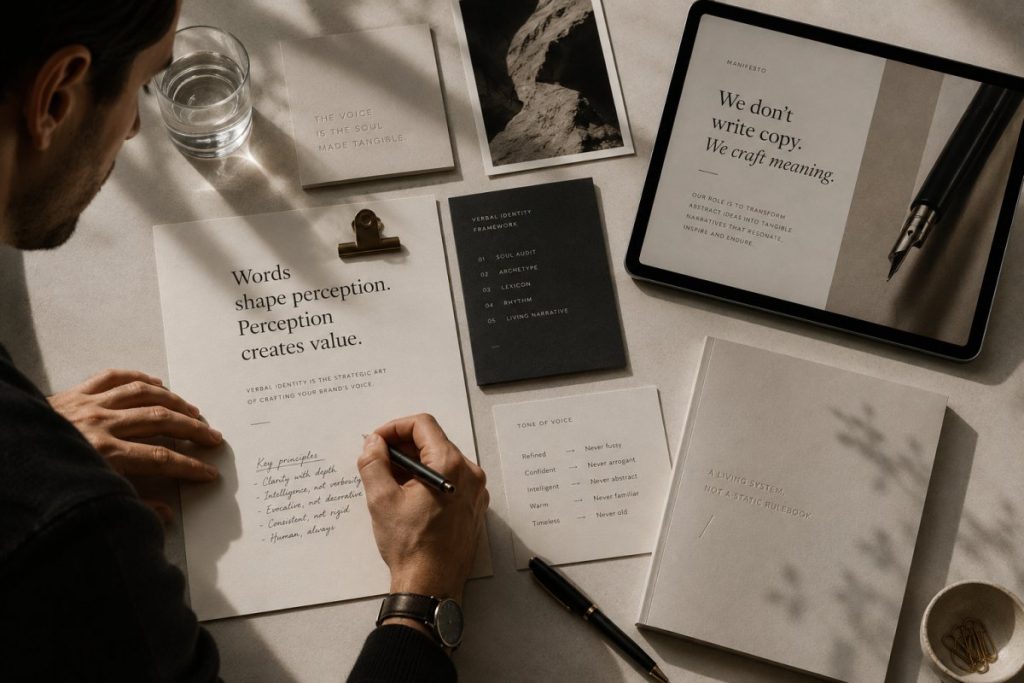
Una marca es una entidad viva que respira, se adapta y evoluciona. Si bien los sistemas visuales proporcionan la silueta y el marco estético, es la identidad verbal la que le da vida a la marca. A menudo vemos marcas de lujo invertir mucho en un sistema de identidad visual, solo para que su mensaje caiga en la trampa de la esterilidad corporativa o el cliché genérico. La identidad verbal es el componente lingüístico del sistema de identidad total de una marca. Es el arte estratégico de elegir palabras que resuenen con intencionalidad, asegurando que cada frase transmita el peso del legado de la marca.
Piensa en la identidad visual como las paredes de la galería y en la identidad verbal como la voz del curador. Una proporciona la estructura; la otra, el significado. En esta intersección es donde encontramos el concepto de Arte Verbal. Se trata de un enfoque multidisciplinario donde el lenguaje no es solo una herramienta de información, sino una forma de alquimia. Para los productos de alta gama, esta voz actúa como el guardián de la exclusividad. Es la diferencia entre una marca que simplemente vende y una marca que cura una experiencia. Según la definición fundamental de Identidad verbal, Este sistema abarca todos los puntos de contacto donde una marca se comunica, creando bases que permiten que el alma de una marca se sienta tanto como se ve.
La diferencia entre el tono de voz y la identidad verbal
Muchos líderes confunden estos dos conceptos, pero la distinción es vital para la claridad estratégica. El tono de voz es el estado de ánimo o la inflexión emocional de un momento específico; es cómo hablas cuando cambia el contexto. En cambio, identidad verbal La identidad verbal abarca toda la personalidad y la estructura lingüística. Incluye las convenciones de nomenclatura, el léxico específico y los modelos narrativos que dan forma a la historia. La identidad verbal es la arquitectura viva de la comunicación de una marca. No solo reacciona al entorno, sino que define la atmósfera del lugar en sí.
¿Por qué las marcas premium necesitan una voz estratégica en 2026?
El entorno del mercado se ha inclinado hacia la preferencia por la profundidad sobre la velocidad. A principios de 2026, las visitas a plataformas de IA crecieron un 28,61% interanual, generando una avalancha de contenido automatizado de nivel medio. En este contexto, la comunicación genérica es una sentencia de muerte para el sector del lujo. Los consumidores se alejan de las interacciones transaccionales en favor de narrativas emocionales que se sienten guiadas por expertos. Su lenguaje debe crear un universo visual vivo en la mente del consumidor, donde las ideas toman forma a través de una prosa sofisticada. Esta voz estratégica es la que construye un legado y una confianza a largo plazo, transformando un producto simple en un legado tangible que habla el lenguaje del presente.
Los pilares estructurales de un sistema de identidad verbal de alta calidad
Un sistema de identidad verbal premium es más que una lista de adjetivos en un manual de marca. Es la arquitectura invisible que permite que el alma de una marca respire, se adapte y evolucione en cada punto de contacto. Mientras que muchos competidores tratan el lenguaje como una herramienta de marketing separada y de menor nivel, nosotros lo vemos como una base estratégica. Para entender ¿Qué es la identidad verbal? En un contexto de lujo, es fundamental analizar los pilares que sustentan el proyecto y justifican la inversión. Dado que los servicios de agencias de nivel medio para estos proyectos oscilan entre $50,000 y $100,000 a partir de mayo de 2026, la solidez de esta arquitectura debe ser absoluta.
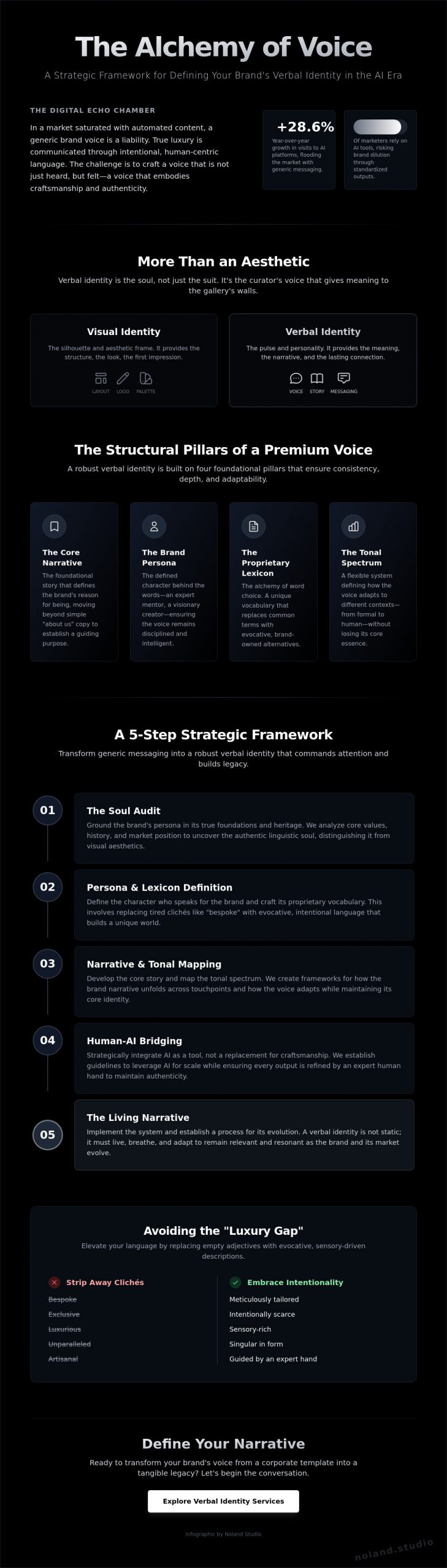
El sistema se sustenta en cuatro pilares fundamentales que organizan, categorizan y clarifican la presencia de la marca:
- La narrativa central: Esta es la historia fundamental que da forma a cada mensaje. Va más allá de la sección "Sobre nosotros" para definir la razón de ser de la marca.
- La personalidad de la marca: Esto define la personalidad detrás de las palabras. Ya sea un “mentor experto” o un “creador visionario”, esta personalidad garantiza que la voz se mantenga disciplinada e inteligente.
- El léxico propietario: Esta es la alquimia de la elección de palabras. Consiste en crear un vocabulario único que pertenezca solo a la marca, reemplazando los términos comunes de la industria con alternativas evocadoras.
- El espectro tonal: Una voz viva debe ser flexible. Este espectro define cómo la voz se adapta a diferentes contextos, desde un informe técnico formal hasta una interacción humana y cercana, sin perder su esencia.
Nomenclatura y arte verbal
El proceso de Denominación e identidad verbal Es donde los conceptos abstractos se vuelven tangibles por primera vez. El nombre de un producto no es solo una etiqueta; establece la expectativa sensorial para toda la experiencia. Es una forma de artesanía de alto nivel donde usamos inteligencia y criterio para asegurar que el nombre resuene con el alma de la marca. Cuando un nombre se elige intencionalmente, sirve como el primer capítulo de una narrativa que se desarrolla a través de todo el universo visual. Para los fundadores que buscan comprender cómo seleccionar al socio adecuado para este trabajo crítico, nuestra guía sobre Elegir una agencia de nombres de lujo en 2026 Proporciona los criterios estratégicos necesarios para evaluar la intuición poética y la precisión lingüística.
El papel del posicionamiento estratégico en el lenguaje
El lenguaje siempre debe ser un reflejo de Estrategia y posicionamiento de marca. Si la estrategia es posicionar una marca como un experto multicultural global, el lenguaje debe ser sofisticado pero sensible a los matices locales. Cada elección de palabras debe estar alineada con la visión de alto nivel de la marca, asegurando que identidad verbal refuerza su estatus de lujo. Esta alineación es lo que permite a una marca hablar el lenguaje del presente mientras construye un legado para el futuro. Si está listo para dar forma a su visión, puede Crea y gestiona el universo lingüístico de tu marca. con orientación experta.
La brecha del lujo: por qué los mensajes genéricos diluyen el valor de la marca.
El lujo no es una palabra; es una sensación. Sin embargo, muchas marcas de alta gama sufren de “fatiga de clichés”, recurriendo a descriptores manidos como “a medida”, “exclusivo” o la propia palabra “lujo”. Cuando todas las marcas afirman ser las mejores, las palabras pierden su fuerza y la presencia de la marca comienza a desvanecerse. Esta dilución crea una “brecha de lujo”, donde el valor percibido de un producto disminuye porque el lenguaje utilizado para describirlo suena comercial. La redacción publicitaria tradicional suele fallar porque se centra en las características en lugar de en la naturaleza multidimensional de una experiencia que debe sentirse.
Un débil identidad verbal Esto conlleva una pérdida de resonancia emocional. Si tu mensaje suena como un informe clínico o un comunicado de prensa corporativo, no logras conectar con un consumidor que busca transformación y excelencia estética. Para mayo de 2026, con 881 TP3T de profesionales del marketing dependiendo de herramientas de IA para sus tareas diarias, el riesgo de sonar como todos los demás ha alcanzado un punto crítico. Sin una estrategia con alma, la voz de tu marca se convierte en un producto genérico, indistinguible del ruido del panorama minorista estándar. El costo de este fracaso es tangible; se manifiesta como una disminución de la lealtad a la marca y un debilitamiento de sus cimientos.
Identificación de mensajes “fantasma”
El mensaje fantasma se produce cuando una marca se comunica, pero sin transmitir nada distintivo. Es el eco vacío de una marca que ha entregado su esencia a plantillas genéricas y mensajes automatizados. Cuando el lenguaje actúa como una barrera en lugar de un puente, impide que el público perciba la intencionalidad y la experiencia de la marca. En el sector del lujo, el juicio experto debe primar siempre sobre la mera automatización. Una narrativa que carece de un punto de vista específico será ignorada por un público global cada vez más exigente que valora la autenticidad y la artesanía.
La psicología del lenguaje sensorial
En un mundo digital, las palabras deben evocar la textura de los materiales de alta calidad o el peso de un producto físico. La elección estratégica de palabras puede imitar el impacto sensorial de la artesanía de lujo, transformando conceptos abstractos en narrativas tangibles. A menudo utilizamos el principio de la tríada para generar autoridad, asegurando que cada mensaje respire, se adapte y evolucione. Esta estructura rítmica crea una sensación de profundidad e inteligencia que un texto puramente clínico no puede lograr. Se trata de sentar las bases que permitan a una marca comunicarse con sensibilidad y cercanía, manteniendo al mismo tiempo una perspectiva visionaria y de alto nivel.
Cómo desarrollar una identidad verbal: un marco estratégico de 5 pasos.
Crear una presencia con alma requiere más que solo una redacción publicitaria ingeniosa; exige un proceso disciplinado de alquimia. Para ir más allá de los mensajes genéricos, debes tratar la voz de tu marca como una manifestación física de su estrategia. Este marco de cinco pasos proporciona la arquitectura necesaria para organizar, categorizar y clarificar tu identidad verbal, asegurando que resuene con intencionalidad y excelencia estética. Se trata de sentar las bases que permitan que tu marca se exprese con sensibilidad y un toque local, manteniendo al mismo tiempo una perspectiva visionaria y de alto nivel.
- Paso 1: La auditoría del alma. Comenzamos por descubrir la narrativa y los fundamentos intrínsecos de la marca. No se trata de lo que quieras decir, sino de descubrir la esencia de la marca.
- Paso 2: Definir el arquetipo. Este paso define la personalidad que da vida a la estrategia. Definimos al mentor experto o creador visionario que guiará cada palabra que pronuncie la marca.
- Paso 3: Elaboración del léxico. Aquí, creamos un vocabulario específico que te pertenece solo a ti. Esto genera un universo visual vivo en la mente del consumidor, reemplazando los términos comunes de la industria con alternativas evocadoras.
- Paso 4: Establecer los ritmos. Definimos las estructuras sintácticas y los cambios de tono para los distintos puntos de contacto. Esto garantiza que el tono de voz se mantenga sofisticado, ya sea en una pantalla digital o en un envase de alta gama.
- Paso 5: Documentar el Universo Vivo. Finalmente, creamos un manual de marca que evoluciona en lugar de restringir. Sirve como una guía a través del lenguaje de tu marca, permitiendo que la identidad se desarrolle a medida que creces.
Auditoría de tu narrativa actual
La transformación comienza con una mirada honesta a la desconexión entre tu mensaje actual y tu visión. Muchas marcas descubren que su comunicación se siente más como una fachada corporativa que como una entidad viva. Pregúntate: “Si nuestra marca fuera una persona, ¿qué libros leería?”. Esta pregunta ayuda a cerrar la brecha entre los valores abstractos y el “cómo” estratégico de tu comunicación. Para mayo de 2026, cuando el 881% de los profesionales del marketing dependan de herramientas de IA para sus tareas diarias, quienes lideren con criterio humano y una narrativa clara serán quienes realmente destaquen.
Creación de un manual de marca vivo
Las directrices estáticas ya no son suficientes para las marcas que se mueven entre los mundos digital y físico. Su sistema verbal debe garantizar que la voz se traduzca sin problemas de Diseño digital y desarrollo web a las narrativas de tus productos físicos. Esta documentación debe ser una herramienta viva que empodere a tu red de creadores para mantener la coherencia. Permite que tu marca respire, se adapte y evolucione a medida que creces globalmente, manteniendo su esencia intacta en cada etapa. Si estás listo para dar forma al futuro de tu marca, Comienza tu transformación verbal estratégica con nuestro equipo de expertos.
La narrativa viva: implementación, IA y evolución futura.
La narrativa de una marca nunca es un artefacto terminado. Es un universo vivo que debe respirar, adaptarse y evolucionar a medida que se mueve a través de fronteras y plataformas. En el panorama actual de mayo de 2026, donde las visitas a plataformas de IA han aumentado en 28,61 TP3T año tras año, su identidad verbal Actúa como guardián principal de la esencia de tu marca. Ya no basta con una guía de estilo estática; necesitas un sistema modular que la IA pueda comprender y que los consumidores puedan percibir. Esto garantiza que, a medida que te expandes globalmente, tu voz siga siendo una manifestación tangible de tu visión estratégica, en lugar de un eco diluido de su intención original.
La verdadera maestría verbal se manifiesta en la intersección de la inteligencia humana y la innovación tecnológica. A medida que el descubrimiento se orienta hacia las recomendaciones impulsadas por IA, un fenómeno que se mantuvo estable para los sitios web tradicionales a principios de 2026, las marcas deben optimizar sus bases lingüísticas para estos nuevos entornos. Esto requiere la guía de expertos que garanticen que cada punto de contacto digital conserve el impacto sensorial de una experiencia de lujo física. Al organizar, categorizar y clarificar su narrativa, crea una estructura que mantiene su integridad, ya sea que se lea en una pantalla o se sienta en un empaque de alta gama.
La IA como herramienta del artesano
Consideramos la IA como un cincel sofisticado, no como un escultor. Si bien modelos emblemáticos como GPT-5.5 y Claude Opus 4.7 ofrecen una velocidad sin precedentes, carecen de la sensibilidad y el toque personal necesarios para el verdadero lujo. La transparencia es ahora un mandato legal: las obligaciones de la Ley de IA de la UE entraron en vigor el 2 de agosto de 2026, y la ley de Nueva York sobre "Intérpretes Sintéticos" entró en vigor el 9 de junio de 2026. Estas regulaciones refuerzan la necesidad del juicio humano en cada palabra. La IA puede generar palabras, pero solo los artesanos pueden darles forma. Al utilizar estas herramientas para potenciar la visión estratégica, garantizamos que la inteligencia de la marca siga guiada por un creador disciplinado y apasionado.
La Voz Global: Crecer sin perder el alma
Ampliar una marca premium requiere un delicado equilibrio entre la coherencia global y la sensibilidad local. Un visionario identidad verbal Debe desarrollarse de forma natural en diferentes contextos culturales, hablando el lenguaje del presente sin perder su atemporalidad. Esta experiencia multicultural permite a una marca mantener su exclusividad a la vez que se muestra accesible y conectada. A menudo utilizamos un breve y cálido contraste en nuestra comunicación, como el uso de “aloha”, para recordar a nuestra audiencia que detrás de la sofisticada estrategia hay un corazón humano. Este enfoque garantiza que su narrativa siga siendo un universo visual vivo que resuene con profundidad emocional, sin importar en qué parte del mundo se escuche. Si está listo para evolucionar su presencia, descubra cómo nuestra Denominación e identidad verbal Nuestros servicios proporcionan la estructura para el futuro de su marca.
Dando forma a una narrativa que respira y evoluciona
La voz de tu marca es la arquitectura viva de su alma. Es la diferencia entre una plantilla genérica y un legado tangible que impone autoridad en el mercado del lujo. Al dominar los pilares estratégicos y auditar tus fundamentos inherentes, te aseguras de que tu marca... identidad verbal Sigue siendo riguroso a la vez que sugerente. A medida que nos acercamos al 2 de agosto de 2026, fecha límite para la transparencia en la IA en toda la UE, la necesidad de innovación liderada por expertos es más crucial que nunca. La autenticidad ya no es una opción; es un mandato estratégico.
Los mensajes genéricos dificultan la exclusividad, pero un lenguaje propio permite que tu marca hable el idioma del presente. Hemos explorado cómo una visión innovadora puede transformar textos impersonales en un universo visual dinámico con repercusión global. Como colectivo multidisciplinario de diseño, compuesto por expertos en diseño digital y especialistas en estrategia de lujo, conectamos las ideas abstractas con el impacto sensorial. Da forma al alma de tu marca con la maestría verbal de Noland Studio. Tu historia está lista para desarrollarse. Aloha.
Preguntas frecuentes
¿La identidad verbal es lo mismo que un eslogan o lema?
No, un eslogan es solo una manifestación de tu marca, mientras que la identidad verbal es toda la arquitectura lingüística. Abarca tus sistemas de nomenclatura, tu léxico propio y los modelos narrativos que dan forma a cada interacción. Piensa en un eslogan como una ventana y en la identidad verbal como la base de la galería.
¿Cuánto tiempo se tarda en desarrollar un sistema de identidad verbal completo?
Un sistema integral suele requerir de 8 a 12 semanas de desarrollo estratégico. Este periodo permite una profunda introspección, la definición de arquetipos y la creación de un léxico flexible. Es un proceso rítmico que garantiza que tu voz respire, se adapte y evolucione en todos los puntos de contacto globales.
¿Puedo usar inteligencia artificial para redactar las directrices de identidad verbal de mi marca?
Las herramientas de IA como Claude Opus 4.7 pueden generar borradores iniciales, pero carecen del criterio experto necesario para el posicionamiento de lujo. Con 881 millones de profesionales del marketing que dependen de la IA a principios de 2026, el uso exclusivo de la automatización da como resultado mensajes genéricos que diluyen el valor de la marca. Es fundamental que los expertos guíen estas herramientas para garantizar que la esencia de la marca se mantenga tangible y cumpla con la normativa europea sobre IA.
¿Qué ocurre si mi identidad visual y mi identidad verbal están desconectadas?
La disonancia entre la imagen y el tono de comunicación genera desconfianza y diluye la exclusividad percibida. Cuando las imágenes sugieren lujo, pero el lenguaje resulta impersonal o corporativo, se produce la brecha del lujo. Esta fragmentación impide que la marca cree un universo visual vivo en la mente del consumidor.
¿Con qué frecuencia debería una marca actualizar su identidad verbal?
Sus cimientos fundamentales deben mantenerse estables durante 3 a 5 años para construir un legado duradero. Sin embargo, su narrativa debe evolucionar y adaptarse a medida que crece o cambian los contextos culturales. Recomendamos una auditoría de esencia cada 24 meses para asegurar que su marca siga conectando con el presente sin perder su esencia atemporal.
¿La identidad verbal es exclusiva de las marcas de lujo o de alta gama?
Cada marca tiene su propia voz, pero los sectores de alta gama requieren un mayor dominio del lenguaje para establecer su exclusividad. Mientras que las marcas de consumo masivo suelen centrarse en la rapidez de las transacciones, las marcas de lujo utilizan el lenguaje como una forma de alquimia. Transforman valores abstractos en una sensación tangible de artesanía que justifica un precio más elevado.
¿Cómo puedo medir el retorno de la inversión (ROI) de un proyecto de identidad verbal?
El retorno de la inversión (ROI) se mide a través del aumento del sentimiento de marca, la alineación interna y el rendimiento en los canales de descubrimiento. A principios de 2026, las visitas a plataformas de IA experimentaron un crecimiento interanual del 28,61 %. Una identidad estratégica clara garantiza que estos sistemas de IA comprendan y recomienden correctamente su marca a los consumidores exigentes, evitando que su mensaje pase desapercibido.
¿Puede una identidad verbal contribuir a la cultura interna de la empresa?
Una identidad verbal sólida proporciona un léxico compartido que une a su equipo bajo una única personalidad creativa y visionaria. Va más allá de un manual corporativo para convertirse en una guía a través del alma de la marca. Cuando sus empleados hablan el mismo idioma, actúan como guardianes disciplinados que protegen la herencia y la intencionalidad de la marca. Trabajar con un equipo dedicado agencia de nombres de lujo Garantiza que este lenguaje compartido se construya sobre una base de rigor estratégico y una identidad sólida y duradera desde el primer momento.