A boutique hotel is not merely a collection of rooms or a curated lobby; it is a living, breathing narrative that guests should feel before they ever cross the threshold. If your property feels indistinguishable from the latest “modern” trend, you are losing the ability to command a premium and build lasting loyalty. Developing a sophisticated visual identity for a boutique hotel requires more than a simple logo. It demands the intentional translation of a physical space into a digital soul that resonates through every touchpoint, from the first click to the final checkout.
You likely recognize the deep frustration of a website that fails to capture the scent of your lobby, the texture of your linens, or the warmth of your service. It is a common disconnect that leaves potential guests feeling indifferent rather than inspired. This article promises to show you how to bridge that gap by transforming your property into a multidimensional legacy. We will explore the art of strategic positioning, the vital importance of digital accessibility, and the expert craftsmanship required to build a brand that evolves, breathes, and thrives alongside your vision.
Conclusiones clave
- Define your property’s essence as a sensory bridge that connects architectural design with the guest’s emotional experience.
- Understand why a robust visual identity for a boutique hotel must be anchored in deep strategic positioning to ensure your brand feels like a destination.
- Identify the essential hierarchy of brand elements, from physical signage to digital booking engines, that create a cohesive and immersive guest journey.
- Synchronize your digital presence with your physical lobby to eliminate the branding disconnect that often costs properties direct bookings.
- Explore why agile, multidisciplinary collectives offer a more refined and expert-led approach to branding than traditional, bloated agency models.
What is a Visual Identity for a Boutique Hotel?
A boutique hotel exists at the intersection of a physical structure and an emotional memory. It’s the place where stone, wood, and light meet the guest’s desire for belonging. To truly understand What is a Visual Identity in this context, one must look beyond the surface. It is the sensory bridge that connects a property’s architecture with the guest’s internal state. While mass-market chains prioritize uniformity and efficiency, a visual identity for a boutique hotel demands a soulful, localized touch. It is a commitment to storytelling that transforms a mere building into a destination with a distinct pulse.
We view branding as a multidimensional experience that breathes, evolves, and matures. It isn’t a static set of rules tucked away in a PDF; instead, it’s a living, digital-first hospitality system. Modern travelers encounter your hotel on a screen long before they touch your door handles. The identity must manifest through pixels with the same intentionality it shows in the physical lobby. This transition from abstract thought to physical presence creates a legacy that grows as the property matures, ensuring the brand remains relevant through shifting trends and guest expectations.
Beyond the Logo: The Hospitality Ecosystem
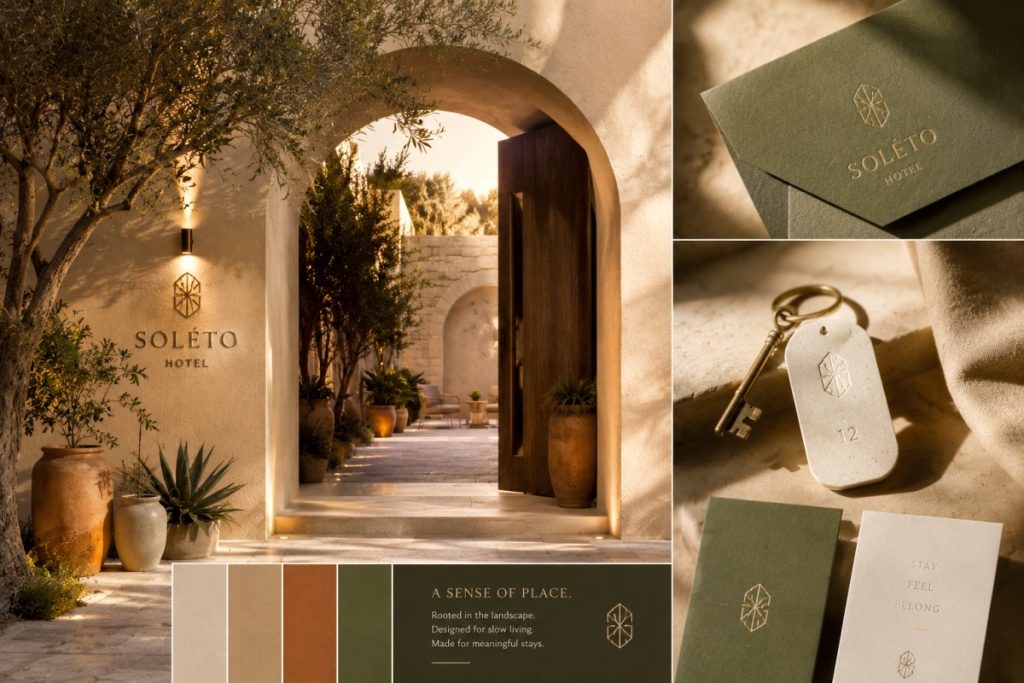
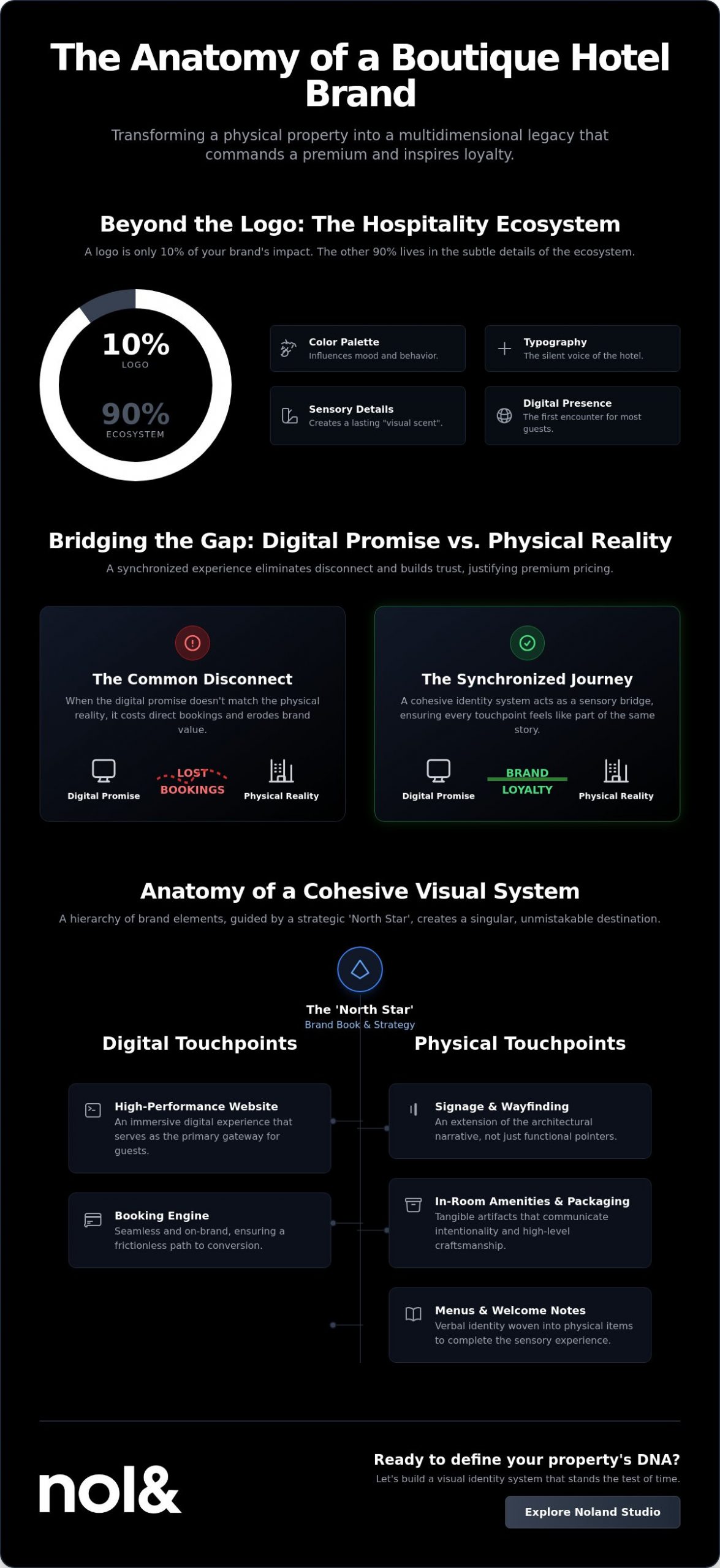
A logo often represents only 10% of a brand’s true impact. The remaining 90% lives in the subtle details of the ecosystem. Typography serves as the hotel’s silent voice; it can whisper of heritage, suggest modernism, or project luxury. Color palettes go beyond aesthetics to influence guest behavior in profound ways. A soft, earthy palette in a wellness suite encourages stillness and reflection. In contrast, a high-contrast, vibrant scheme in a rooftop bar drives energy, movement, and social interaction. Every element must be curated with discernment to ensure the visual identity for a boutique hotel feels cohesive across all touchpoints.
The Importance of Sensory Branding
Visual identity serves as the precursor to the tactile world. Before a guest feels the weight of the linens, the cold metal of a room key, or the grain of a menu, they see the visual promise. This consistency creates a “visual scent,” an aesthetic memory that lingers long after checkout. It ensures every touchpoint, from digital ads to physical coasters, feels like part of the same story. This alignment builds trust and justifies premium pricing. Visual identity is the structural base of hospitality storytelling, giving form to the unseen spirit of the property.
The Anatomy of a Boutique Hotel Visual System
A cohesive visual system acts as the connective tissue of a property. It’s the silent language that translates architectural intent into guest perception. Constructing a successful visual identity for a boutique hotel requires a deep understanding of the hierarchy of brand elements. This hierarchy begins with the high-level digital booking engine and descends through every physical artifact, including the sign on the door, the weight of the menu, and the grain of the business card. Each touchpoint must harmonize to create a singular, unmistakable destination.
Maintaining consistency between global digital platforms and local physical realities is a challenge of discernment. A property’s “North Star” is its Brand Book. This document serves as a strategic guide, ensuring that every creative decision reinforces the hotel’s core essence. It provides the structural base for growth, organization, and refinement. Without this guiding light, the brand risks becoming a fragmented collection of generic tropes rather than a soulful, unified legacy. If you’re ready to define your property’s unique DNA, our studio specializes in creating Sistemas de identidad visual that stand the test of time.
Physical Touchpoints: Tactile Prestige
Physical artifacts are the tangible manifestations of your hotel’s soul. When guests interact with Premium Packaging Design for in-room amenities, they should feel the weight of intentionality and high-level craftsmanship. Signage and wayfinding shouldn’t merely point the way; they must serve as an extension of the architectural narrative, using materials and forms that echo the building’s history. Even the verbal identity, woven into welcome notes and menus, must carry the same sophisticated tone as the visual elements to ensure a seamless sensory experience.
Digital Touchpoints: Immersive Alchemy
The guest journey begins long before arrival, often through an immersive digital experience. High-performance Diseño digital y desarrollo web projects act as the virtual lobby, setting the emotional stage for the stay. By utilizing 3D visualization and motion design, hotels can generate pre-stay excitement that feels as real as the physical space. Social media content creation must act as a perfect mirror, reflecting the on-property aesthetic through every scroll and click. This digital alchemy ensures that the visual identity for a boutique hotel remains consistent across the entire multidimensional guest journey.
Strategy-First Design: Positioning Your Hotel as a Destination
Visual excellence is never accidental. It’s the manifestation of a disciplined, strategic core. Before a single pixel is placed or a color is chosen, Estrategia y posicionamiento de marca must establish the foundation. This process of “giving shape” to a vision requires deep inquiry into the property’s purpose, its people, and its place. Without this structural base, a visual identity for a boutique hotel is merely decoration; with it, the brand becomes an evocative narrative that justifies its place in the luxury market.
We begin by identifying the core archetype of the property. Is your hotel The Rebel, challenging the status quo of traditional lodging? Is it The Nurturer, providing a sanctuary of stillness and care? Or perhaps it’s The Explorer, acting as a gateway to local curiosity and adventure? Selecting a singular archetype allows us to build a story that feels authentic and resonant. This clarity differentiates your property in a saturated market, transforming a physical stay into a destination guests feel compelled to visit.
Defining the Internal Essence
Every hotel owner must confront a series of fundamental questions before the design phase begins. We ask: What is the specific emotion a guest should feel the moment they enter the lobby? How do we translate abstract concepts like “heritage” or “innovation” into tangible visual cues? This stage is about discernment and expertise. We look for the intersection of high-level luxury strategy and the localized, cultural nuances that make a property unique. This ensures the visual identity for a boutique hotel is not just seen, but deeply felt.
Market Positioning and Global Appeal
To stand out, we must find the “aesthetic gap” within your destination. If your competitors are leaning into cold, minimalist tropes, the opportunity might lie in a warm, maximalist heritage approach. We analyze the landscape to ensure your identity resonates with global luxury travelers—those who appreciate the same level of craftsmanship in their ALEON cases as they do in a curated suite—while remaining rooted in its local context. By establishing a clear strategic roadmap from the outset, properties avoid the cyclical costs of frequent rebrands and misaligned campaigns, effectively reducing long-term marketing overhead through increased direct booking efficiency. This strategic discipline ensures your brand is built for longevity rather than fleeting trends.
Bridging the Gap: Connecting Digital and Physical Guest Journeys
The hospitality experience is no longer a linear path; it’s a multidimensional loop where the digital dream must transition into physical reality with effortless grace. A sophisticated visual identity for a boutique hotel acts as the invisible thread binding these disparate worlds together. When a brand suffers from a disconnect between its online persona and the on-property experience, it loses the trust of the discerning traveler. We focus on creating a cohesive narrative where the “soul” of the property is felt, seen, and remembered from the first Instagram scroll to the final checkout.
Maintaining this resonance requires rigorous Art Direction. It’s a process of refinement, organization, and discernment. While we embrace AI-enhanced tools to personalize visual journeys for high-end guests, we remain guided by expert hands to ensure the results feel human and intentional. Technology serves to amplify the narrative, helping abstract concepts take on a physical presence that resonates deeply with the guest’s emotions. This intentionality distinguishes a property as a curator of experiences rather than a mere provider of lodging.
The Pre-Stay Digital Immersion
The pre-stay digital immersion sets the emotional stage. A website should feel like walking through the lobby; it’s an exercise in atmosphere and aesthetic excellence. Motion design allows us to showcase the “vibe” of the property—the way light hits the stone, the rhythm of the evening lounge, or the quiet grace of a morning suite. This immersive digital universe doesn’t just provide information; it builds a sanctuary before the guest even arrives. If you’re ready to transform your digital touchpoints, our studio offers expert Dirección de arte y creación de contenido to ensure your brand’s soul is never lost in translation.
The On-Property Visual Experience
On-property, the visual identity manifests in the tactile. It lives in the weight of the stationery, the cold metal of a room key, and the curated layout of a menu. Art direction ensures that every piece of content created on-site captures the property’s best angles and most evocative moments. This visual sophistication must be mirrored by the staff’s verbal identity, creating a unified front. Every sensory detail is an opportunity to manifest the brand’s essence, ensuring the stay feels like a guided tour through a singular, visionary space that guests are eager to share with the world.
Why a Multidisciplinary Collective is the Future of Boutique Branding
The traditional, bloated agency model often struggles to keep pace with the nuanced needs of modern hospitality. These structures frequently prioritize overhead and process over the raw, transformative power of craft. In contrast, a distributed network of digital artisans offers a more agile, sophisticated approach. By uniting specialized experts under a singular vision, we create a visual identity for a boutique hotel that feels localized, intentional, and deeply resonant. This collective model ensures that every dollar invested is directed toward high-level craftsmanship rather than corporate bureaucracy.
For hotel developers, the shift toward fixed-fee branding projects provides essential predictability in a complex market. It allows for a disciplined focus on the outcome rather than the hours billed. This structural variety creates a sense of authority and depth, ensuring the property’s essence is captured with precision. We believe that a multidisciplinary collective is the only way to build, organize, and refine a brand that stands as a multidimensional legacy. It’s about moving from transactional interactions to a guided tour through a curated, visionary space.
The Noland Studio Approach
Our studio leverages a global network of experts to provide a sensitive, localized touch with world-class design standards. We don’t just create logos; we build soulful brands that are meant to be felt as much as they are seen. By integrating Art Direction & Content Creation into the core identity, we ensure that every visual element supports the property’s internal essence. This commitment to aesthetic excellence allows us to act as a bridge between the abstract world of ideas and the physical world of products, resulting in a visual identity for a boutique hotel that matures alongside its guests.
Transforming Ideas into Tangible Realities
Modern branding requires a process we call digital alchemy. This involves turning abstract hotel visions into physical prestige through a blend of strategy and sensory impact. While we utilize AI-enhanced tools to refine the luxury experience, we recognize that technology remains a tool for the expert hand. In an era of automated design, the discernment of the expert artisan is what provides the soul. A boutique hotel needs a partner that understands both the rigors of luxury strategy and the technical demands of digital performance. If you’re ready to give your vision physical form, you can Inquire about our fixed-fee branding for boutique hotels to begin your property’s transformation.
Crafting an Enduring Destination
Building an enduring legacy requires more than aesthetic intuition; it demands a disciplined alignment of strategic purpose and sensory impact. We’ve explored how a cohesive visual identity for a boutique hotel acts as a bridge between the digital dream and the physical stay, ensuring that every touchpoint resonates with your property’s internal essence. By prioritizing strategy-first design and embracing a multidisciplinary approach, you transform a mere building into a soulful brand that guests feel compelled to experience. This process of refinement and organization is what distinguishes a curated space from a generic property.
The future of hospitality branding lies in the hands of expert artisans who understand the delicate balance of luxury strategy and digital alchemy. Our multidisciplinary collective of global creators is dedicated to giving physical form to your most ambitious visions through fixed-fee, end-to-end identity projects. This level of intentionality ensures your brand remains a living, breathing narrative that matures alongside your property. It’s time to move beyond the generic and build a destination that is truly felt. Start your hotel’s transformation with Noland Studio and begin the journey of manifesting your property’s unique soul.
Preguntas frecuentes
What are the core elements of a boutique hotel’s visual identity?
The core elements include the logo, typography, and color palette, alongside tactile touchpoints like packaging and digital motion design. A sophisticated visual identity for a boutique hotel acts as the sensory bridge between the property’s architecture and the guest’s emotions. It ensures that every interaction, whether on a screen or in the lobby, feels like part of a singular, visionary narrative.
How much does a full branding project for a boutique hotel cost?
The cost of a full branding project depends on the scope of the physical and digital touchpoints required for your specific property. This investment typically covers strategy, visual identity design, and the development of essential collateral like signage and premium packaging. While budgets vary based on complexity, prioritizing a multidisciplinary approach ensures the brand acts as a high-value asset that drives long-term commercial resilience.
How long does the visual identity process take for a new hotel?
A comprehensive transformation typically takes between three and six months to complete. This timeline allows for the necessary stages of strategic inquiry, creative refinement, and physical manifestation. Taking the time for such a deep process ensures the final identity is built for longevity rather than fleeting trends, providing a structural base that grows with the property.
Should my hotel’s branding match the local culture or be global?
Successful brands find a balance by rooting themselves in local culture while maintaining global luxury standards. This duality ensures the property feels authentic to its location yet sophisticated enough to appeal to international travelers. It’s about providing a sensitive, localized touch that remains guided by a high-level, visionary perspective, making the guest feel both grounded and inspired.
What is the difference between hotel branding and interior design?
Visual identity is the narrative soul of the property, while interior design is its physical manifestation. Branding defines the emotional promise and sensory consistency across all touchpoints, whereas interior design focuses on spatial organization, furniture, and materials. Both must work in harmony to ensure the guest’s digital dream matches their physical reality in the lobby and suites.
Can an existing hotel undergo a visual identity refresh without closing?
Yes, a visual refresh can be implemented in phases without disrupting the guest experience or closing the property. Most hotels begin with digital updates and tactile elements like menus, stationery, or in-room amenities. This evolutionary approach allows the brand to mature and stay relevant through shifting trends while the hotel remains fully operational and profitable.
How does visual identity affect direct booking rates for hotels?
A cohesive visual identity for a boutique hotel directly impacts direct booking rates by building an evocative and trustworthy digital presence. When the website experience feels like a guided tour through a curated space, guests are more likely to bypass third-party platforms. This emotional resonance reduces commission costs and strengthens the property’s relationship with its audience, driving higher revenue.
Why is verbal identity important for a boutique hotel?
Verbal identity is the “voice” that gives personality to the hotel’s communications, from welcome notes to staff interactions. It ensures that the sophisticated tone of the visuals is mirrored in the property’s spoken and written language. This consistency in storytelling creates a deeper emotional resonance and a sense of intentionality, distinguishing the brand as a thoughtful mentor and sophisticated creator.