What if the most prestigious element of your 2026 collection isn’t the weight of the glass or the depth of the emboss, but the verified integrity of its origin? Ethical sourcing for luxury packaging has evolved from a niche preference into the ultimate expression of brand discernment. You understand that true luxury is found at the intersection of beauty and responsibility, yet the fear of “cheapening” your heritage with recycled alternatives is a valid, lingering concern. It’s a delicate balance to strike between artisan-level quality and the rigid demands of global sustainability.
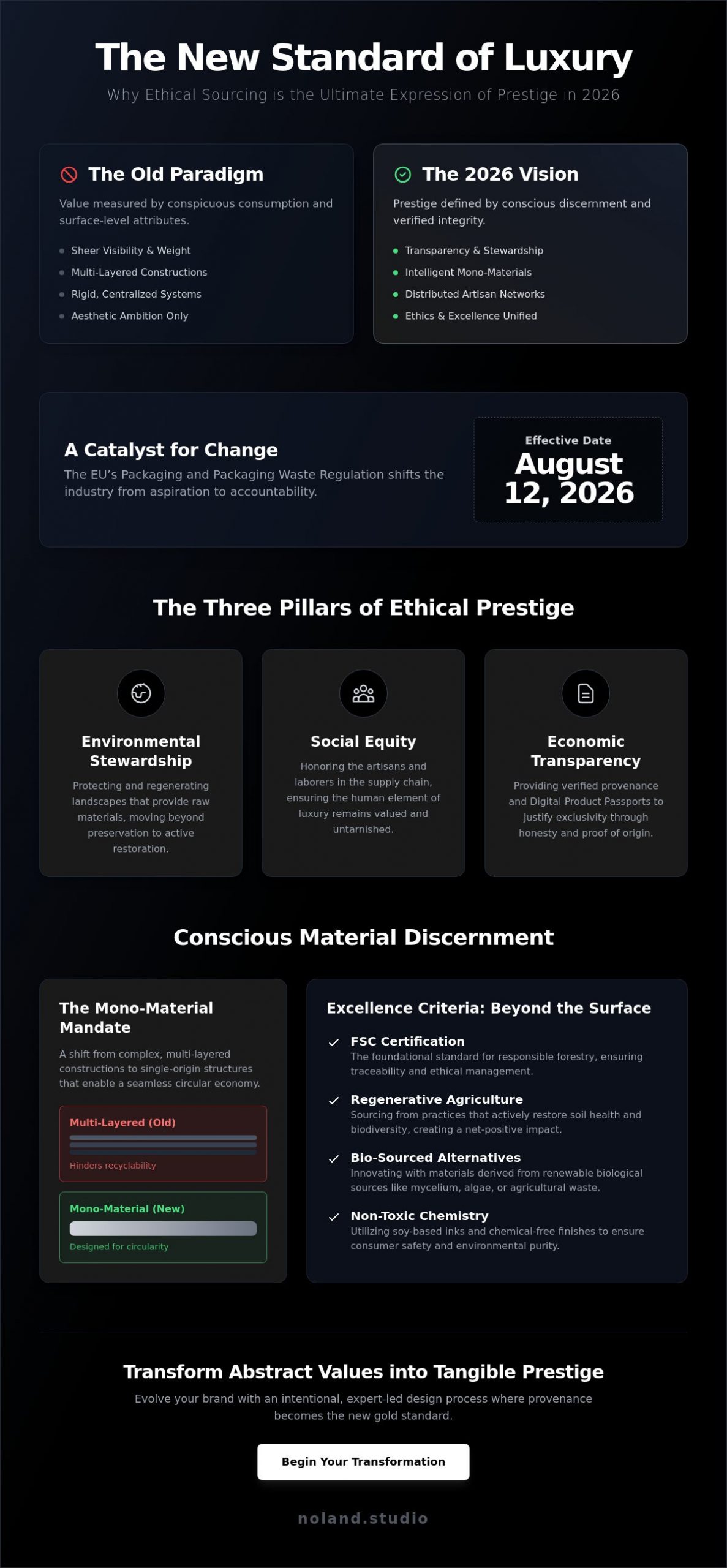
As the EU’s Packaging and Packaging Waste Regulation begins to apply on August 12, 2026, the industry is shifting from aspiration toward absolute accountability. We’ll show you how to navigate these complex mandates without sacrificing the tactile, sensory excellence your clients expect. You’ll discover how to integrate premium materials, utilize Digital Product Passports for storytelling, and build a supply chain that reflects your internal essence. This is your guide to evolving, refining, and leading in an era where provenance is the new gold standard.
Key Takeaways
- Understand why transparency and stewardship have replaced conspicuous consumption as the primary markers of prestige in 2026.
- Learn how to master ethical sourcing for luxury packaging by selecting mono-materials that harmonize circular principles with sophisticated aesthetic depth.
- Resolve the tension between ethics and excellence by exploring the sensory psychology behind weight, texture, and the premium unboxing experience.
- Shift your production model from rigid centralized systems to a distributed network of global artisans who balance meticulous compliance with human-centric craft.
- Discover a visionary approach to brand strategy where abstract values take on physical form through intentional, expert-led design processes.
The Evolution of Luxury: Why Ethical Sourcing Defines the Modern Narrative
Luxury has shed its skin. The era of conspicuous consumption, where value was measured by sheer visibility and weight, has been replaced by a period of conscious discernment. For the global elite in 2026, prestige is no longer a surface-level attribute. It’s an internal essence. Ethical sourcing for luxury packaging acts as the primary vehicle for this transformation, turning abstract brand values into a physical manifestation that can be held, admired, and trusted. It’s the silent storyteller that confirms a brand’s place in a modern, sophisticated world.
When we speak of ethical sourcing today, we’re discussing more than just recycled fibers. We’re discussing a commitment to transparency, humanity, and environmental stewardship. This shift defines the “soul” of a brand long before a customer touches the product inside. It creates a narrative of intentionality that resonates on an emotional level, building a foundation of long-term brand equity that transcends fleeting trends. We see a shift toward a luxury that is felt, understood, and verified. It’s a process of growth, organization, and refinement that begins at the very first link of the supply chain.
From Compliance to Strategic Positioning
Too often, brands view ethical mandates as a clinical hurdle to clear. In reality, the most visionary houses use these requirements as a catalyst for growth. Effective Brand Strategy & Positioning must now weave ethical sourcing into the very fabric of the identity system. This isn’t about avoiding the greenwashing trap; it’s about building a structural base where aesthetic ambition and regulatory compliance coexist. By integrating the concepts of Sustainable packaging into the core story, you move from mere adherence to a position of cultural leadership. You’re not just following rules; you’re curating a legacy that balances high-level vision with a sensitive, localized touch.
The Three Pillars of Ethical Prestige
To achieve true prestige in 2026, a brand’s packaging must rest on three foundational pillars that support its creative and commercial weight:
- Environmental Stewardship: This involves protecting and regenerating the landscapes that provide the raw materials for luxury. It’s a process of preservation, respect, and renewal that ensures the natural world continues to inspire high-end design.
- Social Equity: Every box, ribbon, and insert carries the touch of an expert hand. Honoring the artisans and laborers within the supply chain ensures the human element of luxury remains untarnished and valued.
- Economic Transparency: High-end consumers demand to know the “why” behind the premium. Verified provenance provides the data needed to justify exclusivity through honesty, clarity, and undeniable proof of origin.
By grounding your brand in these pillars, you transform ethical sourcing for luxury packaging from a technical requirement into a profound competitive advantage. You’re no longer just selling a product; you’re offering an experience that is as ethically sound as it is aesthetically flawless.
Beyond the Label: The Pillars of Conscious Material Discernment
Prestige in 2026 is measured by the intelligence of the material. Conscious material discernment is the process of selecting substrates that possess both ethical integrity and sensory weight. Ethical sourcing for luxury packaging requires a departure from traditional, multi-layered constructions that hinder recyclability. Instead, we see a movement toward mono-materials. These single-origin structures allow for a seamless transition into a circular economy, ensuring that the physical presence of the brand doesn’t become a permanent burden on the environment. It’s a commitment to a lifecycle that is as intentional as the design itself.
The criteria for excellence have expanded beyond the surface. While the Forest Stewardship Council (FSC) remains a foundational standard, discerning houses now look toward regenerative agriculture and bio-sourced alternatives. The goal is to move beyond mere preservation and toward active restoration. Chemistry plays a silent but vital role here. Non-toxic finishes and soy-based inks are now non-negotiable standards. They ensure that even the most vibrant visual identities remain safe for the artisan, the consumer, and the earth. This level of detail transforms a box into a vessel of verified integrity.
The Renaissance of Paper and Cardboard
Paper is no longer just a carrier; it’s a medium for artistic expression. High-end brands are sourcing fibers that maintain structural rigidity even at high recycled content levels. We’re seeing a rise in agricultural waste fibers, such as grape, citrus, and hemp, particularly in the premium cosmetics sector. These materials offer unique textures that tell a story of origin. Achieving deep, saturated blacks or vibrant crimsons without heavy metal pigments is the new technical frontier, requiring a deep understanding of ink chemistry, substrate absorption, and tactile resonance.
Innovative Bio-Materials and Vegan Alternatives
The landscape of luxury hardware and inserts is shifting. Mycelium and seaweed-based components are replacing traditional thermoformed plastics, providing a soft, organic feel that feels more “human” than synthetic alternatives. Lab-grown materials now mimic the intricate properties of rare leathers or silks with startling accuracy. Even upcycled ocean plastics are finding a place in luxury hardware, transformed through expert craft into polished, high-density accents. This is where premium packaging design bridges the gap between the abstract world of ideas and the physical world of products.
The Tension of Tactility: Balancing Sensory Excellence with Ethical Integrity
The most profound challenge in the transition to ethical sourcing for luxury packaging is the perceived sacrifice of haptic quality. For decades, the luxury sector relied on high-gloss coatings, heavy-duty laminates, and dense virgin plastics to communicate value. There’s a lingering fear that moving toward sustainable alternatives will result in a “lightweight” or “cheap” feel. However, true prestige in 2026 is found in the intelligence of the engineering. It’s about a sensory experience that is as intentional as it is responsible. We don’t just replace materials; we refine the entire physical interaction.
Tactile resonance is the silent language of luxury. The way a box resists the pull of a hand, the texture of a grain under a fingertip, and even the sound of a lid sliding into place all contribute to the psychological perception of worth. Through expert Art Direction & Content Creation, we can frame the raw, organic characteristics of ethical materials as unique artisan markers rather than flaws. A slight variation in the fiber of a grape-waste paper or the matte finish of a bio-sourced insert becomes a testament to the brand’s soul. It’s a shift from clinical perfection to a more human, evocative form of craftsmanship.
Engineering the Unboxing Journey
Structural design can effectively compensate for the lighter weight of some sustainable substrates. By utilizing internal reinforcement techniques and multi-layered folding patterns, we create a sense of density and protection without the need for non-recyclable fillers. The unboxing experience is a curated space where every movement is measured. We utilize ethical debossing and foil stamping alternatives to add depth and shadow, creating a visual and physical landscape that the consumer can explore. Acoustic properties also matter. The “pop” of a vacuum seal or the soft “thud” of a heavy board lid are engineered moments that reinforce the feeling of exclusivity and care.
The Beauty of the ‘Mono-Material’ Challenge
Designing for recyclability often means working within the constraints of a single material family. This mono-material approach, while technically demanding, allows for incredible creative growth. We explore innovative folding techniques that eliminate the need for toxic adhesives, relying instead on mechanical tension and structural integrity. A single sheet of high-grammage, FSC-certified board can be transformed into a multidimensional experience through precise die-cutting and sculpting. This process of manifestation proves that ethical sourcing for luxury packaging isn’t a limitation; it’s a sophisticated design discipline that requires a high-level vision and a sensitive, expert touch.
Orchestrating the Supply Chain: A Guide to Strategic Production Management
Managing the physical manifestation of a brand requires more than just a list of vendors. It demands the orchestration of a global, multicultural network of specialists. In 2026, the traditional model of centralized, mass-market manufacturing is being replaced by a more sophisticated, distributed approach. Ethical sourcing for luxury packaging is no longer a matter of simply signing a contract with a single large-scale factory. It involves identifying, vetting, and managing a constellation of niche artisans who possess both the technical expertise and the ethical integrity to bring a visionary concept to life.
The Artisan Network Advantage
Niche artisans offer a level of ethical transparency that mass-market factories struggle to replicate. These smaller studios are often deeply rooted in their local communities, providing a sensitive, localized touch that honors the human element of production. Building long-term partnerships with these suppliers ensures that every component of your packaging system aligns with your visionary aesthetics. Localized sourcing also plays a critical role in reducing the environmental impact of your logistics, ensuring that the journey of your packaging is as responsible as its origin. This distributed model offers the flexibility needed for rapid innovation and high-level craftsmanship.
Verifying the Invisible Architecture
In 2026, the consumer’s desire for truth is met through blockchain technology and Digital Product Passports. This “invisible architecture” allows the end user to verify the ethical origin of every fiber and finish. Third-party audits remain essential, but they must be conducted by partners who understand the nuances of artisan-level quality. It’s vital that your Naming & Verbal Identity accurately reflects this journey, using language that honors the true provenance of the materials. When the story you tell matches the reality of your supply chain, you build a foundation of trust that is impossible to break. To begin curating your own network of ethical excellence, connect with our studio for expert-led production management.
The Noland Approach: Transforming Abstract Values into Tangible Prestige
At Noland Studio, we believe the most resonant identities are those where the internal essence is perfectly mirrored in the physical touch. We don’t view ethical sourcing for luxury packaging as a secondary compliance task or a technical checklist. Instead, we integrate these values into the earliest stages of our strategy; we ensure every decision serves the brand’s aesthetic and ethical legacy. This is a journey of manifestation, evolution, and structural base-building. We aim to curate identities that are meant to be felt as much as they are seen. True prestige is born when a brand’s physical presence is as disciplined and intelligent as its founding philosophy.
Our methodology focuses on the intersection of strategic purpose and high-level craftsmanship. We guide brands through a transformative process where abstract concepts take on physical presence through expert-led craft. By prioritizing human-centric discernment over mere automation, we ensure that your supply chain reflects your deepest brand values. This measured pace reinforces a positioning within high-end sectors where time, consideration, and intentionality are valued over quick, transactional interactions. We act as a bridge between the world of ideas and the world of products, projecting a persona that is both visionary and sensitive.
Manifesting Vision through Materiality
Our process begins by identifying the specific materials that best give physical form to abstract brand thoughts. We act as the bridge between strategic vision and technical production reality, ensuring the soul of the brand is never lost in the transition to the physical world. By aligning high-level artistry with responsible discernment, we transform sustainability from a perceived constraint into a sensory masterpiece. We’ve refined our approach to ensure every texture, weight, and finish contributes to a cohesive narrative of prestige. It’s about giving shape, purpose, and longevity to luxury visions. We believe that when a material is chosen with intentionality, it ceases to be a mere substrate and becomes a storyteller.
A Global Collective for a Global Audience
The power of our studio lies in our distributed collective of global experts. We access a multicultural network of the world’s most talented digital and physical artisans, ensuring every project is guided by expert hands rather than mere automation. This digital-first model reduces waste, enhances creative output, and allows for a sensitive, localized touch on a global scale. We provide fixed-fee transparency and end-to-end production management; this offers a disciplined path for brands to evolve with absolute confidence. Our role is to act as a thoughtful mentor and a sophisticated creator for those who value time and consideration. We invite you to build a soulful identity that resonates through aesthetic excellence and verified integrity. Partner with Noland Studio to define your brand’s ethical legacy.
Architecting a Legacy of Intentional Luxury
The transition toward 2026 demands a new form of discernment. We’ve moved beyond the surface to find value in origin, integrity, and stewardship. Integrating ethical sourcing for luxury packaging isn’t just a regulatory necessity; it’s a strategic opportunity to give physical form to your brand’s deepest values. By balancing tactile resonance with absolute transparency, you create a vessel that honors both the artisan and the environment. This is where abstract thought meets physical reality, resulting in a product that is as responsible as it is beautiful.
Noland Studio exists to guide this transformation. As a multidisciplinary design collective of expert digital artisans, we bridge the gap between abstract vision and physical manifestation. Our approach focuses on building soulful brands that resonate emotionally through aesthetic excellence. We offer fixed-fee branding and identity projects, providing a disciplined and intentional path toward your future legacy. Explore our approach to Premium Packaging Design and begin the process of refining your brand’s physical presence. The future of prestige is yours to shape. We look forward to manifesting your vision together.
Frequently Asked Questions
What exactly constitutes ethical sourcing for luxury packaging in 2026?
Ethical sourcing for luxury packaging in 2026 is defined by a holistic commitment to transparency, social equity, and environmental regeneration across the entire supply chain. It moves beyond raw material origin to include the human touch of artisans and the end-of-life circularity of the vessel. With the EU’s Packaging and Packaging Waste Regulation (PPWR) applying from August 12, 2026, ethical sourcing now necessitates verifiable data and a disciplined focus on materials that are either fully reusable or recyclable.
How do I ensure that sustainable materials don’t look cheap to my high-end customers?
Ensuring prestige requires a shift in how we perceive material perfection. You can maintain a high-end aesthetic by utilizing structural engineering to compensate for lighter sustainable substrates and by framing organic textures as unique artisan markers. When we treat a recycled fiber with the same reverence as a rare silk, we transform it. Sophisticated debossing, non-toxic saturated inks, and intentional haptic design ensure the unboxing experience remains an evocative, premium interaction.
Are there specific certifications I should look for when sourcing luxury paper and board?
While FSC certification remains a foundational standard for paper-based packaging, you should also prioritize regenerative agriculture and bio-sourced verification. In 2026, discerning brands look for suppliers who can provide Digital Product Passports under the Ecodesign for Sustainable Products Regulation. These digital records offer standardized data on traceability and compliance. This ensures that every fiber in your premium board has been curated with a sensitive, localized touch that honors the landscape.
Can ethical packaging be as durable as traditional luxury options?
Ethical packaging is frequently more durable than traditional options when designed with structural intentionality. By moving away from brittle, single-use plastics and toward high-density mono-materials or reinforced natural fibers, we create structures that possess significant physical presence. These materials are engineered to withstand the rigors of global logistics while maintaining their aesthetic excellence. Durability in 2026 is less about the thickness of a plastic coating and more about the integrity of the base.
How does ethical sourcing impact the overall cost of premium packaging design?
The cost of ethical sourcing for luxury packaging is often offset by the reduction in regulatory levies and the growth of long-term brand equity. For instance, the EU’s plastic tax of approximately €0.80 per kilogram on non-recycled waste makes traditional synthetic options increasingly expensive. While specialized bio-materials or artisan networks may require a different investment, they protect the brand from future compliance costs and resonate more deeply with the conscious luxury consumer.
What is the role of mono-materials in the future of high-end cosmetics packaging?
Mono-materials are the cornerstone of the circular luxury economy because they simplify the recycling process into a single, efficient stream. By designing a cosmetics case from a single material family, you eliminate the need for toxic adhesives and complex disassembly. This approach allows for incredible creative growth, as it forces designers to use innovative folding and mechanical tension to create form. It’s a disciplined, intelligent way to meet the August 2026 recyclability mandates.
How can I communicate my ethical sourcing efforts without sounding like I’m greenwashing?
Avoiding the greenwashing trap requires a move from aspiration to absolute accountability. You should use verifiable data, such as Digital Product Passports, to provide consumers with a transparent view of your supply chain. Instead of making broad claims, focus on specific stories of provenance and the human artisans involved. Authentic communication is rooted in truth; it’s a narrative of expert-led craft where every ethical choice is a physical manifestation of your brand’s soul.
Why is production management critical when working with non-traditional ethical materials?
Production management is the vital link that ensures abstract ethical values become a high-quality physical reality. Working with non-traditional materials like mycelium or agricultural waste requires a sensitive, expert touch that mass-market automation cannot provide. A disciplined manager orchestrates a distributed network of artisans, vetting each for compliance and craftsmanship. This oversight ensures that the unique properties of ethical materials are handled with the precision necessary to maintain a brand’s prestigious reputation.