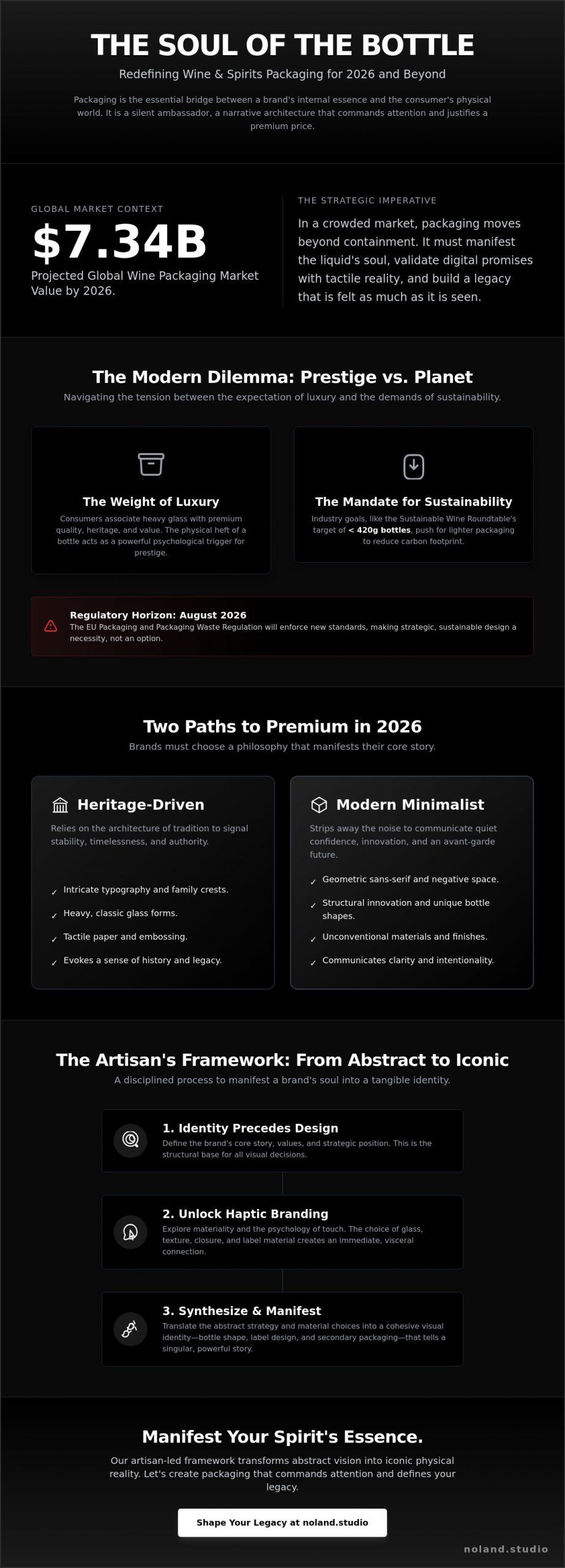
Your bottle is not a container. It is a physical manifestation of an internal essence, an evocative bridge between the liquid’s soul and the consumer’s touch. In a global wine packaging market valued at 7.34 billion dollars in 2026, standing out requires more than a label; it requires a disciplined, intentional narrative. You understand that packaging design for wines & spirits must do more than hold volume. It must command attention, justify a premium price, and resonate with a sense of enduring impact.
You likely feel the tension of modern production. Balancing the Sustainable Wine Roundtable’s goal of reducing bottle weight to under 420 grams with the expectation of luxury weight is a delicate art. With the EU Packaging and Packaging Waste Regulation taking effect in August 2026, the need for strategic alignment has never been more urgent. We promise to show you how tactile artisanship and strategic positioning can resolve these conflicts. We will examine how to manifest luxury through sensory textures, smart digital integration, and a visual identity that finally mirrors the excellence of your craft.
Key Takeaways
- Move beyond the label to understand how packaging serves as the essential bridge between your brand’s internal essence and the consumer’s physical world.
- Navigate the evolving landscape of sustainable luxury by balancing modern recyclability requirements with the weight and prestige expected of high-end labels.
- Unlock the power of haptic branding and the psychology of touch to ensure your packaging design for wines & spirits creates an immediate, visceral connection with every pour.
- Follow a disciplined, artisan-led framework to define your brand’s core story and manifest that abstract thought into a tangible, iconic identity.
- Learn how to synthesize strategy, materiality, and visual identity to create a bottle that commands shelf attention and justifies its premium position.
The Strategic Soul: Why Packaging Defines the Wines & Spirits Experience
True luxury isn’t a surface-level application. It’s an internal essence made visible. For the modern producer, packaging design for wines & spirits serves as the critical bridge between an abstract brand vision and the physical moment of consumption. We call this narrative architecture. It’s the structural base upon which a brand’s story is built, organized, and eventually felt by the consumer. By 2026, the marketplace has moved beyond the generic premium label. Consumers now prioritize soulful brands that possess a clear sense of intentionality and aesthetic excellence. They want to feel the weight of the creator’s hand before they ever taste the liquid.
The bottle is the first emotional touchpoint in a brand’s journey. It acts as a silent ambassador, communicating values of heritage, innovation, or rebellion without a single word being spoken. This physical presence is what transforms a simple purchase into a curated experience. When a consumer reaches for a bottle, they aren’t just buying a spirit; they’re engaging with a manifested reality that promises quality and depth.
From Liquid to Legend: The Role of Identity
Packaging gives a definitive shape to a liquid’s internal story. While mass-market products focus on utility, artisanal prestige demands a transformation into something legendary. This process begins long before a designer touches a bottle. Identity must precede design. To understand the physical vessel, one might look at the history and variety of wine bottle shapes to see how form has historically signaled function and status. Today, we refine that form to ensure the glass, the seal, and the label manifest a singular, cohesive truth. Without a defined identity, design is merely decoration. It lacks the structural integrity required to command a premium price point or inspire long-term loyalty.
The 2026 Beverage Landscape: A Shift Toward Intentionality
The current landscape is defined by a deep thirst for authenticity. Digital-first discovery means a consumer often falls in love with a brand’s visual identity on a screen before seeing it on a shelf. This disconnection requires the physical packaging to be an even more powerful emotional touchpoint. It must validate the digital promise through tactile reality. At Noland Studio, we believe this evolution starts with Brand Strategy & Positioning: Giving Shape to Soulful Luxury Visions. By aligning the liquid’s quality with a sophisticated visual identity, we create a sensory impact that lasts. Packaging design for wines & spirits in 2026 isn’t just about protection; it’s about the manifestation of a legacy that is meant to be felt as much as it is seen.
The Pillars of Premium: Comparing Design Philosophies for 2026
Luxury in the spirits world is no longer a singular destination. It is a spectrum of intentionality where brands must choose to either anchor themselves in the weight of history or project their essence into an avant-garde future. As we look toward 2026, packaging design for wines & spirits has bifurcated into two dominant philosophies: the reverent Heritage-Driven approach and the bold Modern Minimalist aesthetic. Choosing between these isn’t merely a visual preference. It’s a strategic decision that dictates how a consumer perceives the soul of the liquid before the first drop is poured.
Heritage design relies on the architecture of tradition. It utilizes intricate typography, family crests, and heavy glass to signal stability and timelessness. Conversely, modern minimalism strips away the noise, using negative space and structural innovation to communicate a sense of quiet confidence. Research into how label design influences consumer perception shows that these visual cues act as powerful psychological triggers, often bypassing logic to create an immediate emotional bond. Whether you lean into the past or the future, the design must feel like an inevitable manifestation of the brand’s core story.
Heritage vs. Innovation: Finding the Balance
The most successful brands in 2026 often find a “third way” that synthesizes these extremes. While traditional crests provide a structural base of authority, avant-garde glass shapes can introduce a sense of modern craft. We see this in the work of studios like Olssøn Barbieri, where ancient historical narratives are woven into contemporary, sleek silhouettes. This balance is particularly vital for Limited Edition releases, which serve as a playground for experimental 3D visualization and motion design. While the Core Range maintains brand recognition, these limited runs allow for a deeper exploration of artistic weight and sensory impact.
Sustainability as a Luxury Aesthetic
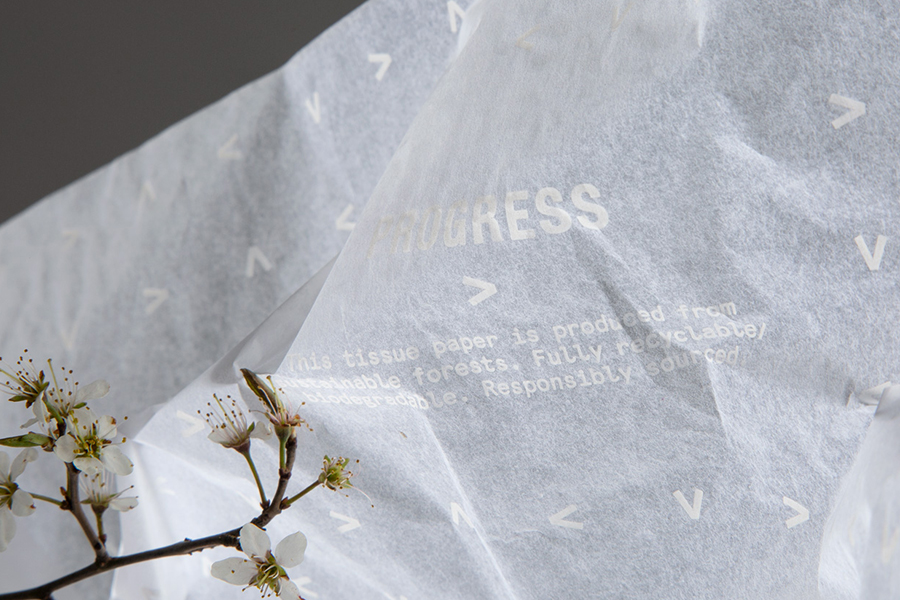
The “Sustainable Luxury” movement has moved from a niche concern to a mandatory regulation. With the EU Packaging and Packaging Waste Regulation (PPWR) coming into force in August 2026, and the Sustainable Wine Roundtable aiming for bottle weights below 420 grams by the end of 2026, designers must rethink the definition of prestige. True luxury now lies in “right-weighting.” It is the expert-led craft of reducing glass volume while maintaining a premium hand-feel through texture and haptic details. If you are ready to evolve your bottle’s presence, our team specializes in premium packaging design that harmonizes environmental responsibility with aesthetic excellence.
Even the process of glass-making has evolved. AI-enhanced tools are now being used to optimize structural integrity, allowing for thinner, stronger glass that doesn’t sacrifice the “luxury of weight.” This intersection of human discernment and technological precision ensures that every bottle is a disciplined, intelligent work of art.
Tactile Prestige: Materiality and the Psychology of the Pour
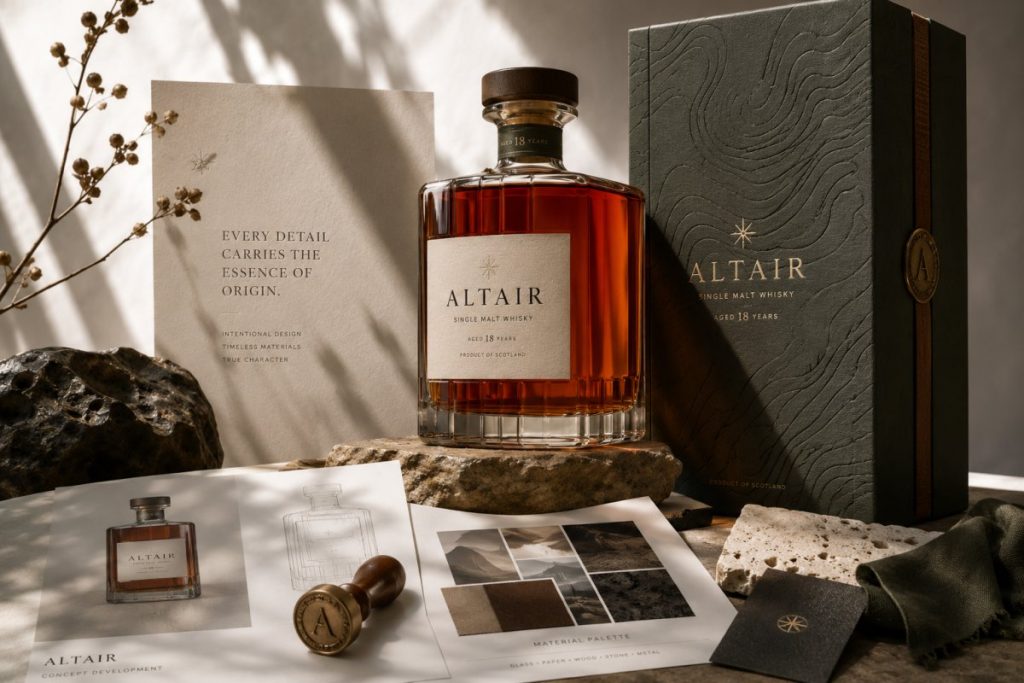
Luxury is a physical conversation. While the visual identity captures the eye from across a room, the tactile experience confirms the soul of the brand once the bottle is held. In the specialized field of packaging design for wines & spirits, materiality is the bridge where abstract brand strategy takes on a tangible presence. This is haptic branding: the intentional use of touch to communicate prestige, origin, and excellence. When a consumer’s hand meets the bottle, the brain processes quality faster than the eye can read a label.
The psychology of the pour begins with weight and resistance. A heavy bottle suggests a liquid that has matured with patience; a lighter, intricately textured glass might signal a vibrant, modern spirit. By giving physical form to a brand’s internal essence, we ensure that the consumer’s first interaction is one of discovery and delight. This process involves selecting substrates that resonate with the brand’s story. It is the careful discernment between the organic grit of recycled cotton labels, the smooth, cool touch of metal-infused foils, or the warmth of a natural wood closure. Each choice is a building block of refinement.
The Architecture of the Bottle
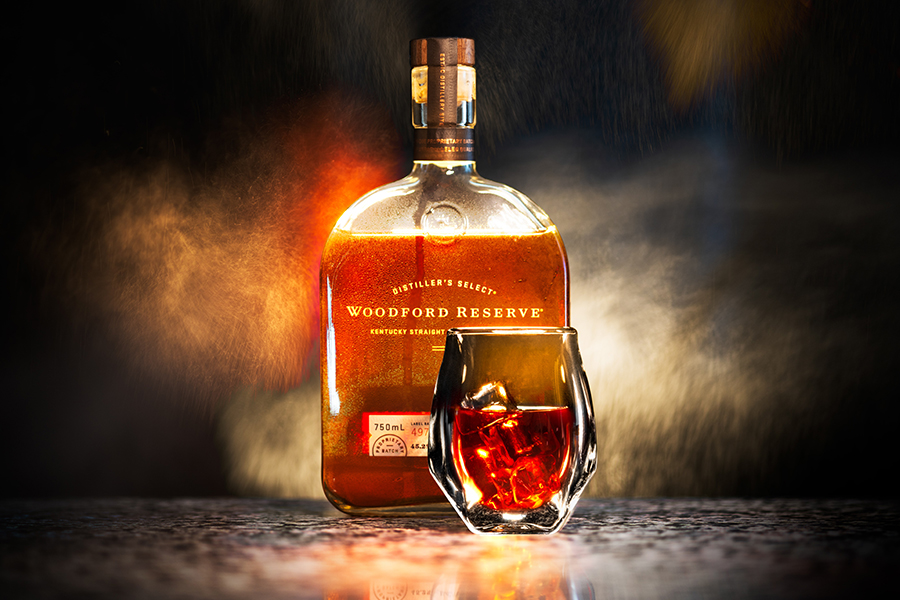
Glass is more than a container; it is a medium for sculpture and a tool for light. Through strategic Art Direction & Content Creation: Shaping the Living Visual Universe of Luxury, we treat the bottle as a canvas for sensory impact. Embossing and debossing create shadows that give the glass a rhythmic quality, inviting the hand to explore its surface. This architectural approach ensures that the bottle remains an object of beauty long after the liquid is gone. It reinforces a narrative of expert-led craft where every curve and facet serves a strategic purpose.
The Unboxing Ritual: Beyond the Shelf
The brand journey doesn’t end at the point of purchase. For the 2026 consumer, the “reveal” at the home bar is a vital ritual of consumption. Secondary packaging serves as an extension of the brand’s soul. Boxes, tubes, and wraps provide a multisensory experience that lingers well after the pour. Consider the sound of a heavy wooden lid sliding open, the scent of a natural cork, or the visual texture of a hand-applied wax seal. These details are not mere accessories. They are the manifestations of an exclusive identity. When every element is disciplined, intelligent, and evocative, the spirit is transformed into an iconic brand experience that commands both the shelf and the heart.
The Artisan’s Framework: A Guide to Conceptualizing Your Spirit’s Identity
Creating an iconic presence requires more than aesthetic flair. It demands a disciplined, structural approach that organizes a brand’s abstract thoughts into a physical form. This framework is the path we take to ensure every bottle is an intentional manifestation of excellence. When we approach packaging design for wines & spirits, we follow a rigorous five-step process designed to elevate a product from a mere commodity to a legendary brand experience.
- Step 1: Define the Internal Essence. Before a single line is drawn, we identify the spirit’s core story. Is it a tale of ancient soil, rebellious innovation, or quiet refinement? This essence is the foundation of everything that follows.
- Step 2: Establish the Verbal Identity. we give the essence a name and a voice. This invisible architecture sets the tone for the entire visual universe and establishes how the brand will resonate in the consumer’s mind.
- Step 3: Curate the Visual System. We select the typography, color palettes, and iconography that will represent the brand. Each element is chosen with discernment to ensure it resonates with the established strategy.
- Step 4: Select Materials. We decide which substrates, glass finishes, and closures will manifest the strategy physically. This is where the abstract becomes tangible and the sensory impact is defined.
- Step 5: Coordinate with Expert Production Partners. The final step involves technical development, ensuring that the visionary design is realized with precision during high-end manufacturing.
Verbal Identity: The Invisible Architecture
Naming is a powerful act of creation. In the crowded spirits market, a name must do more than identify; it must evoke an emotion and a sense of place. We view Naming & Verbal Identity: The Invisible Architecture of Luxury Brands as the structural base that informs every visual cue. A name that suggests heritage will naturally lead to different typographic choices than one that suggests a modern, digital-first identity. When words and visuals are perfectly aligned, the brand’s story feels inevitable and authentic.
Technical Development and Production Management
Bridging the gap between a 3D visualization and a physical product is where expert-led craft truly shines. Managing the complexities of high-end manufacturing requires a sensitive touch and a global vision. It’s about ensuring that the embossing is exactly the right depth and the glass color remains consistent across every market. This level of technical oversight prevents the dilution of the brand’s soul during the transition from render to reality. If you are ready to transform your vision into a physical masterpiece, our studio provides the premium packaging design and strategic oversight necessary to command the shelf.
Consistency is the hallmark of luxury. By coordinating closely with production partners, we ensure that the final product justifies its premium price point. This disciplined management of the creative process ensures that the liquid quality and visual identity are in perfect alignment, creating a bottle that is meant to be felt as much as it is seen.
Noland Studio: Manifesting Spirits into Physical Realities
Noland Studio operates at the vital intersection of visionary strategy and visceral artistry. We aren’t a traditional agency; we are a multidisciplinary collective of digital artisans who refine, organize, and manifest brand identities into physical icons. Our focus remains on longevity and emotional resonance. We believe that packaging design for wines & spirits should be a transformative process where the liquid’s internal essence takes on a structural, enduring presence.
The advantage of our distributed network lies in its balance. We possess a high-level, global vision that understands the complexities of international luxury markets, yet we remain guided by a sensitive, localized touch. This multicultural expertise allows us to curate identities that are meant to be felt as much as they are seen. By prioritizing human-centric discernment over mere automation, we ensure that every bottle we create acts as a bridge between an abstract idea and a physical product.
The Digital-Physical Bridge
In our studio, technology serves the artisan. We use advanced digital tools to perfect the nuances of physical craftsmanship before the first bottle is ever produced. Through Digital Design & Web Development: Crafting the Living Visual Universe, we explore how 3D visualization and motion design can refine the architecture of a spirit’s identity. This process allows us to transform abstract concepts into tangible luxury realities with absolute precision. It’s a disciplined, intelligent approach that ensures the final packaging design for wines & spirits justifies its premium position on the shelf and in the consumer’s hand.
Collaborate with Global Artisans
We provide a clear, fixed-fee approach to end-to-end brand creation. This model allows us to focus entirely on the creative and strategic evolution of your project without the distractions of traditional agency overhead. From naming and verbal identity to the final technical development of your visual system, we tailor every element for the global spirits market. We invite you to experience a partnership where time and consideration are valued over quick, transactional interactions. Our goal is to build a structural base for your brand that inspires a sense of transformation and high-level craftsmanship.
Salud. We look forward to manifesting your vision into a physical reality that resonates across cultures and generations.
Manifesting the Future of Iconic Spirits
Luxury in 2026 is defined by a brand’s ability to give physical form to its internal essence. We’ve explored how the intersection of narrative architecture, sensory materiality, and environmental discernment creates a bottle that’s felt as much as it’s seen. High-end packaging design for wines & spirits is no longer just a container. It’s a disciplined manifestation of quality that justifies its premium place on the global shelf.
Transitioning from abstract thought to a physical icon requires a sensitive touch and expert-led craft. Noland Studio, a multidisciplinary collective of global digital artisans, specializes in this transformation. We offer fixed-fee end-to-end luxury branding and deep expertise in sustainable premium materials to ensure your brand resonates with longevity. Discover how Noland Studio transforms spirits into iconic brand experiences.
Your vision deserves a vessel that mirrors its excellence. Let’s build that structural base together.
Frequently Asked Questions
What are the key trends in spirits packaging design for 2026?
The 2026 landscape prioritizes quiet luxury, right-weighting glass, and smart digital integration. Brands are moving away from loud, excessive ornamentation toward refined textures and haptic details that suggest an internal essence. This evolution in packaging design for wines & spirits reflects a consumer desire for soulful, intentional brands that balance aesthetic excellence with modern environmental discernment.
How does sustainable packaging impact the luxury perception of wine?
Sustainability now serves as a high-end aesthetic rather than a compromise. By utilizing regenerative materials and optimized glass structures, brands manifest a narrative of expert-led craft and responsibility. True luxury in 2026 lies in the intelligence of the design, where reducing carbon footprint through “right-weighting” actually enhances the brand’s prestige and emotional resonance.
What is the difference between premium and luxury packaging design?
Premium design focuses on high-quality utility and market-standard elegance. Luxury packaging design for wines & spirits, however, is a transformative process that gives physical form to a brand’s unique soul. While premium justifies a price through quality, luxury justifies its position through exclusivity, narrative architecture, and a sensory impact that feels inevitable and legendary.
Why is tactile design important for high-end spirits brands?
Touch is the final confirmation of a brand’s promise. When a consumer’s hand meets a bottle, the brain processes haptic cues like weight, texture, and temperature to verify the liquid’s value. This visceral connection creates an immediate sense of authority and depth, transforming a simple pour into a curated ritual that lingers in the memory.
How do I choose a design agency for my wine or spirits brand?
Prioritize a multidisciplinary collective that possesses both high-level global vision and a sensitive, localized touch. You need a partner who acts as a bridge between abstract strategy and physical product. Look for experts who emphasize brand positioning and verbal identity as the structural bases for their visual work rather than those who offer mere decoration.
What role does storytelling play in spirits packaging?
Storytelling serves as the invisible architecture that organizes every visual and tactile choice. It transforms a glass container into a manifested reality. By defining the spirit’s core story first, we ensure that the typography, substrates, and closures all work in harmony to communicate a singular, cohesive truth that consumers can feel.
Can AI-enhanced tools improve traditional luxury packaging design?
AI tools optimize structural integrity and material distribution, allowing for thinner glass that maintains a premium feel. These technologies don’t replace the artisan; they empower human-centric discernment. By using data to refine physical craftsmanship, we can create resilient, beautiful designs that meet the strict regulatory demands of 2026 without sacrificing sensory impact.
How does the unboxing experience affect consumer loyalty for spirits?
The “reveal” ritual at the home bar is a vital emotional touchpoint. Secondary packaging like boxes or wraps extends the brand’s internal essence beyond the initial purchase. When the unboxing experience is disciplined and evocative, it reinforces the consumer’s decision to choose an exclusive brand, fostering a deep, enduring loyalty through multisensory delight.